
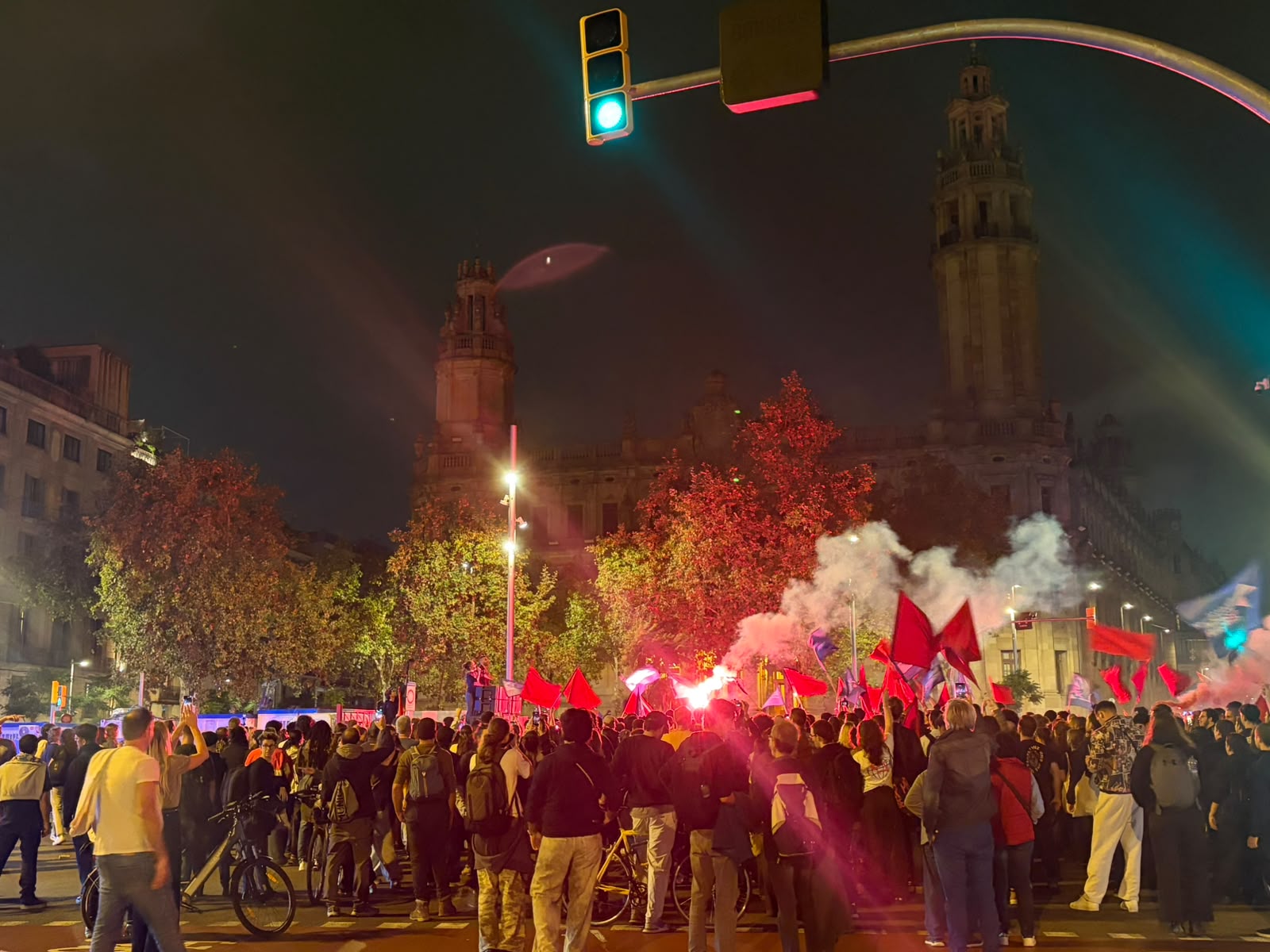
Six days after Spain’s first general strike in fourteen years shut down Barcelona, police have cleared the housing camp at the heart of the city’s protests, and three people arrested on the day are in provisional prison awaiting trial.
The encampment protesting unfair housing rights and prices had been in the Plaza de Catalunya since the end of September, until around 465 officers from Barcelona’s Guardia Urbana and the Mossos d’Esquadra evicted it in the early hours of Monday, November 16.
Police identified 80 people during the operation, and the activists have called the eviction “illegal” and warned they will still be camping.
Fifty-two people were arrested in Barcelona during the strike itself last week. By Friday, November 13, a Barcelona court had sent three of the detainees to provisional prison without bail on charges including criminal damage, assaulting officers, and public disorder, while 16 others were provisionally released, seven of them barred from attending demonstrations.
This strike and its associated protests come at a crucial time in Spanish politics, with the snap general election taking place in just 12 days, on November 29. The day after the strike, Spain’s interim lower house ratified measures to limit evictions and real estate speculation, though how long they last will depend on the result of the election.
Around the Plaza de Catalunya in Barcelona, a sign, translated from the original Spanish, read “SANCHEZ! THIS IS ALSO AGAINST YOU. NONE OF THEM HAVE EVER REPRESENTED US.”
Pedro Sánchez is the current prime minister of Spain and leader of the PSOE socialist party.
The strike, held last Wednesday, November 11, brought protests to every corner of the Catalan capital. It was called nationally by Spain’s two largest unions, CCOO and UGT, and millions of Spaniards are believed to have taken part across the country.
Read more: Barcelona prepares for Spain’s November 11 nationwide strike
Fireworks went off at midnight. By around 10 am, protests had spread across the city, with people chanting “National strike, national strike” in Catalan and occasionally setting off firecrackers.
In Barcelona, groups including the CGT and the Sindicat de Llogateres i Llogaters (The Tenants’ Trade Union) led the city’s protests, but people from all walks of life joined in. Amongst protesters were senior citizens in wheelchairs and toddlers in pushchairs.
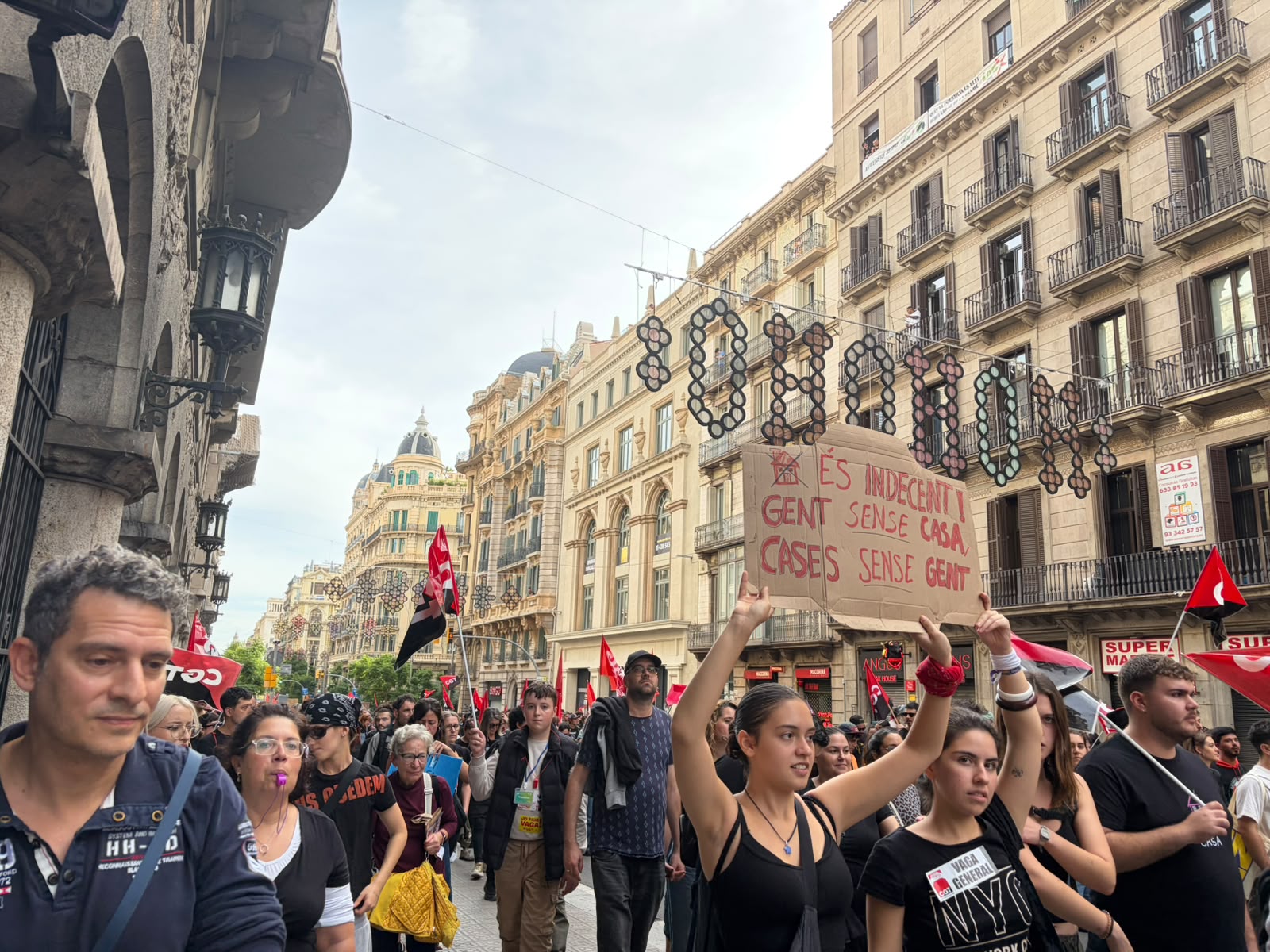
Police figures indicate that over 55,000 attended the Barcelona protests, whilst organisers estimate this to be 400,000.
Their anger is aimed at soaring rents and stagnant wages, which they say have made Barcelona unliveable. Many say they are being forced out of their homes, often because housing has been bought up by companies that use the residences for expensive short-term rentals.
Many videos also circulated on social media during the strike. Notably, one video appeared to show protesters ambushing an old man having a coffee and trying to force him out, and others appeared to show those in food and beverage establishments being boarded in at the door.
Police cars and motorbikes followed the evening protests, with a particularly heavy presence of police vehicles around the Arc de Triomf and its neighbour, the Parc de La Ciutadella. Many roads were closed off as the protest passed through.
Violence broke out in the evening, in and around the central Plaza de Catalunya, where fires were set off by some protesters, and tension was noted between police officers and protesters.
Some protesters smashed the windows of the Apple Store and started a fire at the entrance. Graffiti was also written onto the glass windows, with phrases like “11N”, and ‘Maricarmen 1939, 2026’ on a cardboard board outside the Plaza de Catalunya to pay tribute to the late 87-year-old Maricarmen who, in September, was publicly evicted from the central Madrid apartment she had lived in for the last 71 years.
The day after the strike, the Apple Store was closed, and a team was boarding up some of the destruction. The city council put the cost of the 110 waste containers burned during the riots at €150,000, shared via press release on November 12.
However, attendees have pointed out that most of the protest was peaceful. María, who attended the protest on Wednesday evening, spoke to EU Reports about her worries that the isolated incidents would make people view the strike and its principles differently.
“The isolated acts of violence shouldn’t cloud the actual essence of the strike”, she said, clarifying that “for many people the main point was the housing crisis.”
María also nodded to the wordplay used on November 11, including the protest’s main slogan, “Living costs us our lives” (Viure ens costa la vida).
The city saw 25% of normal services on the Barcelona metro, tram, the FGC train and funicular network, the Rodalies regional trains and intercity buses. Schools across the Catalan capital also closed, while 84 out of 734 scheduled flights were cancelled at Barcelona’s El Prat airport, largely believed to have been due to strike-related disruption.
Most chants by protesters were in Catalan, and included “Out of our neighbourhood, this neighbourhood is ours. Tourists out”, and “Long live the workers’ fight”, as translated from the original Catalan. A similar use of language appeared on the placards carried by protesters, which included “People without homes and homes without people”, “Give us a house, not Valium” and “Universal free and quality housing”.
Many protesters also carried the flags of the trade unions they belonged to, waving them as they walked.
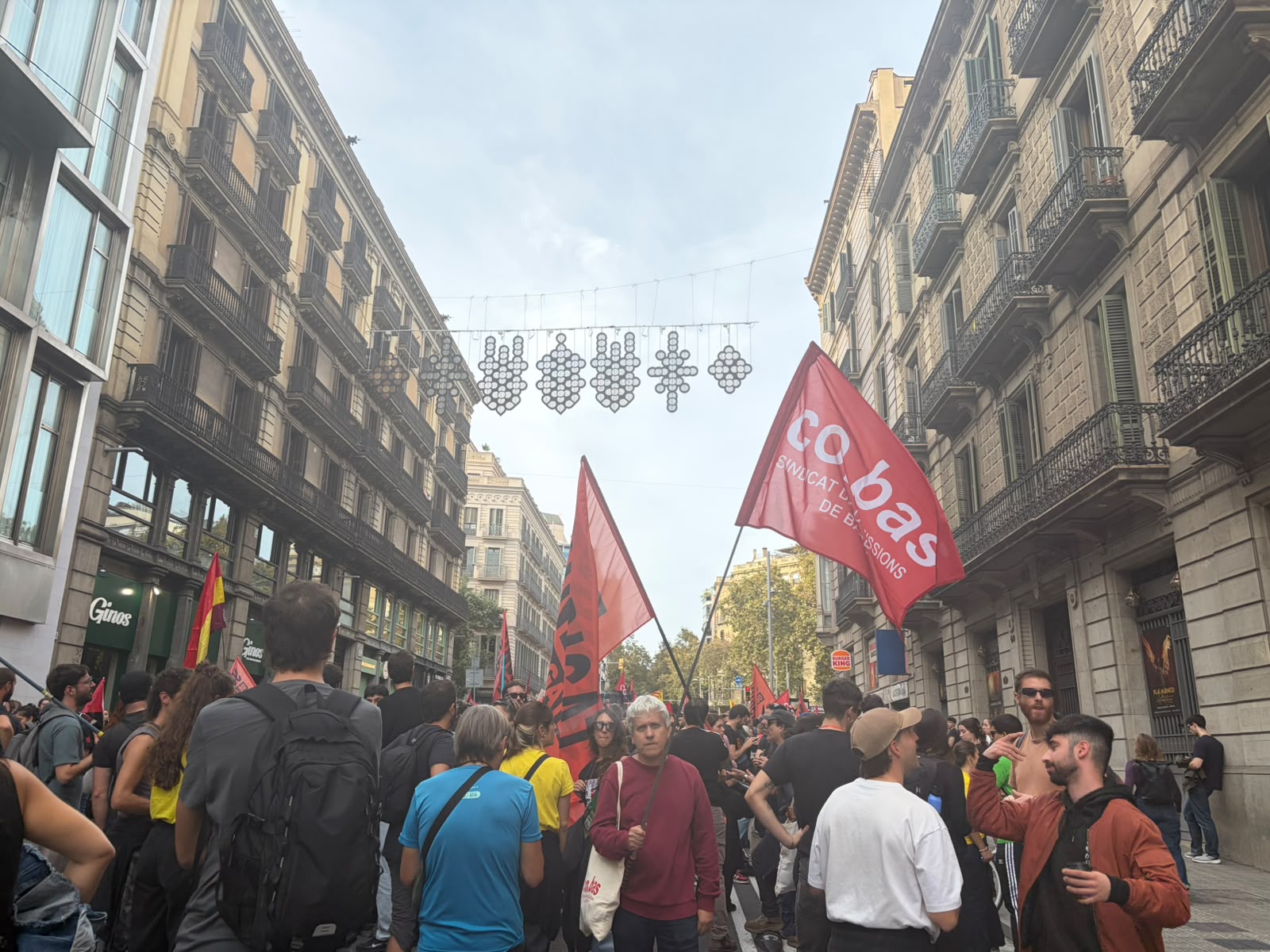
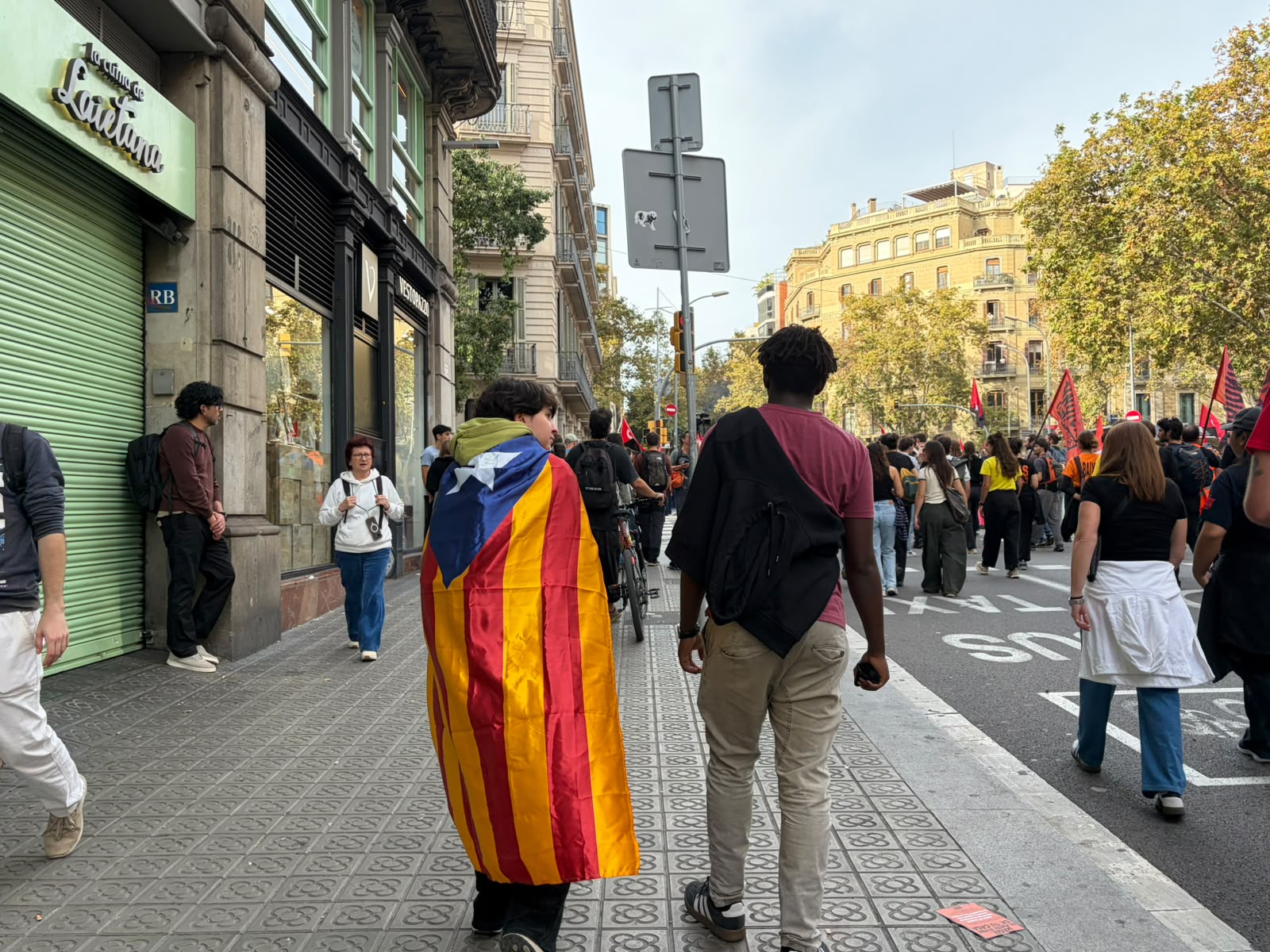
The Catalan flag was also prevalent in the protests, with some protesters seeking to preserve the national identity of the area, which they believe is being tarnished by tourism. Meanwhile, the “Bella Ciao” song, originally an Italian anti-Nazi and anti-fascist folk song, was sung with fervour. The song has become known as a worldwide anthem against fascism, maltreatment and injustices in recent years.
Featured image: courtesy of Rebecca Turner