


The European Central Bank (ECB) has increased interest rates for the first time since 2023, ending a lengthy pause as policymakers confront a fresh inflation problem driven largely by rising energy prices.
The ECB announced on June 12 it raised its deposit facility rate from 2% to 2.25%, with the main refinancing rate moving to 2.4% and the marginal lending rate to 2.65% effective June 17, 2026.
The decision had been expected for weeks, with traders having come to view a rate rise as the most likely outcome ahead of today’s meeting. Even so, it marks a significant change in direction for a central bank that spent much of the past year signalling patience. Behind the move is a sharp deterioration in the inflation outlook.
The Iran War has rattled energy markets and renewed concerns over the security of shipping through the Strait of Hormuz, a route through which a substantial share of the world’s oil supply passes. Brent crude has climbed from roughly $72 a barrel before the crisis intensified to around $92, while reports following attacks on refinery infrastructure briefly sent prices above $110.
Read more: Iran war to slow down German economic growth, prompt deindustrialization
Those increases are now feeding through into European inflation figures. In April 2026, inflation rose to 3% – up from 2.6% in March and 1.9% in February – while energy price inflation jumped to 10.9%, after 5.1% in March. Food price inflation also edged up to 2.5%.
ECB executive board member Isabel Schnabel argued in favour of acting despite ongoing diplomatic efforts aimed at reducing tensions in the region, warning that “the risk of de-anchoring inflation expectations is rising,” and that the bank could no longer “look through this shock.”
Meanwhile, ECB chief economist Philip Lane struck a similar tone, suggesting conditions had worsened since the ECB’s previous forecasts were published earlier this year.
The bank now expects inflation to average 3% in 2026 before gradually easing over the following two years. Schnabel warned, however, that inflation could rise considerably further in the short term if energy prices remain elevated.
The rate rise comes at a difficult moment for the Eurozone economy, with economic growth across the region already slowing: output declined by 0.2% in the first quarter of 2026, and the ECB revised its growth forecasts downward – citing the effects of higher commodity prices, weaker household spending power and declining confidence among businesses.
The bank now expects growth of 0.8% in 2026, followed by 1.2% in 2027 and 1.5% in 2028. That combination of weak growth and rising prices has revived discussion of stagflation – which policymakers can no longer dismiss entirely.
Financial markets have begun adjusting accordingly. Italy’s 10-year bond yield rose to 3.99%, its highest level in more than a year, reflecting expectations that further rate increases may still be to come.
For highly indebted governments, borrowing costs matter; small movements in interest rates can quickly translate into billions in additional financing costs.
The ECB’s decision also leaves it taking a different path from some of its peers. The Federal Reserve is expected to leave rates unchanged at its next meeting, while the Bank of England and Bank of Japan are also set to remain cautious.
Other countries, however, have already responded to the same energy shock, as shown by policymakers in Australia and the Philippines, both tightening policy in recent months.
For consumers, the immediate consequences are fairly straightforward: mortgages, business loans and other forms of borrowing are likely to remain expensive. Savers may benefit from slightly higher returns, although that will depend on how commercial banks respond.
What happens next depends heavily on events far beyond Frankfurt, however. If energy prices stabilise, the ECB may find itself able to pause again. And if they continue to rise, today’s decision may become only the first step in a new cycle of rate increases.
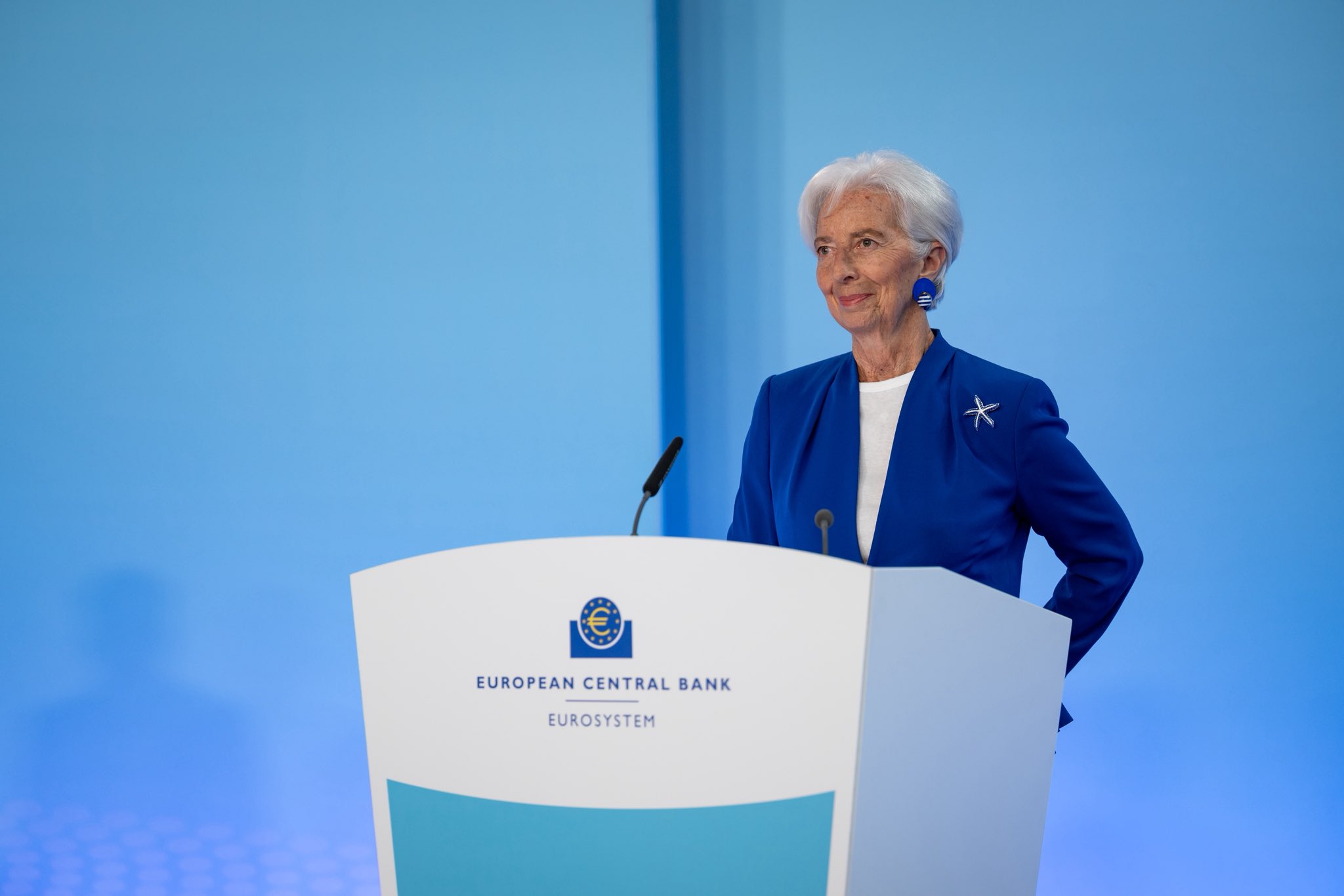
Featured image: ECB President Christine Lagarde.
Source: ECB via X.