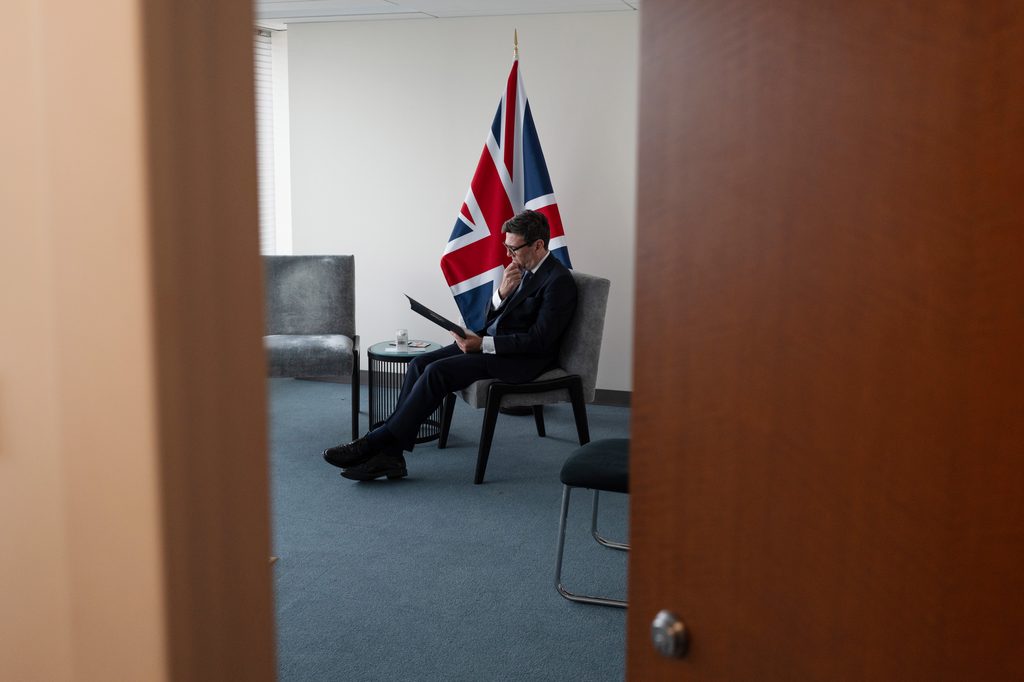

UK Prime Minister Sir Keir Starmer has today announced his resignation following less than two years in office. His successor will be the country’s seventh prime minister in the last 10 years.
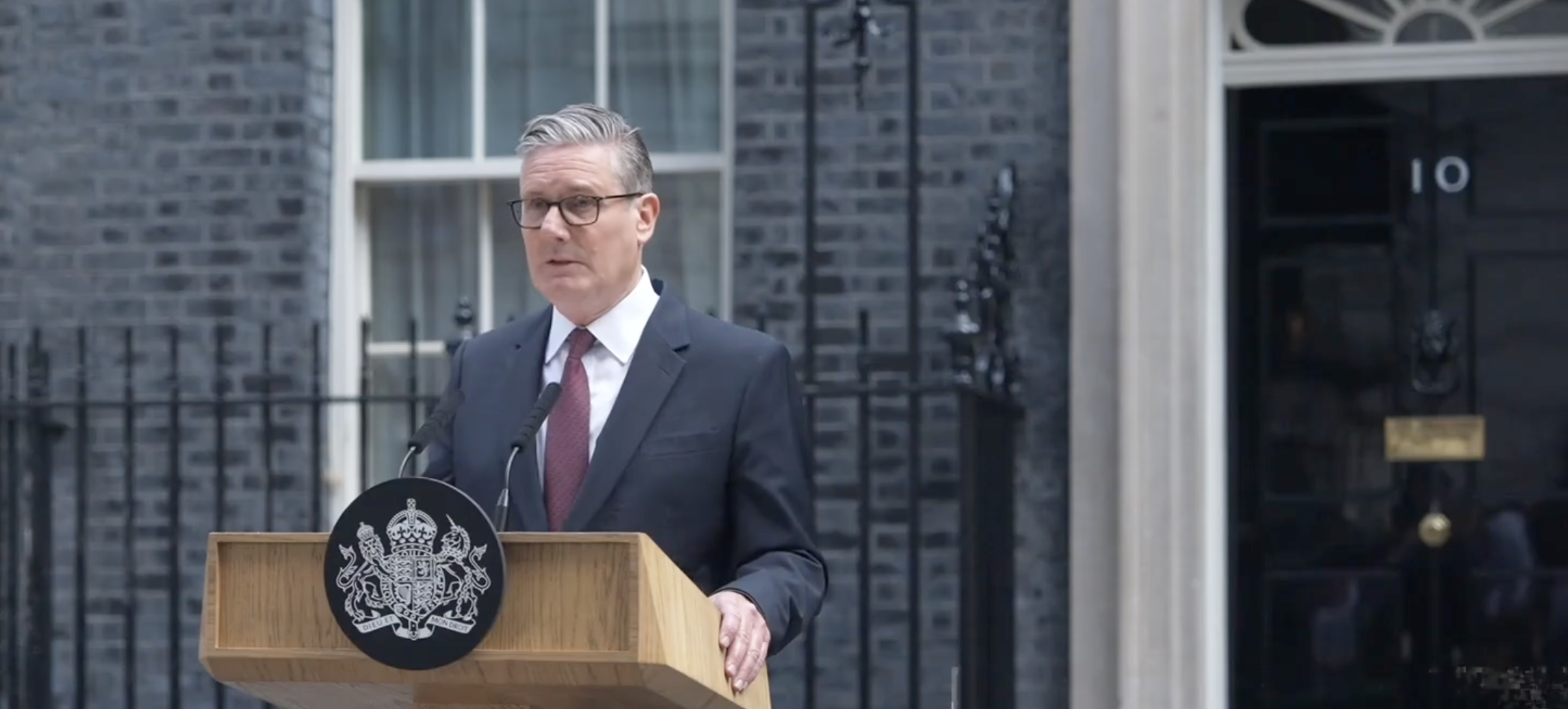
Starmer confirmed that he would also resign as leader of the governing centre-left Labour Party in a speech made in front of 10 Downing Street early on the morning of June 22, 2026. He had been elected as leader of the party in 2020, and was responsible for moving it from the left towards the centre – before winning a landslide victory at the last general election in July 2024.
The party had previously been out of office since 2010.
Starmer told the press that he had met with King Charles III, and had informed him of his decision. Regardless, the outgoing leader will remain as the sitting Prime Minister until a new Labour leader is chosen.
“Walking up this street two years ago was the proudest moment of my life,” Starmer stated. “A new Labour government. The first in 14 years. A page in our country’s history turned after years of disappointment and despair. The chance to change the lives of millions of people for the better. That’s what I came into politics for.”
The politician then listed his achievements, including a stronger and growing economy, an end to austerity “with the fastest fall in NHS waiting lists for 17 years”, as well as the biggest improvements in workers’ and renters’ rights in a generation. “The biggest uplift in defence spending since the Cold War,” Starmer noted.
“But I know the question being asked now is not who was best placed to change the Labour Party, to take us into power, and to begin the vital work of improving lives for millions of people,” he added. The question his party now faces is whether Starmer himself is best placed to lead Labour into the next general election, the prime minister said.
“I have heard the answer of my parliamentary party to that question. And I accept that answer with good grace.”
He added that he would give his successor his full and unequivocal support, and paid an emotional tribute to his friends, colleagues, and family.
Why now?
Starmer’s resignation comes following weeks of speculation after Labour suffered major losses at the May 7 local and regional elections. Here, the party lost some of its key heartlands, including Wales – where it had been dominant for the past century – whilst the right-wing populist Reform party made significant gains.
Read more: Britain’s two-party system fracture signals seismic shift in European political landscape
The outgoing prime minister experienced historic levels of unpopularity, and had initially stated that he intended to stay on as head of government. “I was elected to meet those challenges but I’m not going to walk away,” he said following the May elections.
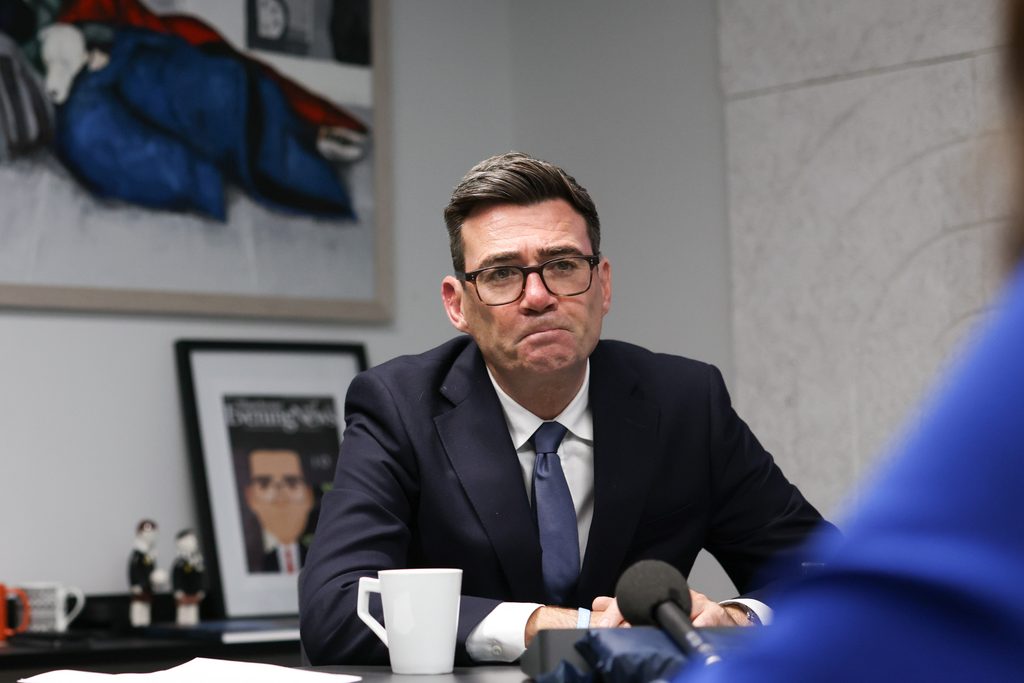
Pressure only mounted in the weeks that followed, with as many as 98 of his own Labour MP’s calling on him to resign, alongside the high profile by-election in Makerfield, in Northern England, where Andy Burnham, former Greater Manchester Mayor was elected MP. Burnham is favourite to succeed Starmer as prime minister.
Read more: Contender to replace British PM Starmer faces off right-wing in crucial vote
Starmer’s resignation has come on the same day that Burnham has been sworn in as an MP, in fact. Burnham has confirmed he intends to now run for the Labour leadership, stating:
“Keir has given huge service to our country […] His decision marks the beginning of a transition and it is important that this process is conducted in an orderly and responsible way. I will put myself forward as part of this process.”
“The country expects stability, seriousness and a continued focus on the issues that matter most and that is what it will get,” Burnham continued.
The next Prime Minister?
With other contenders for the leadership having now endorsed Burnham – including former Health Secretary Wes Streeting – there is the strong possibility that Burnham may well run unopposed.
This kind of ‘coronation’ for a prime minister is not unprecedented, as Tim Bale, professor of politics at Queen Mary University of London (QMUL), told EU Reports. Bale points to the example of Gordon Brown taking over from Tony Blair in 2007, as well as when Rishi Sunak succeeded Liz Truss in 2022 without a formal leadership contest being triggered.
“Burnham will face calls for an early election but not ones he has to take seriously,” Bale stressed. “If he goes for it, it will be his choice, because he’s enjoying a honeymoon and he knows the other parties are nowhere near ready.”
“It would also give him a personal mandate – if he were to win. And that’s a big if. So, while I wouldn’t rule it out, I’d say that on balance it’s less likely,” the professor added.
Figures such as Nigel Farage, the leader of Reform, have already called for an early general election, arguing that whoever becomes the prime minister “will not have been voted for by the British public”. The right-wing leader also compared the manoeuvring in Westminster to “Italian-style farce politics.”
Labour supporters will be hopeful that a Burnham premiership may provide a change in direction needed to reverse Labour’s electoral fortunes and halt the rise of the populist right.
“Voters are looking for feasible alternatives to counteract the far-right, and that seemed to have been the appeal of Burnham in Makerfield,” Javier Sajuria, professor of comparative politics at QMUL, also told EU Reports.
“I would argue that, unlike what many of Starmer’s supporters think, there is no path to recovery by trying to emulate or outmanoeuvre the far-right. Quite the opposite, Labour would need to rally those people who are against Farage and his allies with a coherent and reasonable message that creates enough distinction,” Sajuria said, adding that these causes include immigration, social and cultural issues, Gaza and Russia.
Other political leaders have however voiced concerns on the level of change that might be expected under a Burnham premiership. Ed Davey, leader of the centrist Liberal Democrats, has argued that “changing the person at the top” will not fix the UK’s “broken political system”, and that voters are fed up “with the merry-go-round of prime ministers” seen in recent years.
The international response
Various world leaders have expressed their thanks to Starmer for his work, including Ukrainian President Volodymyr Zelenskyy, who praised the Labour leader’s support during the Russia-Ukraine war.
Canadian Prime Minister Mark Carney also stated that “the world is safer and allies are more united because of his efforts.”
U.S. President Donald Trump, however, took to social media to announce Starmer’s resignation before the Labour PM himself made his decision public. “Keir Starmer will resign as Prime Minister of The United Kingdom. He failed badly on two very important subjects- IMMIGRATION AND ENERGY (OPEN NORTH SEA OIL!). I wish him well!,” Trump said on June 21 via Truth Social.
A summit between the UK and the EU, which had been scheduled for June 22 to conclude talks on an agrifood agreement, an emissions trading deal and a youth mobility scheme, was postponed following Starmer’s resignation.
“We are reassessing the opportunity of this new summit. But my wish is that [Starmer’s] successor could give continuity on this good path to reset our relationship with the United Kingdom,” said President of the European Council António Costa on Monday.
Costa then took to social media to also thank Starmer for his work. “It has been a pleasure to work with you, as a colleague and a friend. Thank you, dear Keir,” he said on X.
Burnham has so far remained reticent on the question of whether a general election will take place should he become leader, arguing that it is still too early in the process for a definitive statement on this.
Nominations for the leadership of the Labour party are set to open from July 9, with a new prime minister expected to be in place by the end of Parliament’s summer recess in September.
Featured image: Keir Starmer via X.