

While Britain left the EU in part to regain control over its own borders, net migration has hit a record high, then fallen sharply since. Meanwhile, the political debate has only intensified.
On June 12, the EU triggered its own overhaul of the system Britain left, representing the most significant piece of European immigration reform in years. With the objective of creating a fair, safer, and more efficient immigration system, the Pact on Migration and Asylum was initially opposed in 2020, and eventually agreed upon in 2023.
Outside the EU, Britain is seeing unrest as tensions surrounding immigration begin to boil over. Days of rioting have taken place in Belfast in response to a brutal attempted beheading, while parties such as Reform UK and newcomers Restore Britain continue to surge in the polls off the back of anti-immigrant rhetoric.
This tension had been rising for years. Yet the country finds itself no closer to solving it.
Read more: Brexit debate re-centred as Starmer announces EU reset after poor local election results
The EU’s new Pact centres on four main aims: securing external borders, efficient procedures, a system of solidarity and responsibility, and embedding migration in international partnerships. To achieve these goals, several new measures have been implemented, including more robust screening, new standards for refugee status, and tackling migrant smuggling.
The framework has not yet cooled tensions across Europe, with leaders from both sides of the political spectrum taking issue with its aims. On the right particularly, there is widespread resentment.
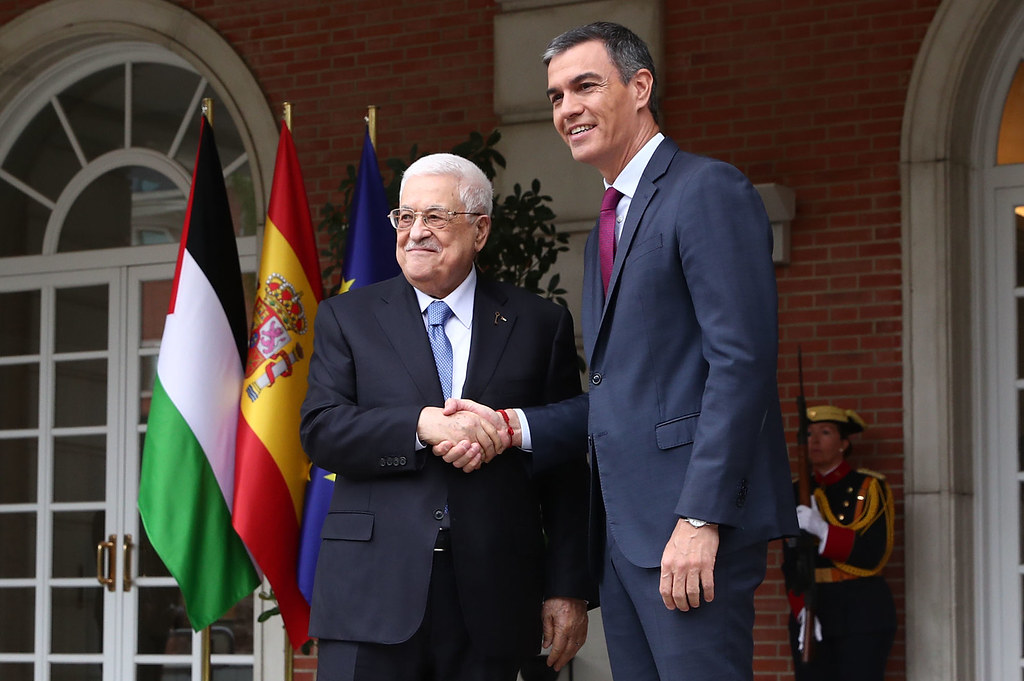
Hungarian Prime Minister Péter Magyar has said that Hungary “will not accept any pact or such an allocation mechanism,” while Polish Prime Minister Donald Tusk stressed that Poland “will not take in migrants under the Migration Pact” to POLITICO.
The EU’s new policies, while intended to promote unity, could thus potentially be widening the gap between western and eastern member states.
In Western Europe attitudes are more positive, with German Chancellor Friedrich Merz claiming that the Pact will give Germany “stronger external borders, better ways to prevent secondary movement, and faster asylum procedures.”
But while Britain’s immigration debate is now among the most charged in Europe, it is left without the legal framework that is attempting to resolve the issue. Upon leaving the EU, many who voted Leave believed that full control over the country’s borders would lead to a reduction in migration numbers.
Yet net migration hit a record high of 994,000 in 2023, fuelling the rise of politicians who centred their campaigns around the issue. Jonathan Portes, professor of economics and public policy at King’s College London, told EU Reports that the basic error was assuming that ending free movement was the same as reducing immigration.
“Brexit did sharply reduce EU migration, especially into lower-paid sectors. But the post-2021 system was designed to be much more open to non-EU workers and students. Combined with post-pandemic labour shortages and refugee flows from Ukraine and Hong Kong, the result was record net migration.”
Net migration dropped to 171,000 by late 2025, but anti-immigrant attitudes had already solidified on the right. Portes argued that the disconnect between falling numbers and rising anxiety is not surprising.
“Public concern is not mechanically related to government statistics. The political debate is still dominated by the 2021-23 surge, the visibility of small boat crossings, asylum hotels, and the sense that public services and housing cannot cope.”
Despite the figures continuing to fall, temperatures are only rising – driven in part by the attack in Belfast, but also by the inflammatory rhetoric from Nigel Farage of Reform UK, Rupert Lowe of Restore Britain and amplified by Elon Musk.
Read more: Starmer condemns Musk’s “interference” in UK politics following Henry Nowak muder commentary
Farage has claimed that “anti-white racism was embedded into the state,” while Lowe stated plainly: “We will discriminate” – not on the basis of behaviour or beliefs, but birthplace.
A February poll shows 25% of people would vote for Reform UK and 7% for Restore Britain – the latter founded in the same month. Meanwhile, a July 13 YouGov deep-dive on who is backing Lowe’s party concluded Restore draws roughly a tenth of its base from former Farage voters.
Where 86% of current Reform UK voters name immigration as one of the most important issues facing the country, that rises to 90% among Restore supporters. The new, harder-right party isn’t pulling in new demographics so much as pulling Reform’s own base further right.
On whether the EU Pact offers a more coherent approach than Britain’s current strategy, Portes was clear. “The Pact is at least an attempt to build a coherent framework across asylum processing, external borders, returns and solidarity between states. But implementation will be difficult, and some elements raise obvious legal and humanitarian concerns.”
His prescription for reducing tensions goes beyond any single policy, explaining that “work, study, family, asylum and irregular migration require different policies.” Portes added that investment in housing, GP capacity and local services is essential: “migrants generally contribute fiscally, but local services do not automatically expand when people arrive.”
But Britain is tightening its own rules unilaterally rather than building anything like a coordinated framework. A Statement of Changes laid before Parliament on July 9 expands deportation grounds so that foreign nationals given suspended sentences of 12 months or more are now treated the same as those handed immediate custodial sentences.
The amendment also gives the Home Secretary power to skip the personal interview stage of an asylum claim where it can be judged “clearly unfounded” from the paperwork alone.
It is, in effect, Britain doing piecemeal and unilaterally what the EU Pact tries to do as a bloc; tightening enforcement without the solidarity mechanism or common standards that come with it.
Whether the Pact will be successful remains speculative. But the legislation reflects an official attempt to address inflamed attitudes. Britain, in the meantime, has its sovereignty, but as unrest peaks and far-right parties surge, the latest consequences of leaving the EU are beginning to unfurl.
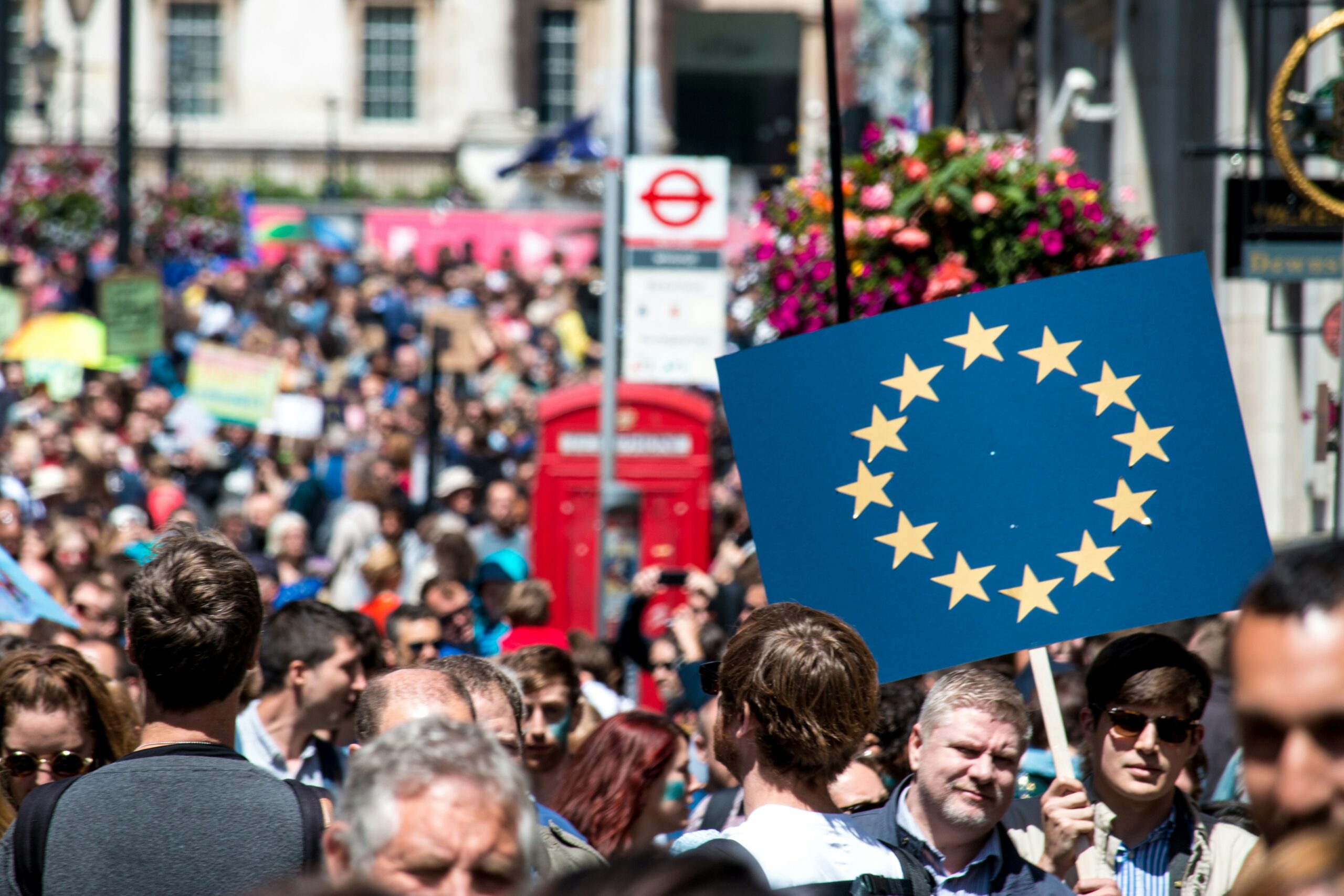
Featured image: Matt Brown via Unsplash+