
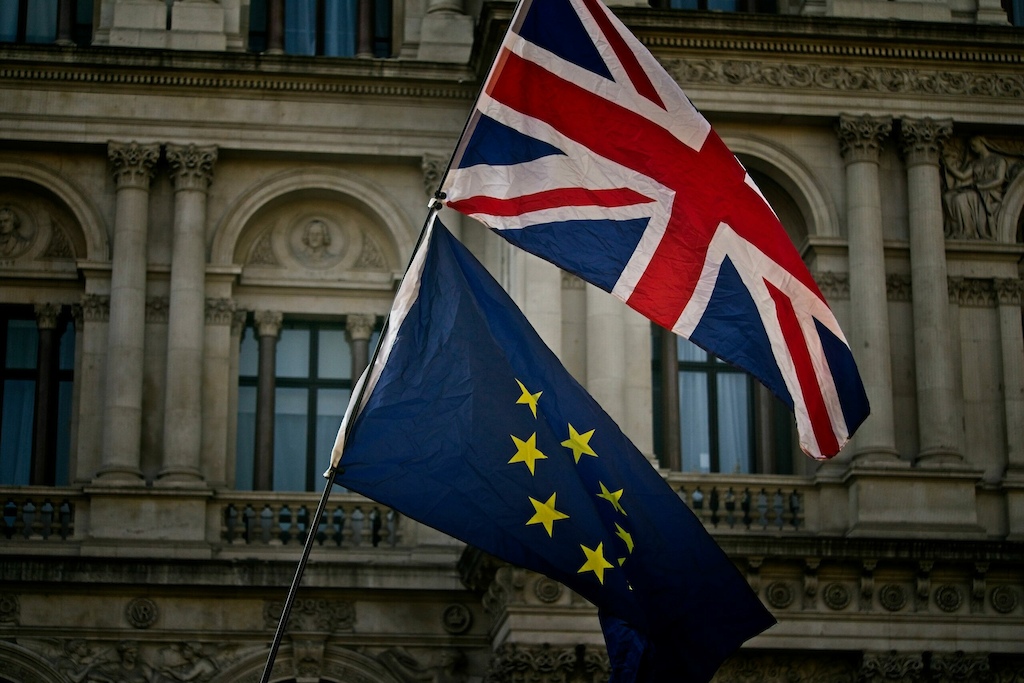

London, United Kingdom – UK Prime Minister Keir Starmer announced earlier today that his government would seek to establish “a platform on which we [the UK] can build” a closer relationship with the European Union.
Starmer also singled out Britain’s decision to leave the European Union, commonly known as Brexit, for criticism.
“I feel that Brexit has held back our young people. They should be free to work, study, travel in European countries, just as I was able to when I was growing up … I’m not going to let Brexit stand in the way of their opportunities”, the Prime Minister said.
The announcement comes amidst growing calls for Starmer’s resignation by Labour MPs after the party suffered major setbacks at last week’s local, Scottish and Welsh elections.
The other of Britain’s two main political parties, the Conservatives, also had a poor showing, with the right-wing Reform UK and the left-wing Green Party making significant gains at Labour and the Conservatives’ expense.
Read more: Britain’s two-party system fracture signals seismic shift in European political landscape
In practical terms, Starmer promised UK-EU cooperation on trade, defence and the economy. Although he had previously ruled out rejoining the EU single market, some speculate that this most recent announcement shows that Starmer is reconsidering his stance on the matter.
Membership of the Union’s single market – the biggest of its kind – was a crucial and contentious issue during the 2016 Brexit referendum.
Local election results suggest Brexit remains a fault line in British politics
In last week’s elections, which saw England vote for over 5,000 councillors and Welsh and Scottish voters choose their representatives in the devolved parliaments, Reform UK and the Greens performed particularly well, with the former winning over 1,450 council seats and the latter winning an additional 441.
In Wales, Labour lost control of the devolved parliament (Senedd) for the first time, as the Welsh nationalist Plaid Cymru and Reform UK came in first and second place respectively. There were more Labour losses and Reform UK gains in Scotland as the Scottish National Party (SNP) retained their status as the Scottish Parliament’s largest party for the fifth election in a row.
All of last week’s big winners have a very concrete stance on EU membership.
Green Party leader Zack Polanski has expressed support for Britain rejoining the EU, a position which the SNP and Plaid Cymru also hold.
Reform UK, on the other hand, traces its origins to the Brexit Party, a largely single-issue Eurosceptic party founded by Nigel Farage whose raison d’etre was ensuring that Britain left the EU in accordance with the 2016 referendum result. Farage remains leader of Reform UK.
Public attitudes towards Europe seem to have played a part in Reform UK and the Greens’ fortunes in particular. The BBC reported that support for Reform UK in wards where more than 60% of voters backed Brexit averaged 40%, in comparison to just 10% in wards where fewer than 40% voted to leave.
The Greens, on the other hand, made large gains in majority-remain areas, such as London, Manchester, Exeter and Oxford. They also won a mayoral election in Hackney and became the largest party on Lambeth Council. Lambeth and Hackney were the two most pro-Remain areas in mainland Britain during the 2016 vote.
The success of Polanski and Farage’s parties in these most recent elections was unsurprising given the two parties’ rise in popularity since the 2024 election.
Although the two parties have a current combined total of 13 MPs, their poll numbers have been consistently high, with renowned UK-based pollster YouGov reporting as recently as May 5 that 40% of British voters intended to back one of the two parties at the next election.
Lord Timothy Kirkhope of Harrogate, Conservative Member of the House of Lords and Co-chair of the All-Party Parliamentary Group on Europe, acknowledged the link between feelings towards Brexit and the fates of the parties in the local elections while speaking to EU Reports.
While Reform UK and right-wing Eurosceptics “fared better in the stronger Brexit areas, the country remains divided on Brexit […] polling suggests that the country is now much more positive about the EU and this is reflected in traditional Remain areas but also in the demographic changes, including a higher level of support from the younger generations,” he argued.
Starmer’s reset towards the EU may therefore signal an attempt to appeal to young and increasingly numerous Europhile voters that have shifted towards the Greens – and to a lesser extent, the Scottish and Welsh nationalist parties. The announcement is, however, likely to further drive Eurosceptic voters into the hands of Reform UK.
What next?
In the aftermath of the results and in anticipation of Europe Day, celebrated May 9, the European Green Party, of which Polanski’s party is a full member, formally invited the UK to rejoin the EU 10 years after it voted to exit.
While this move was largely symbolic, Britain’s full re-accession to the European Union as a member remains possible. Although Starmer has ruled out making rejoining a policy of his government, prominent Labour figures such as London Mayor Sadiq Khan have called on the Labour party to make rejoining the EU a campaign pledge for the next general election.
Starmer’s government has also already made a series of policy U-turns on issues such as farmer’s inheritance tax and winter fuel payments, and the latest promise to deepen UK-EU cooperation could be a prelude to a more radical change of policy towards EU membership.
Regardless, Starmer’s current pledge to seek closer ties with the Union, if it materializes, is likely to be popular. A poll conducted last month showed that 53% of Britons support rejoining the EU, while 61% favor closer ties with the bloc.
This alone may not be enough to save Starmer’s ailing premiership and reverse Labour’s electoral misfortunes; YouGov research indicates that the issue of Britain’s membership of the EU is only considered as one of the three most important political issues facing the country by 15% of the population as of May 4.
Lord Kirkhope asserted that “both the mainstream parties [Labour and Conservative] can only benefit from a new pro-EU position though Labour is closer to that than the Conservatives, who are divided [on the issue].”
“The public thinks that the government has not been courageous enough with their EU reset. They think Starmer has not been sufficiently positive or ambitious,” he added.
Nevertheless, the Conservative politician was skeptical that this closer realignment would have a significant positive effect on the electoral fortunes of Starmer’s administration.
Several Labour MPs reportedly expressed that same skepticism to the BBC when asked for their reaction to today’s speech by the prime minister, with over 70 Labour MPs – including Home Secretary Shabana Mahmood – calling for Starmer to either resign immediately or set out a timetable for his departure.
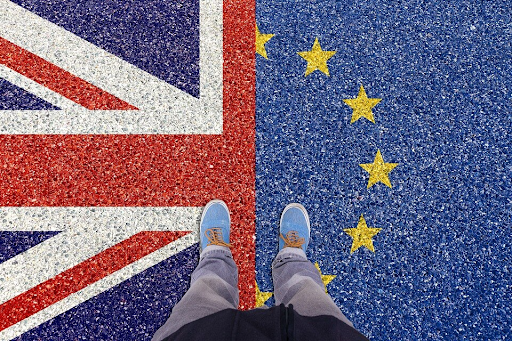
Featured image: La ‘britishness’ y el Brexit
Author: Garry Knight
Source: via Catalunya Plural
Creative Commons Licenses