
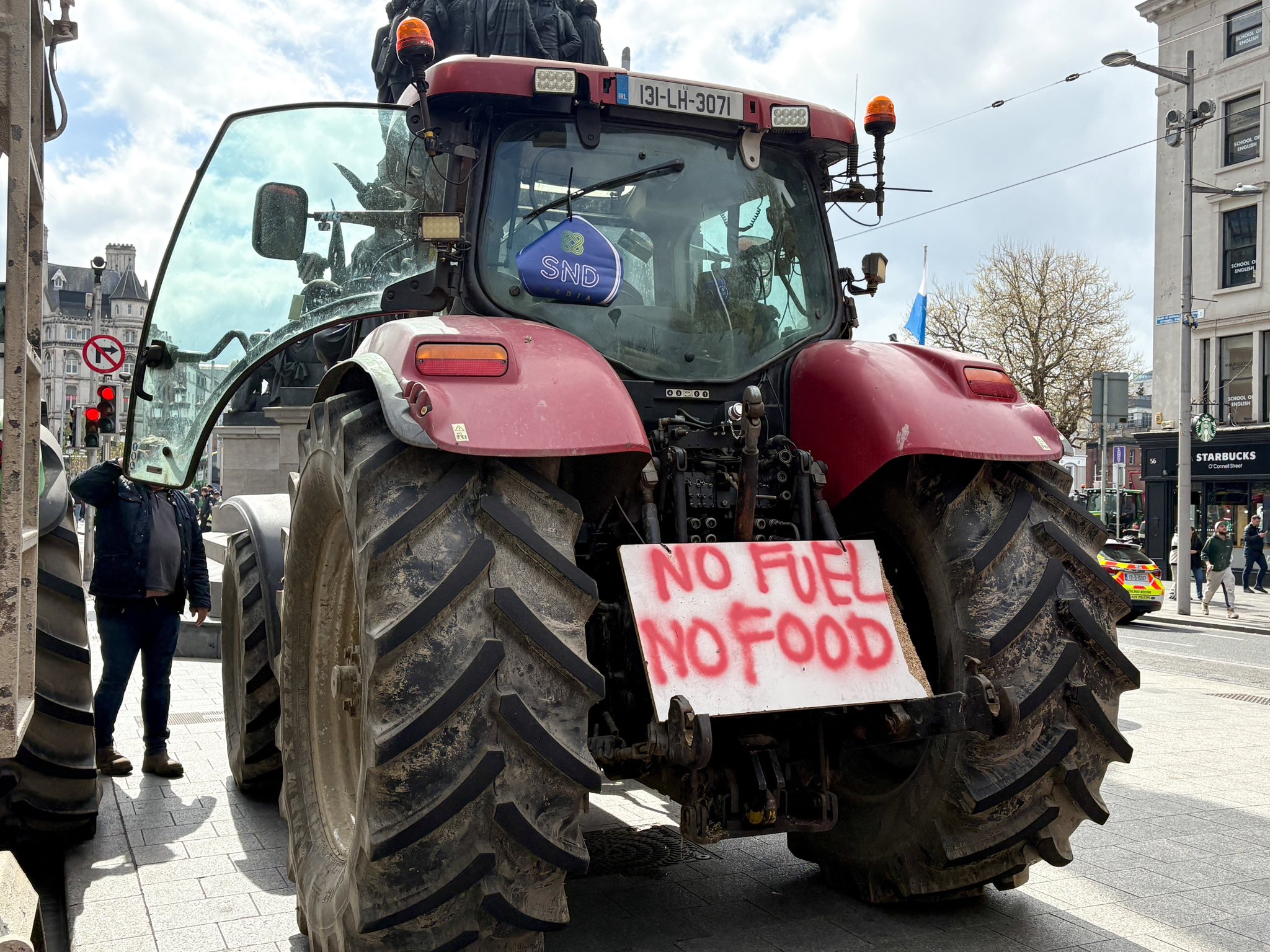
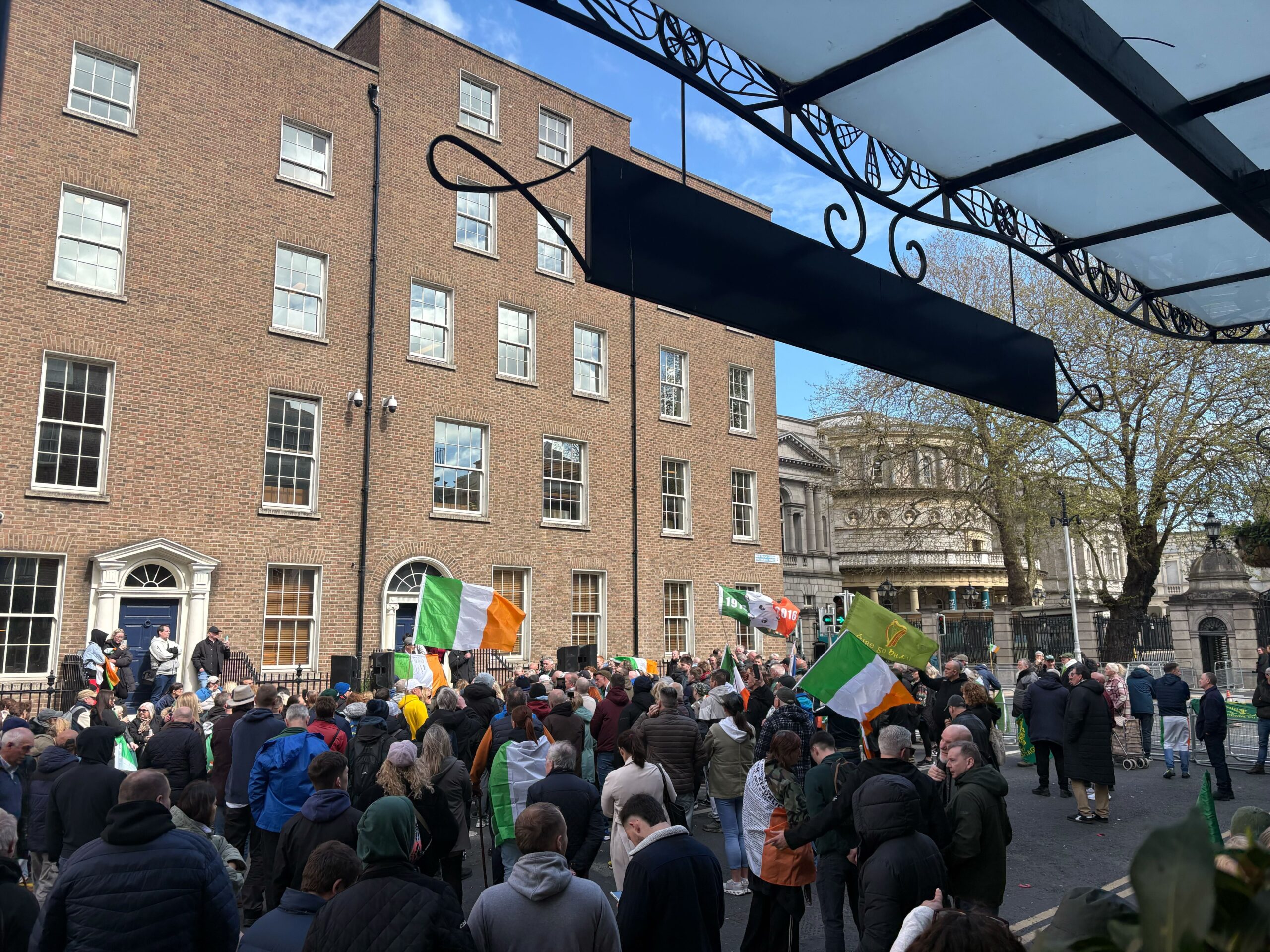
Dublin, Ireland – Protestors gathered on Kildare Street outside the Dáil Éireann – the primary legislative chamber of Ireland – on April 17 in an effort to reignite the widespread fuel blockades that caused severe disruption to the country’s major roads and fuel supply chains the week before.
On April 12, and after severe disruptions to roads and oil refineries and several days of talks, the Irish government agreed to implement two new packages of measures to support the transport, farming, and fisheries industries.
The first package involved allocating €250 million in targeted support to those in the aforementioned industries experiencing severe financial pressure, while the second measure reduced the cost of diesel petrol by a further 10 cents each – bringing the total reductions since March 2026 to 32 cents and 27 cents, respectively.
Following the government’s negotiations with industry representatives and the announcement of support packages, Taoiseach Micheál Martin warned on April 12 against further protesting. These warnings were followed through swiftly on the next morning, as An Garda Síochána (Ireland’s national police) and Defence Forces moved in to remove blockading vehicles and handle unrest amongst protestors.
The most intense scenes unfolded in the suburban area of Coolock, Co. Dublin and the village of Whitegate, Co. Cork, where Garda and Defence Forces were met with severe civil unrest that required the use of pepper spray. Several arrests were also made.
From fuel prices to the far right
The rhetoric of the protest was not limited to fuel dissent, yet the speakers stated that their roots lay in Ireland’s rural communities. They each expressed respect and solidarity towards those who participated in the blockades across the country.
However, as several speakers took to the stage to address a crowd draped in flags and symbols of the 1916 rebellion and sporting green hats reading “Make Our Farmers Great Again”, the thematic nature of the protest appeared less specific to farmers and fuel prices, and instead appealing to various issues often associated with Ireland’s emerging far-right.
Edel Gillick, a contributor to right-wing digital reporting group WakeUpÉire, claimed “it was never going to be about just one week in Dublin,” a clear reference to how this protest is tying itself to the previous week’s fuel blockades.
She then used her time on the podium to condemn mainstream Irish media, calling RTE News the “real virus” – rather than COVID-19 – and accusing the Gaelic Athletic Association of running “depopulation centres” because of their contribution of clubhouses as vaccination centres during the pandemic.
Gillick also contended that the Irish people were a “guinea pig for Pfizer,” and asked the crowd if they consented to “borders being flooded” or to children being taught “that there is no idea as a woman.”
A columnist for Gael Force Media, a right-wing digital media platform, expressed further discontent towards the government, claiming that his 79-year-old father was pepper sprayed by Garda officers during the breaking up of the Coolock, Co. Dublin rally.
He continued by adding that this is the latest in the unnecessary and excessive acts by the government, offering criticism for the nationwide lockdown that Ireland experienced to mitigate the spread of COVID-19.
Further speeches from the convenor and other guest speakers – who could not or refused to be identified – vocalised a range of conservative and far-right views, including condemning Ireland’s contributions to foreign aid, eurosceptic remarks and a rejection of “foreign laws”, claims that Ireland cares more for immigrants than its own citizens, criticism of labels such as “far-right agitators” as opposed to “left-wing activists”, and claims that schools are making young men “effeminate”.
The range of views and beliefs expressed by the various speakers at the protest on Kildare Street showcase further association between the fuel protests and Ireland’s far-right.
Leaving more questions than answers
On April 14, speakers at Dublin’s fuel protests promoted anti-immigration conspiracies and misogynist rhetoric. While previous week’s fuel protests and blockades stayed largely focused on fuel prices, protests on April 17 have left local residents confused and unconvinced.
Paula, a local resident in Dublin in attendance at Ireland’s National Gallery on Kildare street, told EU Reports: “I genuinely don’t know what they are protesting. They’re all over the shop [place].”
“They do not care about the fuel prices. They are simply using last week’s blockades as an excuse to promote hate speech. The right wing are jumping on the bandwagon which is alarming, quite frankly,” Lorraine, a healthcare professional who was working in offices nearby, further told EU Reports.
The support for the protest on Kildare Street compared to the previous fuel blockades is difficult to determine, as the protest outside the Dáil numbered less than 200 people despite the Garda closing streets and issuing heavy security in the area.
The association of the far right with the fuel protests has precedent. The blockades, which covered entrances to oil refineries and major roads, left more than a third of Ireland’s petrol stations without fuel, caused severe disruption to emergency services, and inspired similar protests in Northern Ireland and Norway.
Ireland is bracing for what comes next. The government narrowly won a vote on confidence earlier last week, and analysts – including economist David McWilliams – predict that the disruption caused by the blockades will inspire further action throughout the year.
Featured image: Signal Not Noise via X.