
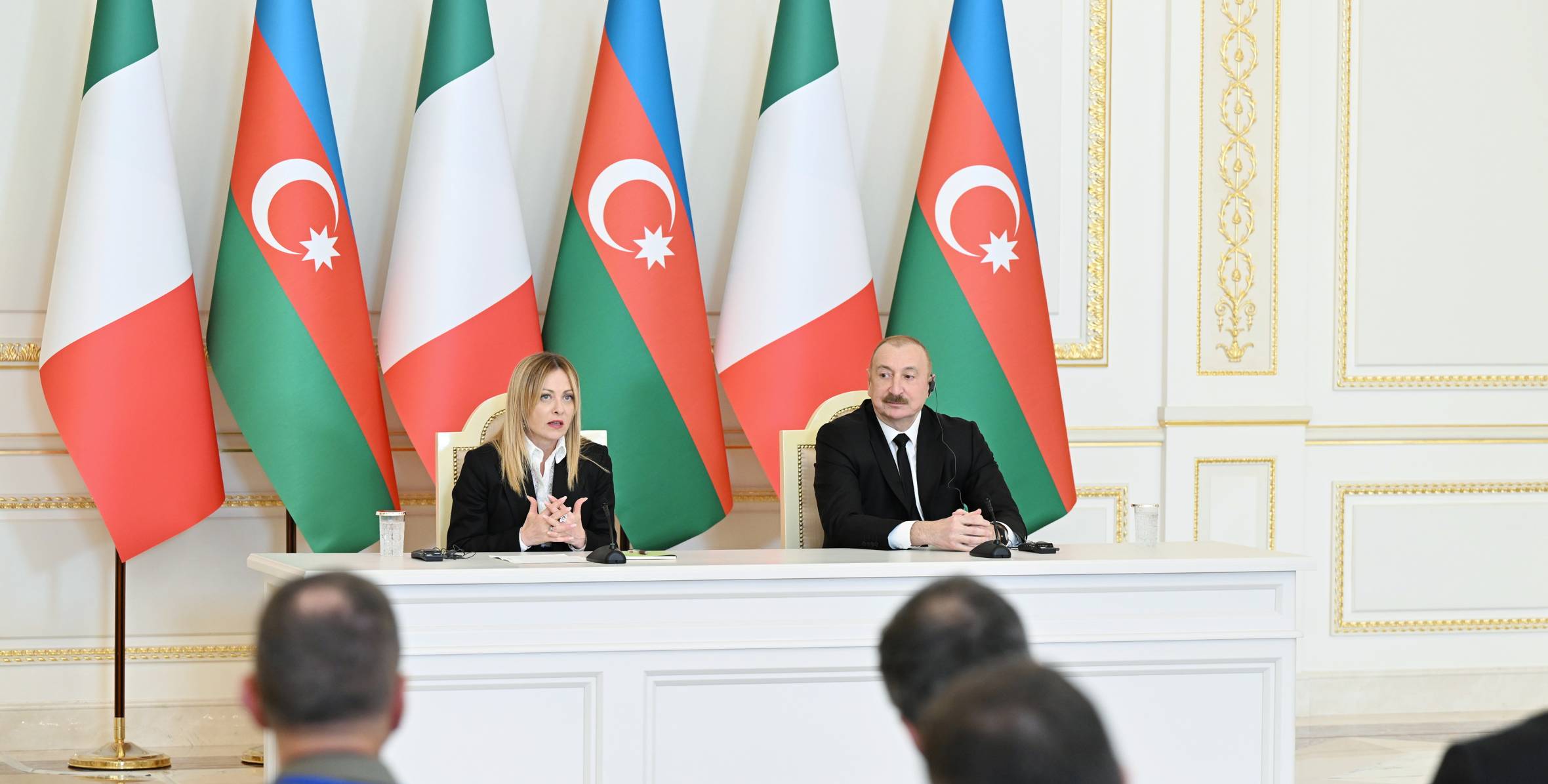
Italian Prime Minister Giorgia Meloni travelled to Azerbaijan on May 4, 2026, where she met with the country’s President Ilham Aliyev.
Since the beginning of the Middle East war and the closure of the Strait of Hormuz, Italy’s PM has already visited Algeria in March and Saudi Arabia, Qatar, and the UAE in April, in an attempt to diversify energy sources.
The talks in Baku focused on political and strategic cooperation between the two countries, in particular concerning the energy sector.
Meloni said that “we would like Azerbaijan to strengthen its role as a fundamental hub between Europe and Asia. In this regard, Italy is always ready to play the role of a privileged gateway to the European market.”
Aliyev underlined the primary importance of the Italian market for both oil and gas, saying that Azerbaijan exported 25 billion cubic meters of natural gas in 2025, of which 9.5 billion were exported to Italy.
The two leaders confirmed that Azerbaijan’s capital is going to host a business forum in the second half of 2026 to turn political cooperation into opportunities for investments.
Increasing cooperation
Monday’s visit marked the first official trip by an Italian prime minister to Azerbaijan in 13 years.
Since the start of the war in Ukraine and the subsequent reduction in the import of Russian oil and gas, Azerbaijan has played an increasingly important role in Italy’s energy supply. Italy imports around 15% of its total oil needs from the South Caucasus nation, making it the country’s second-largest supplier after Libya.
Even more significant is the Trans-Adriatic Pipeline (TAP), which is part of the Southern Gas Corridor and allows the transport of Azerbaijani gas to Italy, crossing Greece and Albania. According to TAP operational data, Azerbaijani gas accounted for roughly 16% of Italy’s gas imports in 2025.
In recent times, the diplomatic ties between the two countries have not been limited to energy. In early March, Italy temporarily closed its embassy in Tehran and relocated the operations and staff to Baku.
In October 2025, Italy’s President Sergio Mattarella travelled to Baku to visit the Italy-Azerbaijan University campus, an initiative created through a partnership between the Azerbaijan Diplomatic Academy (ADA) and five major Italian universities.
Italy also represents Azerbaijan’s top trading partner, with a total turnover accounting for €10.2 billion in 2025.
Azerbaijan’s stronger leverage with Europe
Italy has not been the only European country to have strengthened its relationship with Azerbaijan in recent years. In 2022, following the Russian invasion of Ukraine, the EU and Azerbaijan signed a Memorandum of Understanding (MOU) to enhance their cooperation.
The MOU included a commitment to double the capacity of the Southern Gas Corridor by 2027 in an effort to secure alternative gas supplies for Europe.
The increasing importance of Azerbaijan’s oil and gas supplies to Europe has reinforced Baku’s diplomatic leverage with the EU in discussions surrounding the financing of its energy projects.
In addition, Azerbaijan has strengthened its regional position in the South Caucasus in relation to Armenia, especially following the 2023 offensive in Nagorno-Karabakh.This situation requires a particularly pragmatic approach from European countries, which also have an interest in supporting Armenia’s pivot away from Russia and toward Europe. An example of this is the first Armenia-EU summit held in Yerevan on May 5, 2026.
Before the Armenia-EU summit, Yerevan hosted the European Political Community (EPC) summit on May 4. During the event, Aliyev announced that the Azerbaijani Parliament was suspending cooperation with the European Parliament following an April resolution that called for the return of Armenians displaced from Nagorno-Karabakh.
Featured image: Via President of the Republic of Azerbaijan