


Dublin, Ireland — The French Blood Establishment (EFS) confirmed that a cyberattack targeted three cold storage facilities holding donated blood supplies in France on November 2. While officials noted the incident caused no disruption to patient care or loss of blood inventory, it has raised concerns regarding the security of internet-connected cooling networks across Europe.
The intrusion follows recent cyber incidents affecting supermarkets in Ireland, the UK, Italy, Germany, Netherlands, Luxembourg, Finland and other countries where connected refrigeration units were compromised.
Although EFS was not directly targeted, operational anomalies were detected within the facilities.
“Anomalies were reported, leading to alterations in the operating parameters of cold storage rooms equipped with the service provider’s solution. Specifically, temperature and defrosting thresholds were raised to very high levels,” EFS stated.
According to reports from the investigative weekly newspaper Le Canard enchaîné, one of the first outlets to cover the incident, the unauthorized remote alterations pushed temperatures in the affected cold rooms up to 100°C.
Officials emphasized that immediate containment measures protected the supplies. “The products stored in the affected equipment, including plasma bags intended for transfusion and plasma bags intended for fractionation for the manufacture of medicines, have been transferred or secured,” the agency confirmed.
Coolworld Rentals, the refrigeration equipment provider for EFS, reported on November 4 that the intrusion originated through a third-party vendor outside its direct control. The company added that “only a limited number of Coolworld units were affected” and that corrective measures were applied immediately.
The French Blood Establishment is currently coordinating with the French National Cybersecurity Agency (ANSSI) and the Ministry of Health while increasing digital monitoring across its temperature-controlled equipment.
Widespread cyber incidents hit European supermarkets
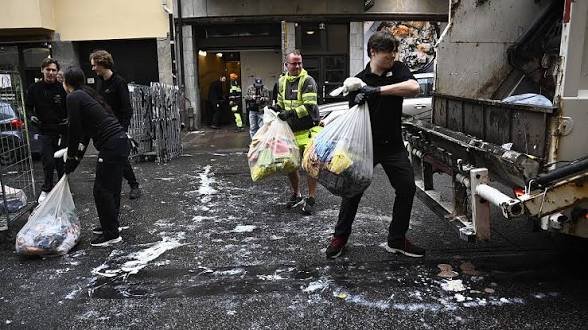
The wave of cyberattacks targeting commercial refrigeration systems across more than 10 European countries continues to unfold, with the full economic impact still under assessment. With temperatures soaring to 50°C (122°F) in several units, massive quantities of food were discarded following the attack recorded overnight between Sunday and Monday.
Thomas Regnier, a spokesperson for the European Commission, stated in a press briefing on November 3 that “these incidents […] show once again how cyberattacks can disrupt essential services and affect citizens’ daily lives,” emphasizing that information-sharing among member states was crucial to respond collectively.
“It is not limited to one member state, but several member states,” he noted.
EU Food and Agriculture Commissioner Christophe Hansen also addressed the attack, which has left more than 300 supermarkets affected across the region. Hansen stated that the incident represents a deliberate attempt to “disrupt our food supply chain”.
Belgium was among the hardest-hit countries. Local news outlet Het Laatste Nieuws revealed that in Flanders, a Delhaize branch in Hoeilaart lost €100,000 worth of produce.
Meanwhile, in Ireland, 13 SuperValu stores were impacted, according to The Irish Independent. Musgrave Group, parent company of SuperValu, confirmed the breach. “The incident is limited to a specific model of refrigeration. Our monitoring systems alerted us to the issue, and we took immediate action,” a company spokesperson affirmed.
In Sweden, the manager of an ICA shop in Sjöbo expressed frustration to the newspaper Aftonbladet over their inability to override temperature settings. “Hot air is blowing into the freezers. Everything is ruined,” he reported.
Italy experienced a similar crisis after around 20 stores nationwide were reported affected. The Italian government held emergency talks with intelligence chiefs to evaluate the fallout from the attack, which left severe losses, including four stores in Sicily.
“We had to throw away everything. The shelves are empty,” Giuseppe Spadaro told Corriere della Sera.
Offering a broader regional assessment, Richard Horne, chief of the UK’s National Cyber Security Centre (NCSC), told the BBC that “there had been a couple of instances where vulnerable technology had been exploited”. Horne underscored the urgency for businesses to ensure that “the technology underpinning a whole range of applications we use and need daily” is properly secured.
Featured image: Gina Beana Fofina via Unsplash+