
The Hungarian Parliament voted on October 13 to roll back key anti-LGBTQ+ legislation that had been introduced under the previous government, led by former Prime Minister Viktor Orbán.
Orbán, a right-wing populist who had styled his regime as an “illiberal democracy,” had been well known for his tough stances against LGBTQ+ issues, with bans on the legal recognition of trangender identities in 2020, as well as pre-existing bans on same-sex marriages and adoptions, and subsequent bans of events such as Pride.
The Child Protection Law introduced by the Orbán government in 2021 further banned the “portrayal or promotion of homosexuality or transgenderism.”
Its stated aim was protecting children and minors from predators and inappropriate content, as well as preventing the “promotion” of homosexuality and transgenderism for under-18s. In practice, this resulted in the banning of a wide range of events or material that appeared to normalise or celebrate LGBTQ+ lifestyles.
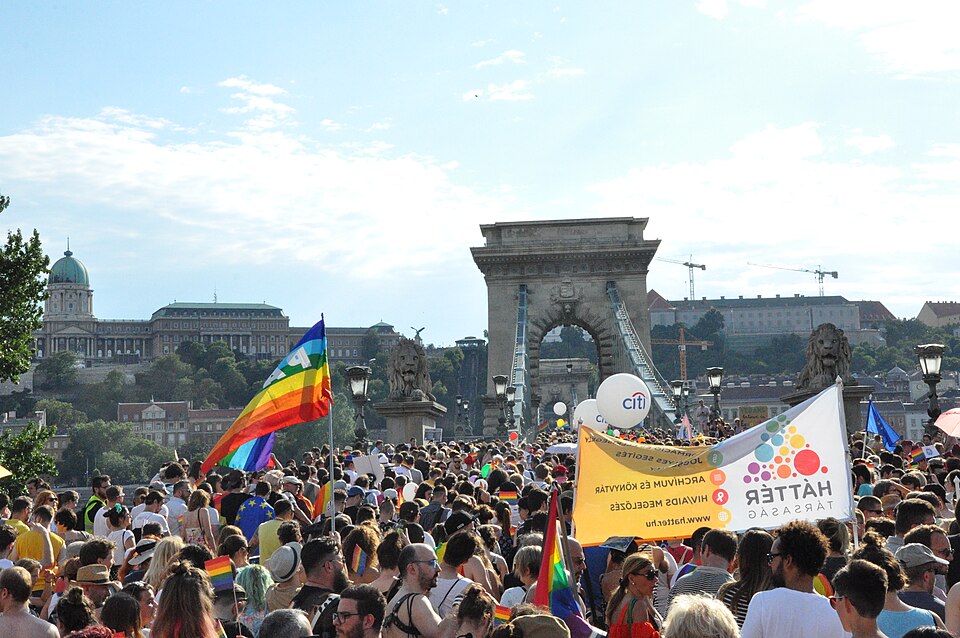
Books simply addressing these topics could only be sold in black plastic packaging with warnings, for example. The law was also used to ban last year’s Pride—though it still saw a record turnout in Budapest in defiance of the ban.
This legislation attracted outrage from the LGBTQ+ community on the grounds, who argued that it was discriminatory and homophobic, and that it conflated LGBTQ+ lifestyles and practices between consenting adults with pedophilia. It also gained widespread international condemnation, with the European Court of Justice ruling in April 2026 that the law violated “the very identity” of the EU.
In the same month, Orbán was defeated in a landslide at the country’s parliamentary elections by the Tisza party’s Péter Magyar. Magyar, himself a former member of Orbán’s Fidesz party who is aligned with the centre-right, had not made LGBTQ+ issues a key part of his election campaign for fear of alienating more right-wing voters, but has since demonstrated a more liberal attitude as he has sought to be more closely aligned with Europe.
This June saw the lifting of the ban on Pride, with tens of thousands turning out to march in Budapest.
The National Assembly has now also voted to amend the current Child Protection Law, removing the ban on portrayals of sex and gender diversity in material accessible for children, and keeping the focus solely on bans of material that could “seriously impair the child’s physical, intellectual, emotional or moral development.”
“Fundamentally, our goal was to move away from a flawed paradigm, linking child protection in any way to sexual orientation or gender identities, and shift to a framework that is truly about children and protecting children,” stated Szilvia Gyurko, a children’s rights activist and the current State Secretary for Children’s Rights and Child Protection.
The amendment was passed with 139 votes in favour and 51 votes against. Fidesz voted against the amendment, accusing the Tisza government of bowing to EU pressure over the bill.
The news has indeed received a positive response from European leaders. EU commissioners Michael McGrath and Hadja Lahbib have issued a joint statement saying they “welcome this important signal of commitment for our common values.”
It has since also been announced that the EU has agreed to release €4.2 billion in funds to Hungary. The money had been frozen in response to the previous Fidesz government’s policies, as well as allegations of corruption and concerns over rule of law.
The announcement came within minutes of the vote, although the EU Commission had already proposed releasing the funds last month, and the decision was awaiting approval by members in the Council of the EU.
Read More: EU set to unfreeze funds to Hungary
Orbán condemned the amendment in a post on social media, where he accused Magyar of putting Hungarian children “at the mercy of the gender lobby to meet Brussels’ demands.”
“The Fidesz–KDNP government introduced Europe’s best child protection law,” he stated. “Tisza is now rewriting this to serve the interests of LGBTQ+ organisations and paedophiles. By bypassing parents, they are allowing gender propaganda back into Hungarian schools and nurseries.”
The disgraced former prime minister added that Tisza’s move is deeply undemocratic, as in the 2022 child protection referendum “3.5 million Hungarians said no to gender propaganda”.
This was echoed by his former political director, Balázs Orbán (no relation), who called the amendment “a betrayal of the people.”
“More Hungarians voted against gender propaganda than have ever voted for any single political party in Hungary—or even for EU accession,” he pointed out. “Yet the Tisza Party is disregarding this democratic mandate because Brussels demanded it. Total capitulation.”
The move has been welcomed by LGBTQ+ groups and their supporters.
Tamás Dombos of the Háttér Society, Hungary’s largest LGBTQ+ civil rights group, stated that “the fact restrictions on access to LGBTQ+ content are being removed is definitely an important and positive step forward.”
However, he has emphasized that “there is still a lot to do,” and that even if the goal of the Tisza government is simply to return to the pre-2020 status quo, “there are still a great many laws that would need to be amended and we don’t know whether the government’s working on that.”
It remains the case that the Hungarian constitution continues to define marriage as being between a man and a woman, something which activists maintain is discriminatory. Bans on same-sex marriage or adoption remain in place for the time being, as does the 2020 ban on legal recognition of transgenderism.
This point was also emphasized by the UK based LGBTQ+ charity Stonewall, which nevertheless stated that last week’s change in the law was “a huge win for LGBTQ+ activists and human rights organisations in Hungary.”
“LGBTQ+ people deserve to live freely and see themselves represented,” they added. “There is still further to go such as the full recognition of same-sex marriage—but this is a positive step in the right direction.”
Featured image: Budapest Pride 2017
Author: Christo
Source: Wikimedia Commons
Creative Commons Licenses