

Ukraine’s new defence minister Yevhenii Khmara has called on European governments to speed up defence funding, asking for part of the €45 billion initially scheduled for 2027.
During an informal meeting in Ireland, which Khmara joined over video call, Dublin raised this proposal alongside the announcement of a new €125 million aid package for Ukraine.
The money potentially being brought forward is part of the Ukrainian Support loan for 2026-27. The original plan was to split €90 billion of funding over two years, but a major defence funding gap alongside intensifying Russian pressure has prompted Ukraine to ask for a larger chunk of the funding this year.
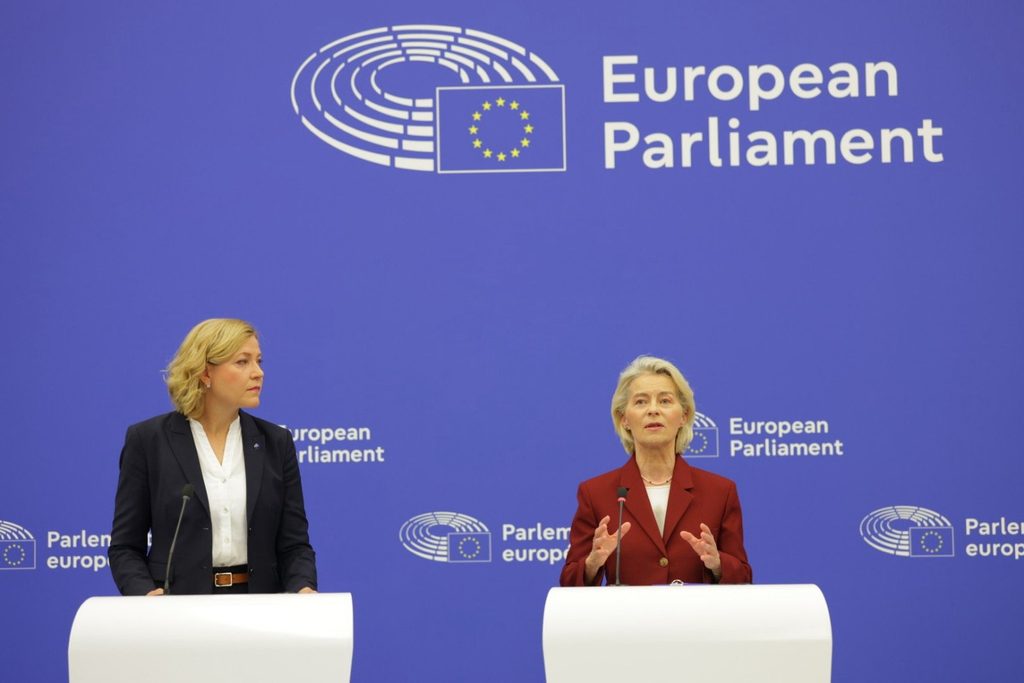
A significant number of EU countries have already backed this proposal according to Ireland’s Defence Minister Helen McEntee, who told a press conference “I do believe that there was a significant number of member states that supported that ask”.
Why Ukraine needs it now
President Volodymyr Zelenskyy has stated that Ukraine is facing a €23.1 billion funding gap, underscoring its need for faster funding from EU allies. Extra funding could cover areas such as personnel and weapons purchases in their fight against Russia’s invasion.
Zelenskyy argued that closing the funding gap was crucial to ensuring Ukraine could “remain competitive with the number of deep strikes” it launches against Russia and “make it painful for them.”
It is not only weapons that Ukraine lacks the finances for, but wider government spending as well. The country is running a deficit of more than $32 billion (€27.6 billion) in 2026, increasing its reliance on international financial support to keep the Ukrainian state functional.
Ukrainian Finance Minister Serhiy Marchenko warned that the country’s budget is in its most difficult position since 2022, the year Russia’s full-scale war began. He directly urged European ministers to think of solutions, asking them to “think outside the box”.
With Ukraine in need of money for both the war effort and wider government spending, Europe now weighs the proposal of bringing forward some of the funding pledged for 2027.
The dilemma for Europe
While the €45 billion is already committed to Ukraine for 2027, bringing it forward means using money intended for later, opening up the possibility of further funding being needed in 2027.
With European governments under pressure to increase their own defence spending, the prospect of going above their €90 billion pledge over the next two years is one that may not appeal to all. European countries are already facing competing demands on their budgets, while governments are being asked to invest more heavily in their own military capabilities.
However, refusing to accelerate the funding could create further uncertainty for Ukraine at a time when European leaders continue to insist they will support Kyiv for as long as necessary. With Ukraine already facing a significant funding shortfall, delays in securing additional financing could make it harder for the government to plan its military spending and maintain its war effort.
The dilemma for European governments is therefore not simply whether to support Ukraine, but how quickly that support should be provided. Bringing forward the money could help address Ukraine’s immediate financial pressures but potentially leave another funding gap further down the line. Refusing to do so could preserve funding for 2027, but risk leaving Kyiv short of money when it needs it most.
What happens next
No final decision has yet been made on whether the EU will bring forward the 2027 funding. A significant number of EU countries have backed accelerating the payments, but any move would require agreement between member states and the European Commission.
The issue is expected to remain part of wider discussions over how Europe can maintain its financial and military support for Ukraine as the war continues; with the funding in place for 2026-27, any decision to accelerate disbursement will have to balance Ukraine’s immediate needs with the bloc’s longer-term financial commitments.
Another option being discussed by European governments is the use of frozen Russian assets to provide further support for Ukraine. The idea has gained renewed attention in recent weeks, although concerns over the legal and financial risks involved mean there is still no agreement on how they could be used.
The immediate question is whether European governments are willing to spend tomorrow’s money today to keep Ukraine financially secure through the war, even if doing so risks creating another funding problem further down the line.
Featured image: Volodymyr Zelenskyy via X.