
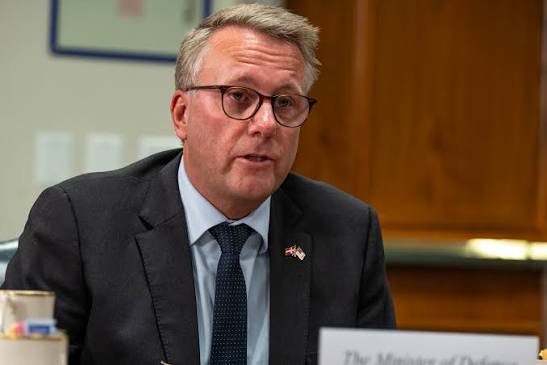
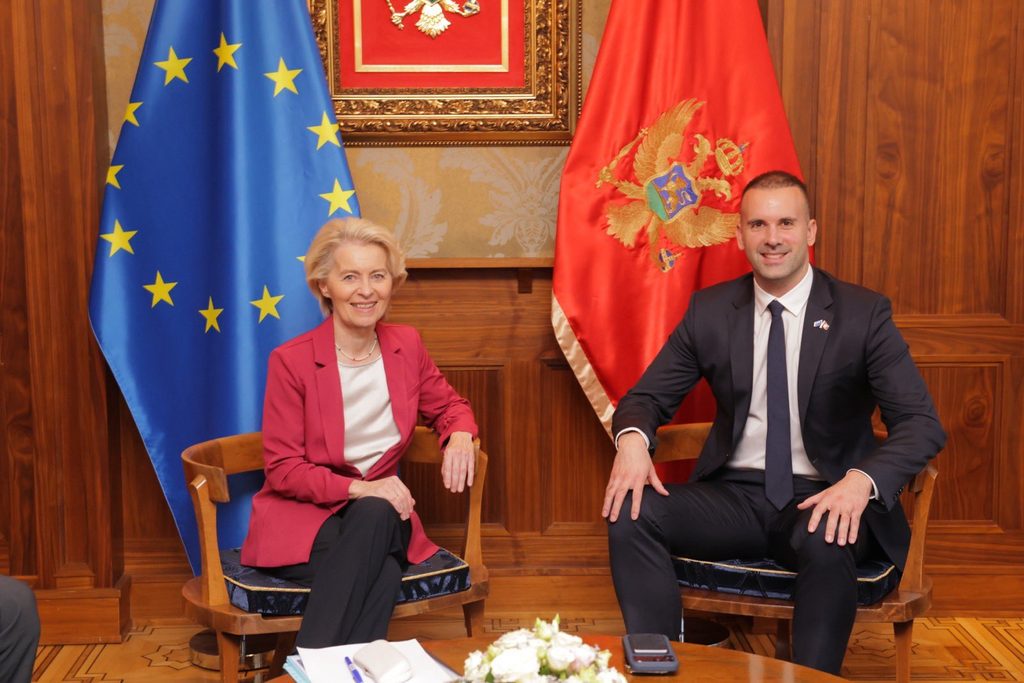
Danish lawmakers have proposed a ban on the Adhan, the Islamic call to prayer issued by Mosques five times a day, according to the country’s new Immigration and Integration Minister Morten Bødskov.
Bødskov was appointed immigration minister in early June as part of the new governing coalition led by Prime Minister Mette Frederiksen and following lengthy negotiations after Denmark’s March snap election.
Read more: Third term for Danish PM after record-breaking negotiations come to an end
An investigation on the ban’s implementation will begin on Wednesday, June 24, according to the immigration minister.
“My position is clear: the call to prayer should not be heard over Danish rooftops,” Bødskov told Danish news agency Ritzau. “It has no place in Denmark, and you shouldn’t be in any doubt whether you’ve ended up in a suburb of Islamabad when you walk around Denmark.”
Bødskov added that Denmark must be protected against the “Islamization that already takes up too much of the public space.”
The wider context
Bødskov’s push for a ban of the Adhan marks the third instance in which the Danish government has looked for such measures, with similar proposals in 2020 and 2025 having been put on hold due to elections.
Various other countries, including the UK and Germany, also place restrictions on the timings and volume of the Adhan in order to minimize disruption for non-Muslim populations.
In November 2025, Rasmus Stoklund, previous immigration minister, wrote to all 98 of Denmark’s municipalities to investigate claims that the level of noise made by the call caused disruption to those living nearby; 78 municipalities responded, though only three – Copenhagen, Brøndby, and Odense – reported complaints.
“Public calls to prayer are not a widespread feature of Danish daily life,” Frederik Weber Henriksen, a researcher with Roskilde University in Denmark, told EU Reports. “This is therefore best understood as symbolic and anticipatory politics: the issue has limited practical reach, but considerable power as a symbol of Islam, public space and national belonging.”
“Since the new four-party government’s programme does not contain a call-to-prayer ban, this looks less like a coalition agreement than a way for the Socialdemokratiet [incumbent Social Democratic Party] to reassure voters that it retains a strict integration policy,” he added.
Bødskov’s proposals have received mixed responses on social media, with critics labelling them as blatant discrimination, racism, and Islamophobia, whilst supporters argue other European nations should do the same.
The Danish model
The proposed ban has also received widespread attention because it was proposed by the ostensibly centre-left government. Frederiksen – leader of the Socialdemokratiet – secured her third term through a coalition between her party, the Social Liberals, the Green Left, and the centrist Moderates.
The comments made by Bødskov, also a member of the Socialdemokratiet, have been widely interpreted as a further example of how the party has recently taken an increasingly hard line on issues around migration and integration, with Denmark now upholding some of the toughest stances on migration in Europe.
Since first being elected in 2019, Frederiksen has been seen as implementing policies traditionally associated with the far-right, including greater emphasis on deterrence and an increase in deportations. Asylum seekers are now granted only temporary leave to remain, reserved for those fleeing countries deemed unsafe – and some countries, like Syria, have been declared safe while still active war zones.
Frederiksen has also pushed for migrant processing hubs in other countries outside of the EU, and has allied with Italy’s right-wing Prime Minister Giorgia Meloni in calling for revisions to the European Convention on Human Rights in order to make deportations swifter.
Her government retained the controversial “ghetto law” – set up in 2018, which allows for forcible evictions and demolitions of areas labelled “parallel societies”, or areas where at least half of residents have a “non-western” background – despite the European Court of Justice finding that such actions could be unlawful under the Union’s race equality directives.
The so-called “Danish model” has been increasingly emulated by other centre-left parties throughout Europe, which have attempted to control migration in the hopes of halting the rise of the far right – the UK’s Labour Party chief among those citing Denmark’s example in recent years.
Meanwhile critics have called the success of the model into question, especially following the results of the most recent election: although the Socialdemokratiet remained the largest single party, they also saw their share of the vote drop to its lowest since 1903, whilst support for the far-right has continued to grow.
The national-conservative Danish People’s Party tripled its vote share in the March 24 snap election, from 2.6% in 2022 to 9.1% in 2026.
“Since the mid-2010s, Socialdemokratiet has combined its traditional welfare-state agenda with a restrictive approach to migration and integration,” Henriksen noted.
“This helped the party compete on political terrain previously dominated by the DPP, but I would be cautious about calling it a durable electoral solution to the radical right.”
The most recent election, the researcher stressed, is instructive, as it indicates that a restrictive mainstream migration policy does not remove the far right’s electoral space in the long term. “It can still claim to be a more authentic or forceful voice on these questions.”
Next steps
Copenhagen already places some restrictions on the Adhan, in accordance with public noise bylaws, and the Danish constitution currently allows for certain exceptions to laws on religious freedoms – as in cases of anti-democratic preaching or funding for banned groups.
The government will however be investigating whether a ban simply on calls to prayer could in fact be legally enforceable, given the country’s constitutional protections for free and public worship.
“A ban explicitly directed at Muslim calls to prayer would probably face serious equality and freedom-of-religion problems,” Henriksen said. “Indeed, the government’s earlier legal assessment concluded that a Muslim-specific ban would conflict with constitutional and Convention protections against discrimination.”
A general and proportionate rule on amplified sound, however, applying equally across all religions, would be more legally defensible, he concluded. But no current government bill following such stipulations exists.
“I would therefore see a nationwide ban as politically possible in the longer term, but neither imminent nor assured.”
Featured image: Morten Bødskov
Source: Wikimedia Commons
Author: U.S. Secretary of Defense
Creative Commons Licenses