
While a March 2026 study found that hospitalization among adolescents with autism increased 74-fold over a 22-year period in Spain, the government pledged €20 million in late 2025 to adapt schools for students with this condition.
Neither the recognition nor the monetary pledge seem to be enough, some parents say, pointing to issues of bureaucracy and social stigma that lead to the alienation and abandonment of their children.
According to the Confederación Autismo España (Autism Confederation of Spain), the average age that children are diagnosed is at five years old, although signs of autism can be spotted from as early as 18 months.
In Spain, many early diagnoses go through the system of Early Assistance, after which families can receive support such as grants for therapies, transport discounts and access to specialised schools.
“It was not easy because the Early Assistance team was reluctant to give him a diagnosis, even though in the case of my son it was a very clear one,” Patricia, mother to an autistic child who spent a year and a half waiting for a diagnosis, told EU Reports. “We had to turn to private clinics as well”, she added.
For some, the waiting period is complicated by the “extremely cold” nature of the bureaucracy. Another mother, Luisa Bonilla, highlighted the need for those working in Early Assistance teams to have a “vocational” desire to work in the field; some of the neurologists who assessed her child, she stressed, showed “zero empathy” even as her daughter cried during the sessions.
Pre-diagnosis, many families also struggle with a lack of resources and knowledge about what they are going through. “We didn’t know how to act,” said Ingrid, whose son was diagnosed with autism at age 6 after pursuing private consultation.
In response to these allegations, the Spanish Ministry for Social Affairs, Consumer Affairs and 2030 Agenda told EU Reports that they “have rolled out a robust agenda to address the inclusion and rights of autistic people and their families”.
“The new process for assessing and diagnosing disabilities considers the realities of neurodivergencies such as autism, and it facilitates the assessment for the administrative category of disability and, as a result, facilitates access to social protection measures,” a Ministry spokesperson added.
“The child is left behind”
Spain’s financial support for children with disabilities or neurodivergence is grant-based, with funding levels tied to the severity of a child’s diagnosis – for autism, this is assessed on a scale of 1 to 3.
Many guardians, however, described insufficient grants which cover five to six months of therapy per year at best. As a result, several parents pay out-of-pocket expenses for therapies – or are forced to choose which ones they can access. “My son goes to two types of therapy, but he should go to three,” said one mother.
Caregivers also usually cut down on their working hours – or stop working entirely – to care for their children, which can exacerbate economic pressures.
“Current support are temporary fixes that don’t cover the day-to-day, often forcing many families to spend money on resources that the State should guarantee,” said another parent.
Patricia also explained that the current lack of resources and support is unsustainable: “We are moving towards a situation where we either implement more resources, implement more measures now at the structural level, or we are heading towards social collapse.”
Regardless, the Ministry claimed that the Autism Action Plan specifically includes contributions to inclusive, high-quality education and employment for people on the autism spectrum, and has pledged €40 million to its implementation – €20 million of which are directed towards ensuring the rights of education and early assistance.
“The lived realities of autistic people appear specifically in the Employment Act with regards to their inclusion in active employment policies, as well as the Spanish Government’s increase for the funding of dependency care and the extension of the CUME benefit for dependent children up to 26 years of age,” the spokesperson continued.
The CUME benefit is a subsidy for caregivers of seriously ill minors, covering their full salary loss when they reduce working hours by 50% or more to provide care.
The educational layer
Educational support for autistic students varies on a case-by-case basis. Support can include individualized education plans, specialized attention within a mainstream classroom, access to specialized schools, and autism-specific classrooms – known as aulas TEA. But families point to a prevalence of bullying, with cases of children being ridiculed by classmates as well as excluded from institutions altogether.
“At an educational level, they are being totally abandoned,” said Patricia. “This gives rise to there being situations of bullying, of children that are abandoned, where they even spend all day sat on a chair facing the wall. It’s horrible.”
And, for those who receive specialized plans, difficulties in implementation could be a more taxing process than the diagnosis itself. One mother of two autistic children said the fight for these plans has been more laborious than anything else, to the point that the education plan is equivalent to “a dead letter.”
“I even regret having shared the diagnoses in their school because it has done them more harm,” she added. Her eldest daughter was not accepted to sit the International Baccalaureate (IB) program, a decision she attributed to the child being on the spectrum.
The lack of funding also extends to specialized education centers. They are “absolutely saturated” with demand, and don’t have sufficient resources and teachers to look after all the children who need their services, one mother said.
An estimated 484 specialised education centres have been established for the 2025-2026 school year, with more than half being private or semi-private institutions – although public specialized centers are responsible for more than 60% of students with special needs.
What’s more: approximately 85% of autistic children are in mainstream classrooms, according to data from 2023-4.
The lack of funding for accessible education is a key concern for many. One mother highlighted the transformative effect that seemingly small investments – including pictograms and ink – can have.
“[It] is not just a minor detail; it is deprivation of their communication system. Without these resources, the child is left isolated and without the tools to understand their environment,” she stressed.
Anywhere between 25% and 30% of autistic people are estimated to be non-verbal or have limited speaking, for which they pursue communication strategies including writing, images, or assistive technology.
The Ministry highlighted the Queen Letizia Study Grant Programme in its response to EU Reports, which has a budget of over €5 million and “acts as a social ladder so that people with disabilities can receive the necessary economic support to carry out their educational and training development.”
Government support and understanding
The perception among families is that the government has abandoned or ignored them. Many, in fact, attribute this apathy to a difficulty by lawmakers in understanding their lived experience.
“The government doesn’t care about [our situation]; they don’t care because they don’t know what a life like this is like,” Ingrid argued.
Some even suggested that the government is neglecting its duty to care for disabled children: “The government isn’t doing us a favour, but rather they should be complying with the Convention on the Rights of People with Disabilities,” said one parent.
Patricia did point to a clear shift in attitude towards neurodivergence since the conservative Partido Popular (PP) was replaced by the current left-wing PSOE government in 2018, but argued that support “continues to be insufficient” and that policy “always follows behind social change.”
In response, the Ministry highlighted that Spain is the only country in the EU which has an Autism Centre, a specialist public body dedicated to research, innovation and public awareness about the lived experiences of people with autism.
The Spanish Center on Autism Spectrum Disorder, self-described as a pioneering European initiative promoted by public administration, is not the only EU country with such an institution; in France, the Centres Ressources Autisme (CRA) are state-mandated medico-social structures stipulated by law to serve autistic people, their families, health and educational professionals, and public bodies.
Barriers to social inclusion
Beyond bureaucratic frustrations, many families point to the pervasive social stigma surrounding autism in Spain – and the difficulty it poses for the social integration of people on the autism spectrum.
“Both the government and society at large are quick to boast that we are inclusive, that our schools are inclusive… but that is not the case,” said one mother, whose autistic child was bullied by classmates.
In fact, many guardians requested anonymity due to concerns about the impact their statements would have on their and their children’s lives.
Several were also blunt about the nature of autism as an invisible disability, which often means their children are judged for their behavior – leading to social exclusion.
“We need more empathy and more humanity so that people understand, for example, that if I go to the supermarket and my child has a meltdown, people don’t think he is spoiled or disobedient,” Ingrid stressed.
Prejudice from strangers can lead families to isolate themselves. Bonilla, for example, highlighted how the stares and judgement from strangers – especially in small communities – can lead families with disabled children to “stop going to parks, stop walking down the street, and you end up stuck in your house, locked in.”
Across the country, these families are united in their call for more support, resources and empathy year round. “The value of a child doesn’t depend on their productivity or abilities, but on their existence,” said one parent.
“We are tired of measures that are simple patches and tired of seeing how political interest seems to be limited to one day a year for the World Autism Awareness Day,” she continued. “We need for this intention to become real resources, administrative flexibility and empathy every day of the year.”
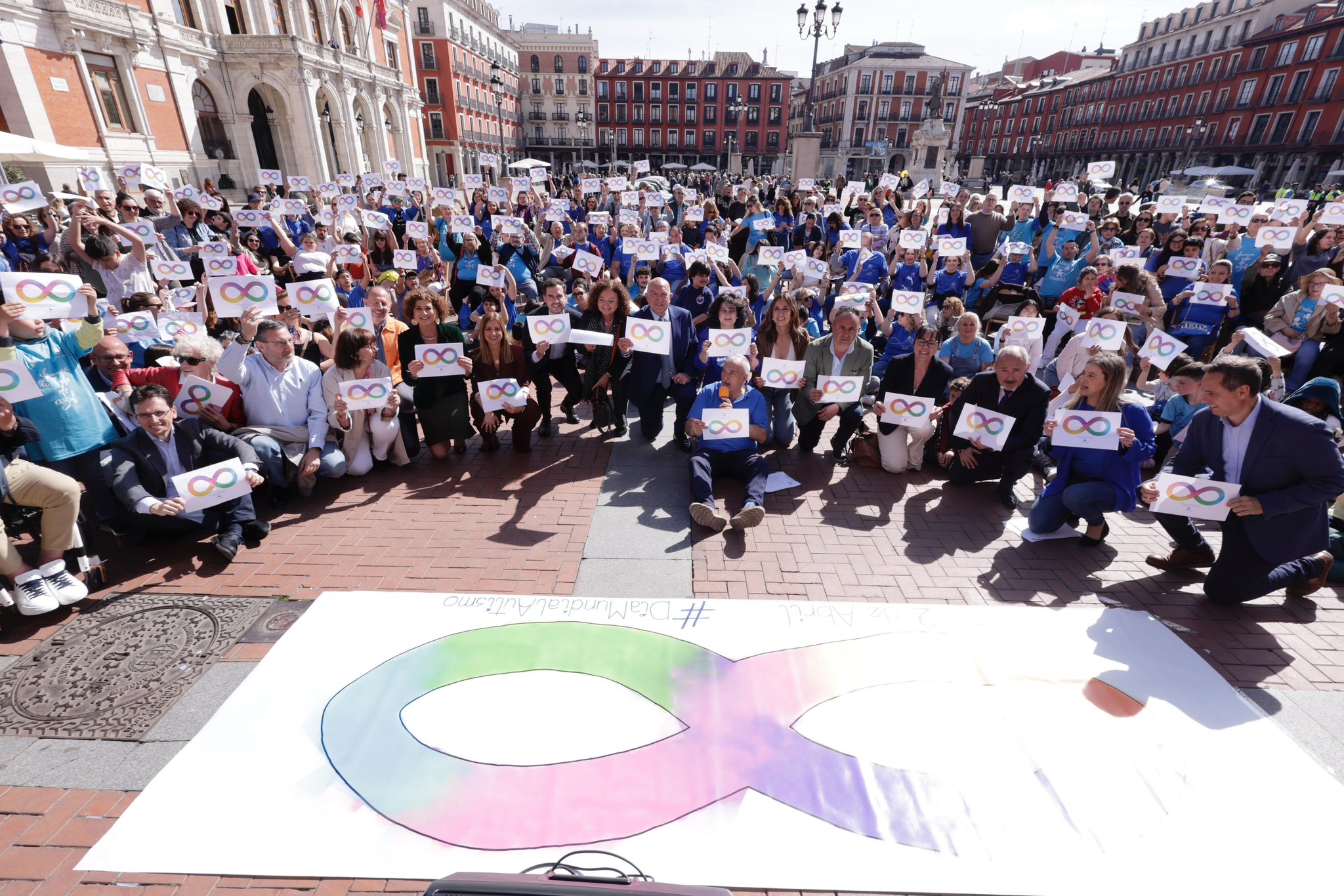
Featured image: Local government celebration of World Autism Day, April 2, 2026 in Valladolid, Spain
Source: Ayuntamiento de Valladolid via X.