
As Russia’s war in Ukraine enters its fourth year and U.S. President Donald Trump questions the country’s commitment to NATO, Europe is under mounting pressure to rearm.
Defence budgets across the region have surged, with EU spending rising from €218 billion in 2021 to €381 billion in 2025 – and the ReArm Europe plan targeting €800 billion more.
Yet as governments race to rebuild their militaries, the question emerges: who pays, and what gets cut?
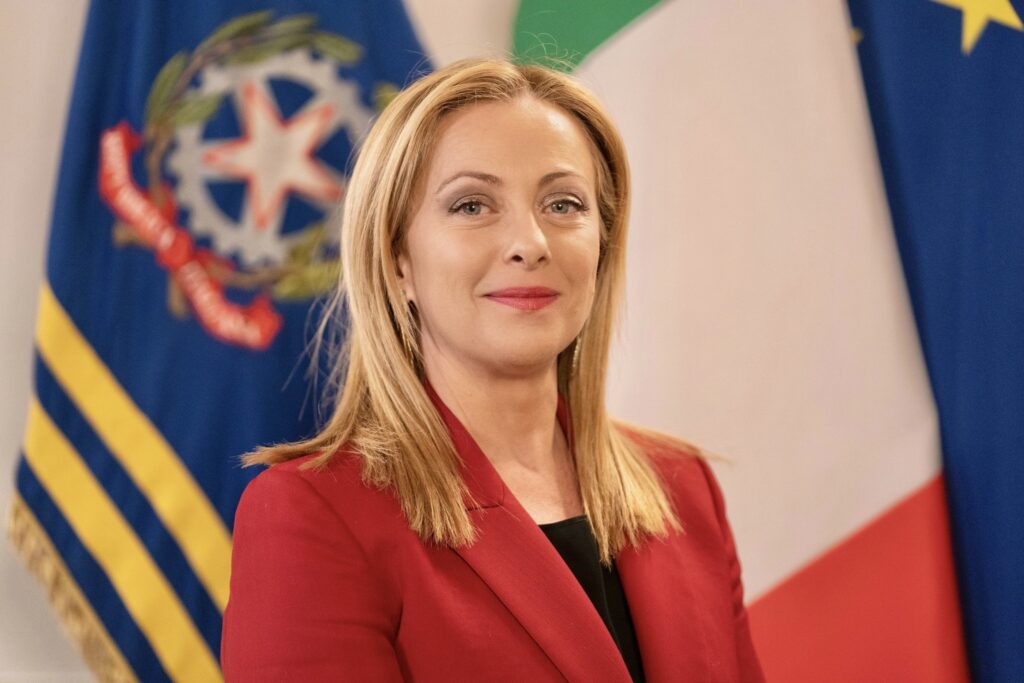
In late May, Italian Prime Minister Giorgia Meloni stepped back from a Security Action for Europe (SAFE) plan designed to loan EU member states large sums of financial resources with the purpose of strengthening their defences.
And, while Italy had reserved €14.9 billion under this scheme, Rome now intends to take €4-5 billion to cover the contracts which have already been signed.
Meloni explained her reasoning by emphasising her concern over national priorities and the effect it may have on citizens:
“We cannot tell citizens that there is money only for defence. If in the face of crises, we are unable to give answers to citizens and businesses, we risk there being nothing left to defend in this country.”
This launched a disagreement with Defence Minister Guido Crosetto, a staunch advocate of Italy’s defensive spending. Despite Crosetto publicly denying any reports of tension with the prime minister, local reporters recounted “shouts and slammed doors” during a recent cabinet meeting.
Meloni’s hesitation to pledge resources to defence reflects the concerns of many citizens, with this argument serving as a microcosm for the wider debate taking place across the EU: can voters be asked to support the prioritisation of defence over issues such as rising energy costs and severe cost-of-living crises?
The scale of the boom
Research shows a monumental increase in defence spending over the past few years: global defence spending reached $2.63 trillion USD in 2025 – up from $2.48 trillion in 2024 – with Germany committing over €117 billion in 2026 alone. This change is even more stark when focusing on EU member states.
“Military spending of EU member states increased by 19% since 2024, up to $461 billion in 2025. This is the highest year-on-year increase recorded,” Jade Guiberteau Ricard, research assistant at the Stockholm International Peace Research Institute, told EU Reports.
The single-year increase Ricard highlights brings the total military spending to more than the entire annual GDP or Portugal.
Eastern nations have been especially forced to invest heavily in their defence, with Poland’s spending reaching nearly 5% of their total GDP – the highest in NATO – as a direct result of Kremlin threats.
The war in Ukraine, Ricard further argued, seems to have durably changed the trend of military spending in Europe.
The economic trade-off
Beyond Italy and Poland, governments are being asked to spend more on their militaries while cost of living pressures remain acute. Some argue that essential welfare state funds have been redirected away from priorities like healthcare and housing in order for governments to afford flourishing defence sectors.
Dr. David Ellison, strategic analyst at The Hague Centre for Strategic Studies, spoke to EU Reports about the potential consequences of heavily increasing investment into defence:
“Defence spending is generally associated with increases in income inequality and reduced economic growth due to the generally unproductive returns on defence investments for the rest of the economy,” he said.
This relationship between economic growth and defence spending has been consistently proven throughout the last century. A 2023 study by economist Luqman Saeed compiled data from 133 countries during the 1960-2012 period, and found that an increase in military expenditure of even one percentage point reduces economic growth by 1.10 percentage points.
And the trend holds true today, too. European nations such as France and Britain announced sacrifices to their social spending in order to prepare for further Russian aggression last year.
For Paris specifically, the LPM set military spending at €53.7 billion in 2026 and €56.9 billion in 2027 – double the level when President Emmanuel Macron took office in 2017.
Deeper consequences
Meloni’s dilemma is, ultimately, Europe’s dilemma too. While the political will to rearm is prevalent, public appetite for it may not be, and the June 2026 EU economic relaunch deadline makes this tension more immediate than ever.
“The severe cuts needed to fund defence could lead to greater political instability and fracturing within Europe, as anti-democratic parties look to exploit disaffected voters,” Ellison said of the potential consequences of defence prioritisation.
The pattern reveals an often-ignored danger of alienating voter bases: by cutting social spending, avenues may open up for far-right parties to take advantage of political uncertainty.
Foreign dangers that the EU is seemingly preparing for may just lead to domestic dangers intensifying.
Featured image: via Friends of Europe
Author: rawpixel.com
Creative Commons Licenses