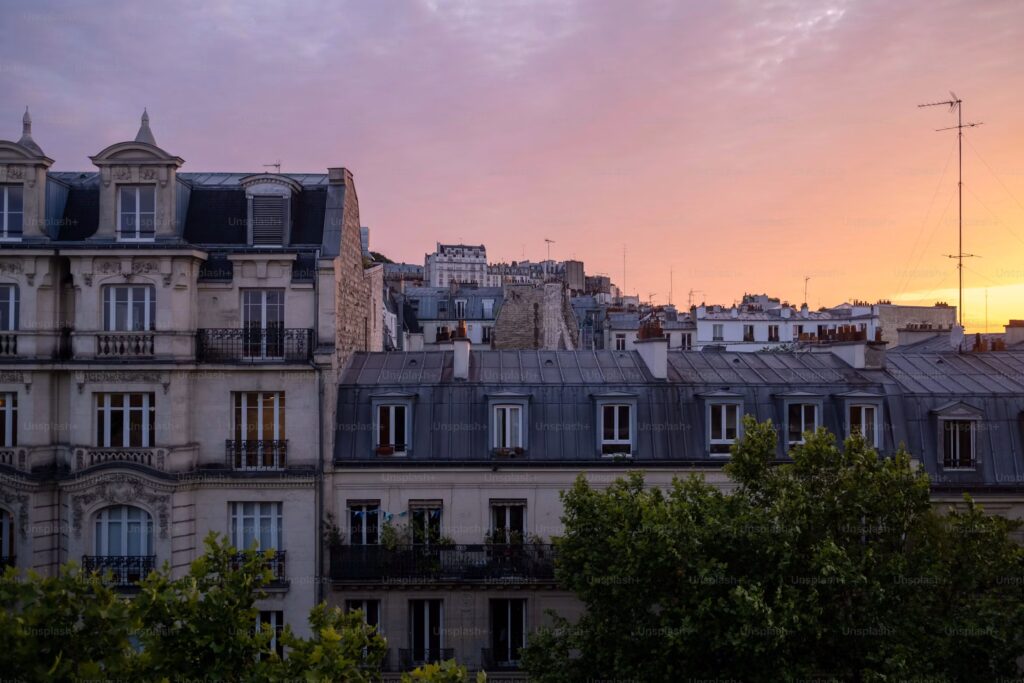

Paris, France — France experienced its hottest day in history on Wednesday, June 24, 2026. According to the national temperature indicator, 30 different meteorological stations around the country recorded 30°C.
French capital Paris hit 40°C, breaking the record set only a day before when, on Tuesday, temperatures exceeded the peaks seen during the heatwaves of July 2019 and August 2023.
Ahead of the 2027 presidential campaign, politicians have seized the heatwave as an opportunity to win over voters and voice their disapproval of President Emmanuel Macron’s strategy.
On the right, Rassemblement National (RN) party leader Jordan Bardella advocated for a major air conditioning plan. First announced a year ago on X, RN – formerly led by Marine Le Pen – has not yet published any budgetary details of the proposal, with the exception that all renovations would be part of the party’s subsidy program 100% rénov.
Valued at €20 billion from now until 2030, the program is an interest-free loan scheme destined for energy-saving renovations and air-conditioning installment.
Air conditioning is expensive, however, because of its usage – not its installment. Depending on devices’ electricity consumption, some air conditioners can add up to €3 a day to energy bills – a steep price to pay following spikes in energy bills due to the war in Iran.
Meanwhile, Prime Minister Sebastien Lecornu from Macron’s Renaissance party unveiled the government’s plan for greater mobilisation of first responders.
Under the Organization of the Health System’s Response to Public Health Emergencies (ORSAN), Lecornu announced phase three of the emergency plan first published in 2024, which seeks greater mobilisation of the medical workforce, coordination of regional healthcare services, and prioritization of hospital patients with heatwave-related conditions.
But, with the healthcare infrastructure already severely overwhelmed, coupled with poor working conditions and upcoming strikes, sustainability questions about the government’s plan of action have emerged.
On the left, Jean-Luc Melanchon’s La France Insoumise (LFI) party have backtracked on their initial rejection of air conditioning as a viable solution. Along with installment of air conditioning in hospitals, nursing homes and schools, LFI now proposes the installment of air circulators, fans, and reflective insulation, as well as air conditioning when absolutely necessary.
“We’re paying the price for the Macronists’ negligence,” Parliamentary Deputy Gabriel Amard told Le Monde. “Since they’ve done nothing, we have to take a short-term approach, because we need to protect the elderly and our children. We’re not irresponsible.”
The Ecologistes party, headed by Marine Tondelier, suggests creating heatwave vacation days. Imported by Spanish measures implemented following the 2024 Valencia floods and supported by LFI, the scheme would allow employees to take time off without loss of pay when extreme weather conditions prevent them from working or from arranging childcare.
Tondelier’s plan in fact considers the heatwave not only as a public health issue, but as a necessary clause to workers rights.
Amidst the differing political strategies to harness voters and assuage concerns, what remains is the science: as temperatures increase and heatwaves last longer, the effects on the human body are clear.
From headaches, cramps, and dehydration to fainting and even fatal heatstrokes, health consequences vary. And while heatwave-related deaths seem to represent isolated cases, the effects are wide-reaching.
A May 2026 study, for one, found heatwaves will result in a 7% economic loss of France’s GDP through 2030 due to productivity loss in sectors including construction, agriculture, road maintenance and landscaping.
In its complexity, then, the heatwave can only be understood as a social phenomenon disguised as an extreme weather event.
Featured image: Getty Images via Unsplash+