
Spaniards will head to the polls for their general election on Sunday November 29, with polls predicting a win for the centre-right Partido Popular (PP) as incumbent President Pedro Sánchez of the leftist PSOE rallies his supporters.
Over 38 million people are eligible to vote, and polls published by El País, one of Spain’s biggest newspapers, predict a win for the PP, led by Alberto Núñez Feijóo.
Many still plan to vote for Sánchez, while Vox, led by Santiago Abascal and widely considered Spain’s far-right party, is also expected to draw many votes this weekend.
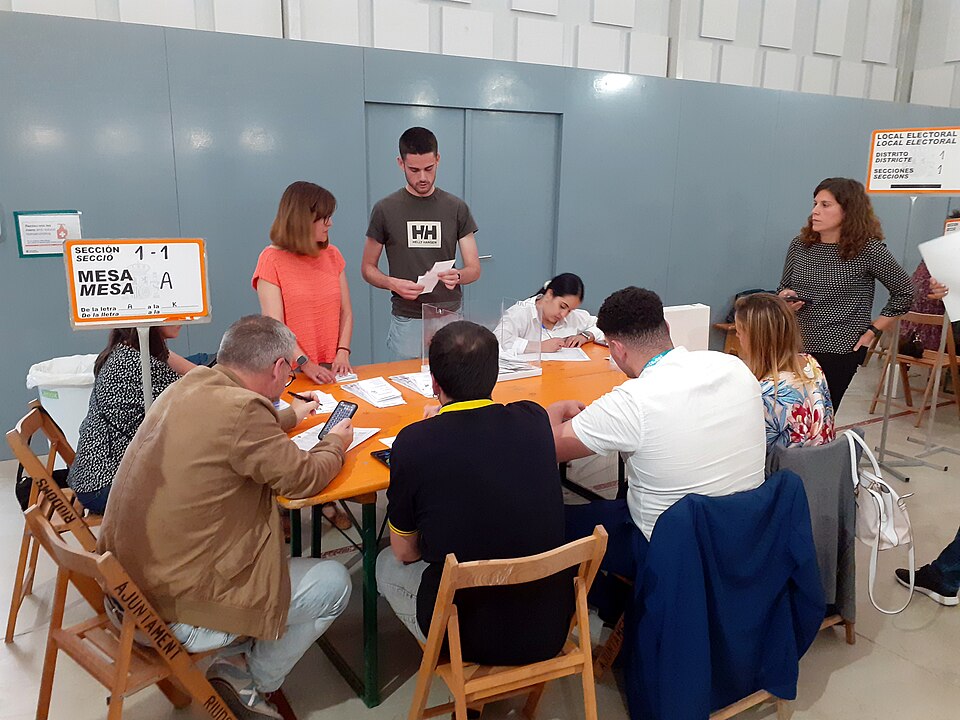
Voting will commence at 9 am and close at 8 pm, although anybody still in line by then will be allowed to vote. Election results are expected to come out on Sunday evening, though counting may continue until Monday, November 30. Spanish citizens living outside of Spain will also be voting.
The PP’s electoral tagline is “El cambio necesario” (The necessary change) and this is especially relevant following the series of protests and strikes which have followed the eviction of Maricarmen from her apartment in Madrid, including the general strike on November 11.
Jesus Vega Martinez, who goes under the username jay_ve_ and describes himself as a political analyst in his Instagram bio, is amongst those planning to vote for the PP. He has a large following of 251 thousand followers on Instagram, and he recently posted a video talking about why Alberto Núñez Feijóo convinced him to vote for the party.
In his video, Vega Martines mentions that some people call Núñez Feijóo a leader without charisma. However, he refers to the PP’s leader as somebody who engages with something called ‘multiplier leadership’.
“He identifies what each member of his team excels at and then places him exactly where they perform best,” he elaborated.
Vega Martines continued, expressing his belief that Núñez Feijóo “enhances talent.”
“Because in the end what characterises a good leader from somebody who is not, is their ability to shine on their own, but rather their ability to make the entire group shine at the same time.”
Notable controversy circulated around Núñez Feijóo after his appearance on YouTuber Jordi Wild’s podcast, where he said that he does not speak English, nor has he ever made an effort to learn it.
“I don’t know English but I know how to govern,” he said.
This was later brought up by Sánchez in a campaign rally, where he mocked what he labelled as Feijóo’s lack of effort.
Thousands of PSOE voters attended Sánchez’s political rally on November 24, in Barcelona, where he was joined by other political figures like Mayor Jaume Collboni and Jordi Hereu, the Spanish Minister of Tourism and Industry. Red T-shirts with slogans in support of PSOE were plentiful, and alongside those who attended the rally were PSOE supporters standing outside, watching a large screen projecting the rally.
During the rally, both the recent Brazilian and U.S. elections were referenced, and actress Loles León was also present and seen interacting with a large Brazilian flag as she walked up to give her speech.
However, not everybody is happy with Sánchez’s governance of Spain. Opposite the PSOE rally, in the Plaza d’Espanya, was a group of firefighters protesting for their work rights. “Firefighters demand compliance with labour agreements” read one of their signs. Their coordinated horn-honking could be heard over the PSOE’s speeches on the projector.
Isiais Fanlo, associate professor of modern Iberian literary and cultural studies at the University of Cambridge, is from Lleida, Spain, but currently resides in England. He spoke to EU Reports about Sunday’s election.
“I think the outcome might be more uncertain than what we might expect. Even if the last events in the country, from the horrific train crash to the general strike protesting for the outrageous housing prices, seem to suggest that the Socialist Party will struggle, Pedro Sánchez has proven to be an extraordinary survivor.”
Fanlo elaborated on his support for the incumbent president, saying “time and again he’s managed to overcome challenge after challenge, and I feel he’s done an excellent job in the debates. When it comes to preparation, to self-fashioning, no one looks more presidential than him.”
Fanlo also discussed Vox, and his worries regarding this party. “For those of us who believe in progressive values, the possibility of a right-wing coalition including the far-right party Vox is, frankly, scary. They have been quite verbal against basic rights such as those affecting refugees or the LGBTQ+ community. Their populist rhetoric seems to be attractive to many.”
Like the speakers at the PSOE rally, he concluded by comparing these elections to other recent elections across the globe:
“But these last months, Hungary, Brazil, even the USA, have given us hope. I’m not entirely optimistic, but we shall see what happens. In any case, people need to vote.”
Vox, meanwhile, has been rallying its own supporters. On November 13, Vox’s electoral campaign held a rally in Madrid’s Plaza de Colón, led by Abascal.
The far-right party held a localised rally on Wednesday 25 in Barcelona’s Hospitalet de Llobregat, with speakers including Joan Garriga, the Vox spokesperson in Catalonia’s government, and Carina Mejías Sánchez, a member of the Congress of Deputies for Vox.
Victor Moreno, a computer technician who was at the rally, spoke to EU Reports.
“We have to control immigration”, he said, elaborating that he believes that at the moment, Spain is seeing “the collapse of schools and the medical system.”
Moreno, who was handing out leaflets at the rally, said that he has been a Vox supporter for four years, and that before, he supported Ciudadanos, “a centrist party”.
He cited other reasons for voting for Vox as saving “our culture and resources”, “safety”, “the planet”, “education”, and “illegal immigration”. Asked if he believes that immigration should be fully stopped, he said: “We are in 2026; we cannot.”
Alba Virseda, who lives in Valencia, also plans to vote for Vox this Sunday. “I want change in Spain. I am worried about safety, the economy, jobs, and the current political situation. I want to listen to clear proposals and to see which party best defends the things I consider to be important.”
She continued, “I don’t want to vote just to vote, but rather because I identify with their ideas.”
Virseda echoed similar thoughts to Moreno regarding immigration policy.
“And as for immigrants, according to Vox, they are going to enforce stricter border control and deportations in certain cases,” she told EU Reports.
Some fear that Vox holds similar ideals to the Francoist dictatorship, which ended with Francisco Franco’s death in 1975. A teacher from Barcelona, who wished to remain anonymous, made these parallels and told EU Reports that she is “sad that it’s a real possibility that Vox could get in.”
Although she comes from a family that has historically supported PSOE, she believes that no Spanish political party fully represents her. She will still vote this Sunday in Barcelona, alongside her mother and uncle, adding that “our dog will come along too”.
She spoke about her family’s history during the dictatorship, clarifying that many were Republicans, some of whom were exiled to France during Franco’s reign. “My grandfather never returned to Spain and was known for his saying ‘Spain wasn’t big enough for me and Franco.'”
“My family often discusses Spanish politics, especially since my grandad’s saying has become a family joke, but I worry that not everybody in Spain has had the same education.”
Speaking only with reference to the Catalan education system, she elaborated:
“We don’t teach about it as much as we should”, explaining that although the Spanish Civil War is part of the legal curriculum, different schools do so to varying extents. “Depending on their point of view, they will speak about it more or less,” she shared.
Having studied law, she also added that the Spanish constitution still contains traces of Franco’s time, and pointed out that just last November 2025, Spain recognised Franco’s 50th anniversary, emphasising that it was not a mark of the transition for all, and that rather, “some people used this period to really celebrate Franco.”
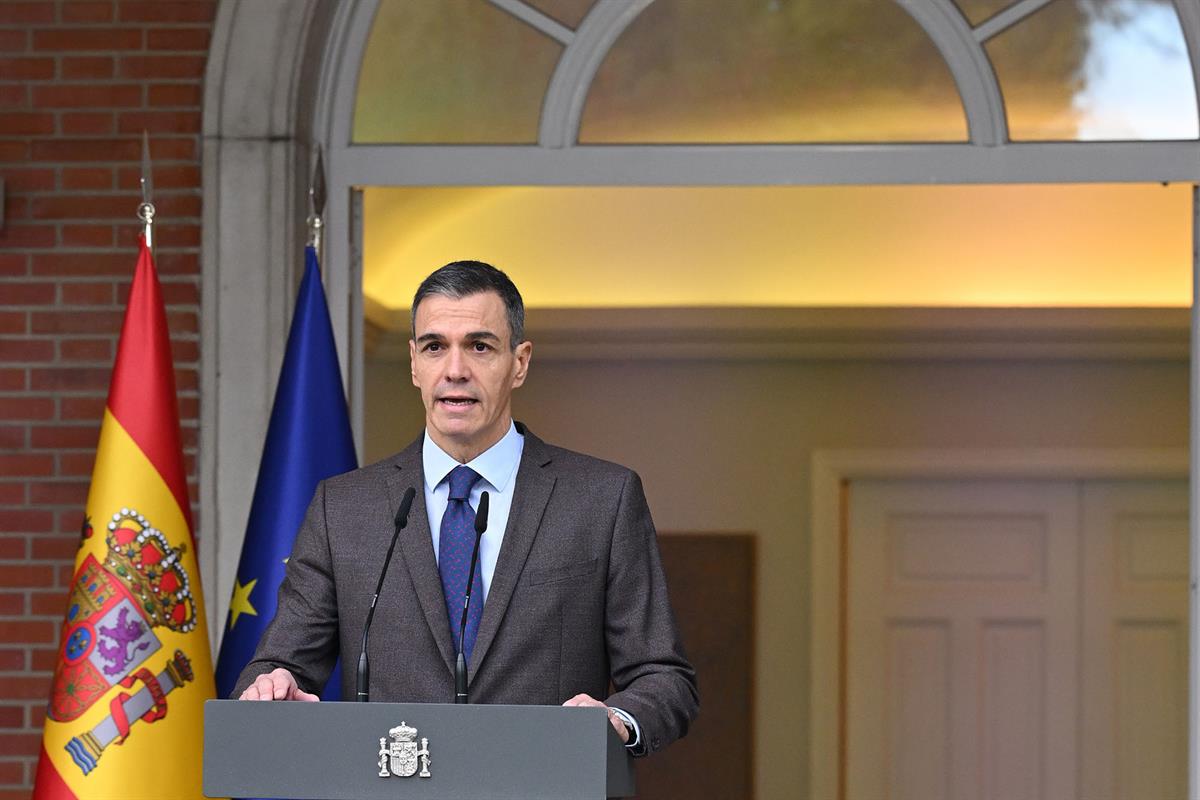
Featured image: Pool Moncloa/Borja Puig de la Bellacasa. La Moncloa, Madrid – 4.11.2026
Via La Moncloa