
The EU Commission proposed releasing €4.2 billion worth of funds towards Hungary on September 23, 2026, after these had been frozen in response to charges of corruption against former Prime Minister Viktor Orbán.
The funds amounted to more than half of the EU’s payments towards Hungary as part of its cohesion funding – an EU program supporting economic and social reforms in lower-income member nations, of which Hungary had been one of the major recipients alongside Poland, Italy, and Romania.
This funding had been put on hold for Hungary since 2022 due to concerns over corruption and rule of law violations under Orbán, which resulted in the worsening of the country’s cost of living crisis.
The reinstatement of the funds proved to be a crucial issue at the country’s parliamentary elections on April 12, following which Orbán’s chief rival Péter Magyar won a decisive victory.
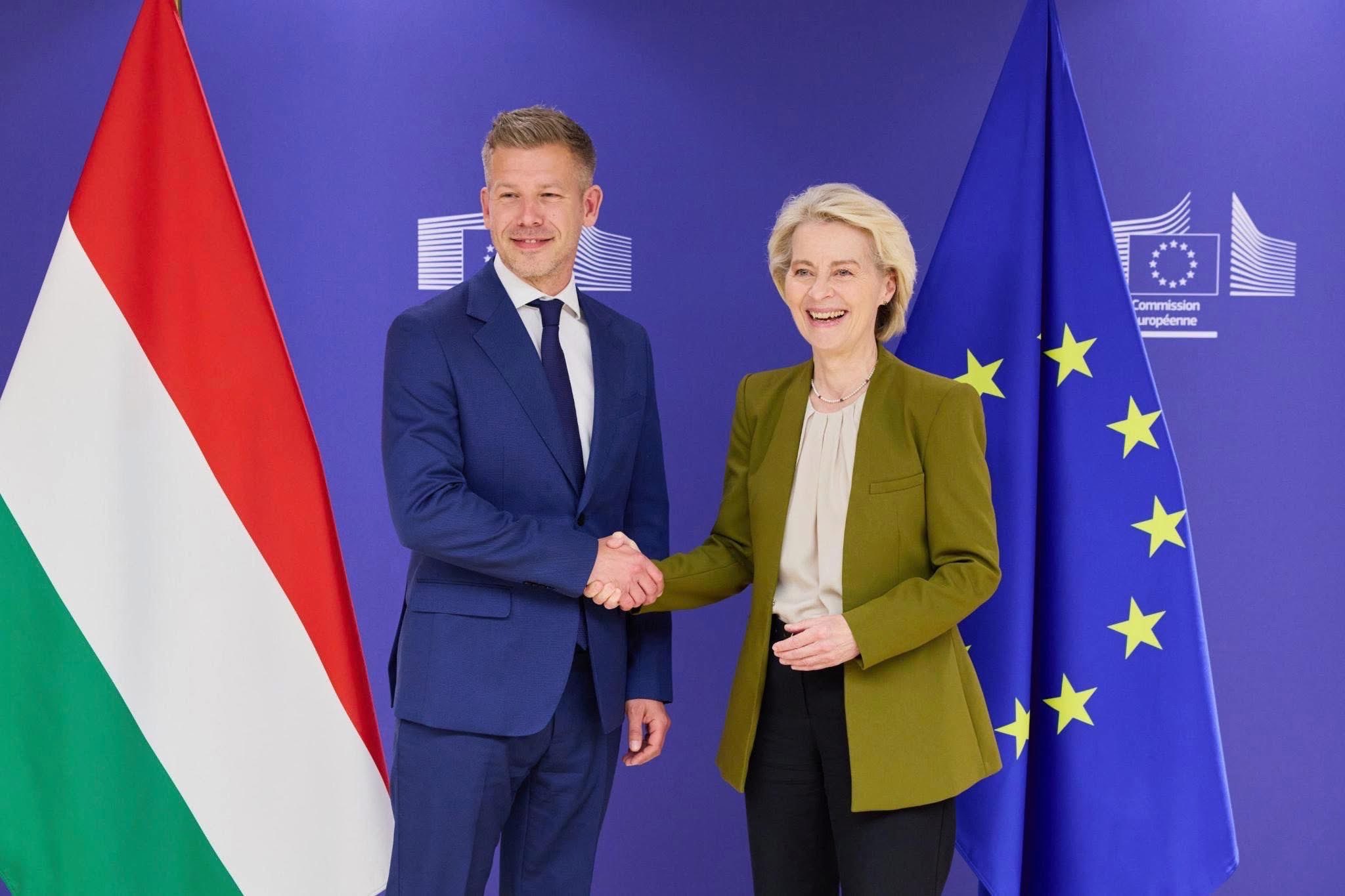
Having campaigned on this pledge, securing the unfreezing of funds towards Hungary had been a key goal of Magyar’s from the start, with a trip to Brussels to discuss this having been amongst his first steps as Prime Minister.
The EU had made clear that the unlocking of the funds was dependent on Hungary taking steps to tackle the corruption seen under Orbán, as well as to restore media and academic freedoms.
The Magyar government has been active in attempting to dismantle the Orbán regime and end charges of corruption, with his government having since moved to boost judicial independence, dissolve politicized bodies overseeing universities and other research foundations, improve transparency regarding public procurements, and increase the monitoring of how EU funds are spent.
Today, European Commission President Ursula von der Leyen confirmed that the Commission has now proposed releasing these funds, stating on X: “Hungary has taken important steps to strengthen the rule of law and protect the Union’s financial interests. And reforms deliver results.”
Alongside the funding, von der Leyen confirmed that the Commission is also seeking to reopen its educational funding programme Erasmus+ and its research and innovation funding programme Horizon Europe to Hungarian students and researchers.
“I am very glad that they will once again fully benefit from the opportunities our Union creates,” she added.
This funding will now be redirected back to Hungary following approval by member states of the European Council, which will vote on this within a month.
A further €2 billion in cohesion funding will remain frozen pending action on Hungary’s asylum system, child protection laws, and academic freedoms, but Magyar has said he intends to tackle these issues by the end of 2026.
Hungary is also still seeking to access an additional €10 billion in recovery funds.
Opposition politicians have been quick to welcome the unfreezing of the funds, but have maintained that it was money Hungarians had been entitled to from the start, denying that there had ever been an issue with corruption under the previous government.
Balázs Orbán, Viktor Orbán’s former political director, has described the EU’s actions as “political blackmail”, stating that the price for such funding was “constant purge against Hungarian politicians, conservative institutes had to be crushed, and gender ideology had to be let back into schools.”
He went on to add that von der Leyen’s leadership of the European Commission had been “outrageous”, and that “the whole world is watching in horror at what they are doing to Europe.
“Arbitrary rule and repression are growing, and we are being dragged ever deeper into war, meanwhile the economic situation is getting worse and worse,” he concluded on X.
Featured image: Péter Magyar via X