
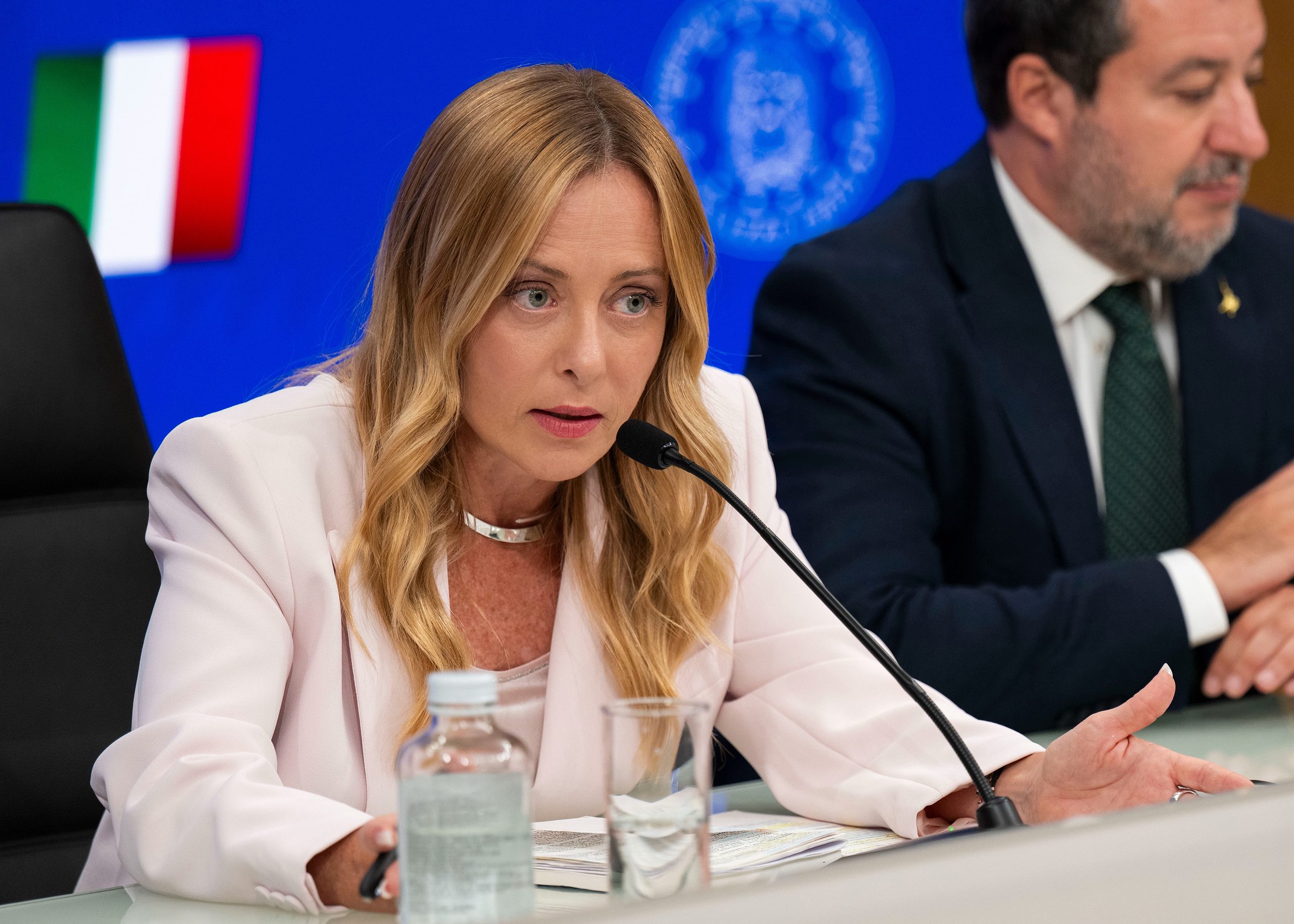
Italian Prime Minister Georgia Meloni confirmed on September 24, 2026 that her Council of Ministers have approved plans to ban the wearing of burqas and niqabs in Italian schools.
These face and body veils form a key part of religious clothing for many Muslims, but have been controversial in numerous European countries, with France, Belgium, and Denmark amongst the nations to have previously imposed nationwide bans. Portugal has also imposed a ban on face coverings in public spaces earlier this week.
Meloni announced the policy on Sunday, September 20, when speaking at a rally organised by Gioventù Nazionale, the youth wing of her right-wing populist Brothers of Italy (FdI) party.
She further stated that parents of foreign pupils will be required to learn Italian, and that there will be greater limits on the numbers of school places available for foreign pupils. She confirmed today that, going forward, there would be “a limit of 30% in classrooms for students who do not adequately know Italian.”
“It is unacceptable that in an Italian classroom the children who end up feeling pushed into a corner are Italian children because they have become the minority,” she stated. “That cannot be allowed. Calling all this integration is yet another lie, a convenient lie for those who live off ideology.”
The prime minister added that anyone who wishes to migrate to Italy “to build their future here” must learn Italian, understand the culture, and respect the country’s rules.
With elections coming up next year, Meloni has also been under pressure from the right, with Futuro Nazionale (FN), a party founded by far-right MEP Roberto Vannacci, calling for even tougher policies on migration and integration. FN had called for a ban on the wearing of burqas in schools back in July.
Whilst her FdI party has its roots in the far-right, Meloni has, since assuming power in 2022, aimed to present herself as more moderate. Critics allege that today’s burqa and niqab ban will also function to toughen her appearance ahead of the elections.
Though face coverings without a valid reason have been outlawed in Italy since the 1970s, a court ruling in 2008 had clarified that this was permitted for religious or cultural reasons.
Education Minister Giuseppe Valditara has backed the move by Meloni, arguing that veils are harmful for gender equality.
Opposition parties, however, have been quick to condemn the action as playing with identity politics and potentially discriminatory.
Green and Left Alliance MP Angelo Bonelli accused Meloni of “chasing Vannacci on far-right positions,” arguing that the government should instead focus on improving conditions in schools and teachers salaries.
The action by the Italian government has also garnered international attention, with figures from the UK’s right-wing Reform Party among those wishing to see similar policies in their own countries.
Meloni described these measures as “tools of common sense that do not divide, but truly help to integrate, avoiding ghetto classes and giving all students the same opportunities.” The proposal is now expected to be voted on by the Italian Parliament within 60 days.
Featured image: Following Council of Ministers meeting no. 189, the President of the Council of Ministers, Giorgia Meloni, held a press conference together with the Vice-President of the Council of Ministers and Minister of Foreign Affairs and International Cooperation, Antonio Tajani, the Vice-President of the Council of Ministers and Minister of Infrastructure and Transport, Matteo Salvini, and the Minister of Economy and Finance, Giancarlo Giorgetti, to illustrate the measures approved.
Source: Governo Italia