
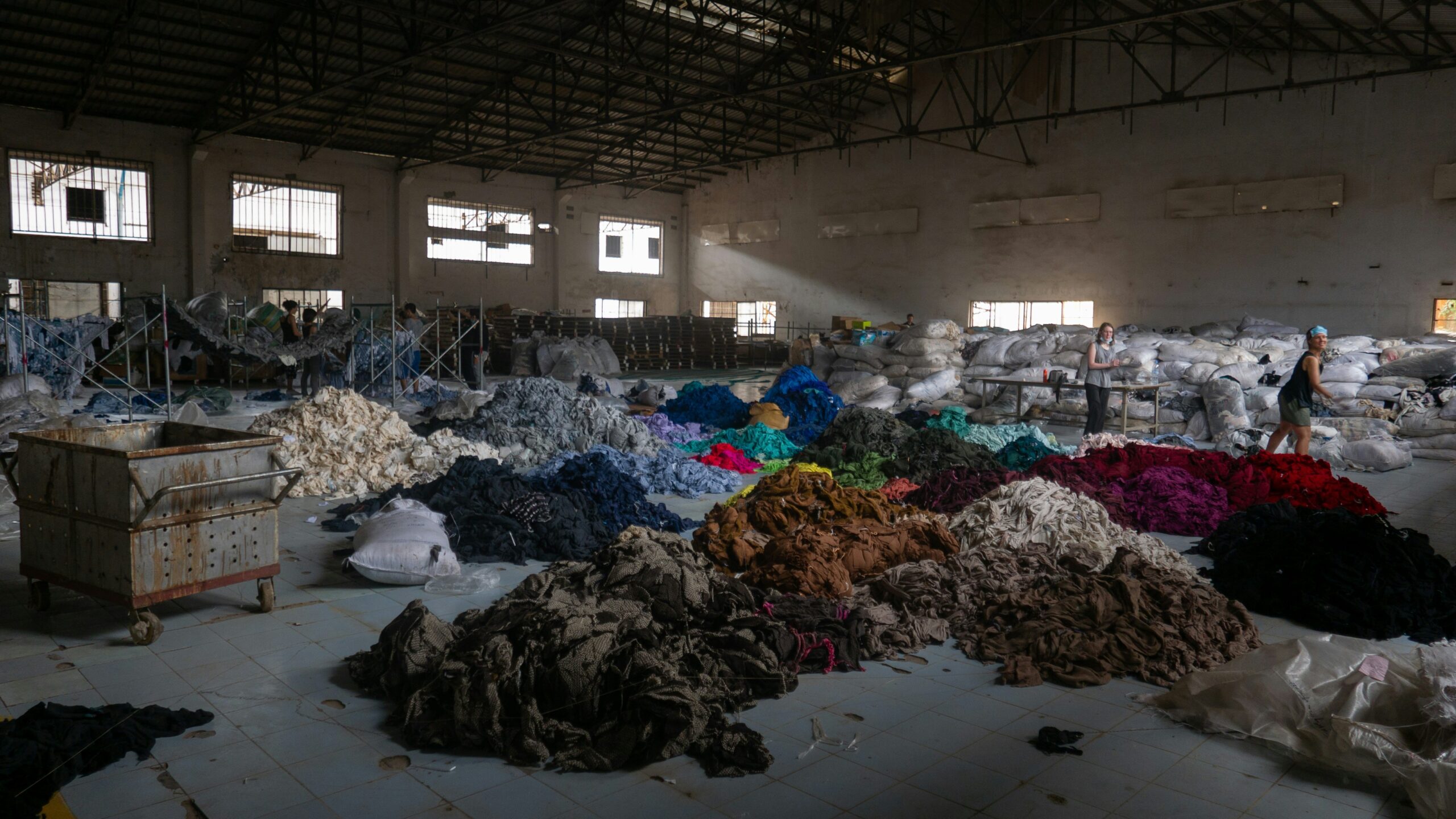

The EU announced on July 19 a new ban on the destruction of unsold clothing, footwear and accessories by retailers and manufacturers across member states.
The measure requires these large companies – those with more than 250 employees and annual turnover above €50 million – to reuse, donate, or find alternative markets for excess stock, and was introduced under the Ecodesign for Sustainable Products Regulation (ESPR) framework, which entered into force on July 18, 2024.
The ESPR has since served as the cornerstone of the Commission’s approach to environmentally sustainable and circular products.
Banning the destruction of unsold textiles, however, was presented by policymakers as one of the first concrete measures under the ESPR due to negative environmental impacts of current business models.
Regardless, the new model contemplates special circumstances for the destruction of products, including unsafe goods, severe damage, counterfeit products, legal violations, or rejected charitable donations.
An estimated 4-9% of all textile products put in the European market are destroyed before use, accounting for 264,000 to 594,000 tons of textiles destroyed every year, as per the European Environment Agency (EEA).
A significant climate cost
Beyond the yearly material cost, the EEA calculates the destruction of these unsold items is responsible for up to 5.6 million tons of CO2-equivalent emissions a year. The figure is comparable to the emissions of just over one million cars driving for one year, and slightly lower than Sweden’s total net emissions in 2021, for example.
That figure sits within a broader picture. The EEA ranks textiles among the top five household consumption categories for raw material use, greenhouse gas emissions, and water and land use – on par with pressures from food, housing, and transport.
EU textile consumption has also been climbing: the average EU citizen consumed 19 kilograms of clothing, footwear and household textiles in 2022, up from 17 kilograms in 2019, while 12 kilograms of clothing per person are dumped each year.
The resource cost behind that consumption is steep. Producing a single cotton t-shirt, for example, requires an estimated 2,700 liters of fresh water, enough to meet one person’s drinking needs for two and a half years. Textile dyeing alone accounts for 20% of global clean water pollution, and synthetic garments shed microplastics with every wash. A single load of laundry of polyester clothing can release up to 700,000 microplastic fibers.
Online returns compound the issue. Around 20% of clothing and 30% of footwear bought online in the EU is sent back, largely over fit or style. Still, the EEA notes that distribution and retail account for only 3% of textiles’ overall environmental footprint, meaning a longer returns process is generally preferable to destruction, provided the product is eventually resold.
Who the ban covers, and what’s exempted
The destruction ban and its exemptions apply to large companies starting July 19, 2026, with medium-sized firms from 2030 following a transition period, according to the Commission’s February 2026 announcement. Small and micro enterprises remain exempt.
Alongside the destruction ban, a separate disclosure requirement forces companies to report the volume of unsold goods they discard, in a standardized format the Commission adopted the same month. They must also retain supporting documentation for five years.
National authorities are responsible for enforcement and can issue fines for non-compliance, though the Commission has said businesses can rely on existing customs and logistics codes when reporting rather than building new systems from scratch.
The scale of the waste problem varies sharply by country, too. In France alone, an estimated €630 million worth of unsold products are destroyed every year and in Germany, close to 20 million returned items are discarded annually.
Much of the compliance burden will also fall outside the bloc’s borders: only around 20% of apparel sold in the EU is actually manufactured there, meaning non-EU manufacturers and suppliers exporting into European markets will feel much of the impact.
Retailers adjust inventory strategies under new EU requirements
The new framework pushes compliance upstream of the warehouse. Companies must show they’re planning inventory to avoid overproduction in the first place, not simply managing leftover stock responsibly once it exists.
Some large retailers had already begun adjusting ahead of the deadline. Fashion giant H&M – originally founded in Sweden in 1947 although it has since transitioned to outsourcing manufacturing mainly via Asian hubs – has expanded its resale and take-back programs, while Germany’s Zalando has scaled up its re-commerce operations to absorb growing volumes of secondhand inventory.
Retail organizations acknowledge that greater product availability could increase discounts, outlet sales, and second-hand distribution. But retailers also face higher logistics costs when moving returned or damaged goods into reuse channels, and low-value products with weak consumer demand may complicate compliance even where exemptions apply.
“The textile sector is leading the way in the transition to sustainability, but there are still challenges,” said Jessika Roswall, EU Commissioner for Environment, Water Resilience and a Competitive Circular Economy.
“With these new measures, the textile sector will be empowered to move towards sustainable and circular practices, and we can boost our competitiveness and reduce our dependencies.”
Sustainable fashion advocates say the rule could curb overproduction and extend product lifecycles industry-wide. Others, however, remain cautious about how much the rule will change in practice.
COSH!, a sustainable fashion platform, welcomed the measure but argued the real goal shouldn’t be “less public destruction” but less overproduction, better product design, and genuine reuse and repair, with accountability that extends beyond the warehouse door.
Featured image: Francois Le Nguyen via Unsplash+