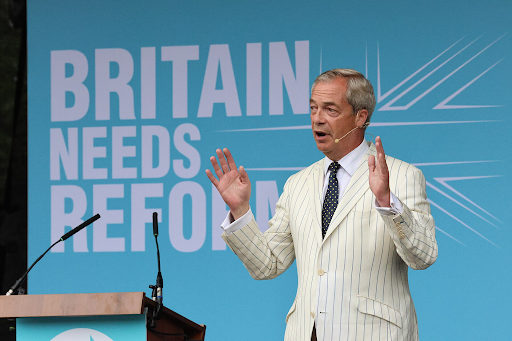

Staffordshire, United Kingdom – Since Labour’s landslide victory in the 2024 election, the rise in popularity of Nigel Farage’s right-wing Reform UK has sent shockwaves through Britain’s traditional two-party system.
Reform, which only won five seats at the last general election, has led national opinion polls consistently since early 2025 and would, according to current projections, become the largest party at the next UK general election.
Farage’s success has come at the expense of Britain’s traditionally dominant right-wing party, the Conservatives, who have witnessed trust in their party decline following their 14 years in government between 2010 and 2024.
Nevertheless, Farage’s outfit isn’t the only insurgent right-wing party grabbing the British media’s attention.
Restore Britain, a more radically far-right party than Reform UK, has also been making headlines. Restore was founded by ex-Reform MP Rupert Lowe in February and now boasts just under 100,000 members.
Restore, whose only MP is Lowe, recently contested its first parliamentary election in Makerfield.
Read more: Contender to replace British PM Starmer faces off right-wing in crucial vote
Although Restore was unable to present a significant electoral challenge to Labour candidate and potential future Prime Minister Andy Burnham, the nascent party’s third-place finish in front of the Conservatives, Liberal Democrats and Greens demonstrated its growing political relevance.
Restore versus Reform: The civil war on the far-right
At first glance, Reform and Restore seem to offer similar visions: both parties find themselves to the right of the Conservative party – of which they are profoundly critical –, share a hostile stance towards illegal immigration, and advocate for broadly nationalistic policies including tightening border controls and defending Britain’s supposed Christian heritage.
Some of the animosity between the parties appears personal; Restore was founded after Lowe, who had been an MP of Farage’s Reform UK, fell out with his former colleagues. Reform alleged that Lowe had made physical threats towards then-party chairman Zia Yusuf and subsequently referred the Great Yarmouth MP to the police.
Lowe, however, accuses Reform of sacking him over his support for mass deportations and his potential to overshadow Farage. This deportation issue seems to be the key ideological fissure between the two parties. Farage told GB News in 2024 that it was “a political impossibility to deport hundreds of thousands of people. We simply can’t do it”.
Restore, by contrast, has pledged to make mass deportations a cornerstone of its policy if elected to government. Their mass deportation policy paper sets out a target of half a million or more voluntary departures and “between 150,000 and 200,000 enforced removals per year”.
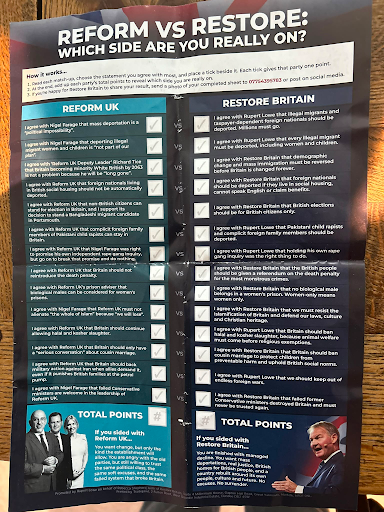
Image Source: Raphael McMahon (own image)
Following Reform UK’s defeat in the Makerfield by-election, Farage urged Restore voters to back him in future elections to prevent the right-wing vote from splitting. Restore supporters on the campaign trail in Makerfield, however, were pre-emptively dismissive of Farage’s accusations of vote splitting.
Thomas Moffitt, a 17-year old Restore Britain activist also known as Young Bob, spoke to EU Reports about the differences between Lowe’s party and Reform UK, and his aversion to Reform’s belief that Restore is splitting the right-wing vote in areas such as Makerfield.
“Is it [Restore Britain’s] fault for standing in a democracy, or is it Reform’s fault for not selling a vision which is compatible with Restore voters?,” he said.
Restore campaigners have also been particularly critical of Reform UK’s admission of various former Conservative politicians, such as Robert Jenrick and Suella Braverman, into its ranks.
“Suella Braverman and Robert Jenrick were the people who brought in the Sudanese migrant who beheaded someone in Northern Ireland. They oversaw the Boriswave […] they oversaw over 900,000 (net) migrants being brought in”, Moffitt told EU Reports.
A Sudanese man was charged with attempted murder in Belfast after a knife attack that caused the victim to lose an eye. The suspect entered the UK and was granted refugee status in 2023, and the attack prompted a wave of anti-immigration violence – with masked men burning homes that they suspected housed migrants.
Read more: Belfast riots ease after two nights of violence targeting foreigners
Net migration to the UK peaked under Boris Johnson’s Conservative government at 944,000 in the year leading up to March 2023. The numbers have since fallen under Keir Starmer’s Labour party to 204,000 in the 12 months leading up to June 2025.
“What is a right-wing party meant to do? Cut the red tape, decrease migration … and I don’t see Reform doing it, because they let in everyone who hasn’t done it,” Moffitt concluded.
In most of the country, Reform remains Labour’s biggest challenger on the right. In Makerfield, Reform won 34.5% of the vote to Restore’s 6.8% – and it continues to consistently outperform Restore in national polls.
According to POLITICO, Restore has averaged 3-4% in national polls since early May, with Reform averaging 25-26% in that same period.
Nevertheless, experts speculate that support for Restore could push Reform into second place in areas such as East London, Leicestershire, Nottinghamshire and parts of Northwest England. This, in turn, could dent Reform’s chances of securing an outright governing majority of 326 seats or above in parliament.
Is Restore an ethnonationalist party?
Whilst canvassing for the party in Makerfield, various Restore campaigners cited the party’s supposed ethnically nationalistic vision as a reason for their support.
One unnamed campaigner emphasized the differences between the nativist visions of Reform and Restore, criticizing the latter as being too limited to deporting illegal migrants.
“Reform are basically ex-Conservatives that have got a liberal-minded idea of just doing the bare minimum of deporting illegal immigrants, and Restore believe in ethnic homogeneity and a homeland for our own particular ethnic group,” they stressed to EU Reports.
At a grassroots level, some Restore supporters have also expressed displeasure towards the diversity of the leading figures of Reform UK.
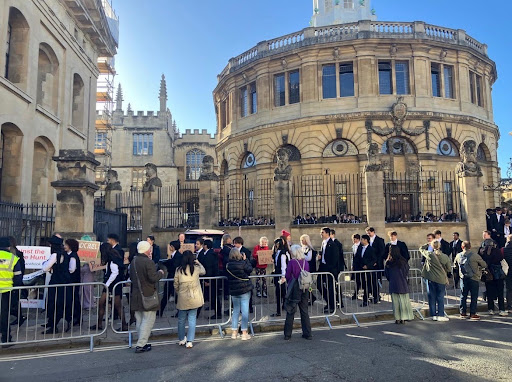
“We are being invaded and our country is being given away by our own government. In order for us not to be violent, there has to be a political solution,” said James Henry Holmes, a businessman and member of Restore Britain, while in conversation with EU Reports during May’s Unite the Kingdom rally organized by far-right agitator Tommy Robinson.

Image Source: Raphael McMahon (own image)
“The only political party that is willing to take on the things that we need – mass deportations, stripping away DEI [Diversity, Equity and Inclusion] – is Restore Britain.”
Read more: “Unite the Kingdom” rally reveals growing internationalization of far-right, anti-Islam movement
“Deform UK are a Muslim-infilitrated party, they’re going to do nothing; you cannot believe Farage, no matter what he says”, the businessman continued, referencing a derogatory nickname for Reform.
Both Reform UK’s spokesperson for home affairs and former party chairman Zia Yusuf and its candidate for London Mayor Laila Cunningham are Muslim. Cunningham has reported receiving death threats from Restore voters over her Muslim identity.
Regardless of ethnonationalistic tendencies on the ground by some campaigners, Restore’s website does not explicitly state that the party intends to promote ethnic homogeneity – but it does foreground demographic issues.
“By 2030 native British births will account for fewer than 50% of total births in Britain. By 2070, native Brits will be an absolute minority. In order to avert this, Restore Britain will reverse mass immigration,” the website reads.
The “native Brits” referenced by the party likely refer to white Britons as opposed to those born in Britain; rightist political commentators such as Matt Goodwin have predicted that white Britons will become a demographic minority by 2070 – a heavily disputed claim.
Self-proclaimed British ethnonationalist activists, such as Steve Laws, have also expressed their support for Lowe’s party.
Regardless of its own self-professed interpretation of nationalism, a Restore Britain government would likely seek to drastically reduce immigration to the UK from predominantly non-white countries and deport large numbers of non-white immigrants.
Increased ethnic homogeneity may therefore not be an explicit part of a Restore government’s agenda, but would likely be a consequence thereof.
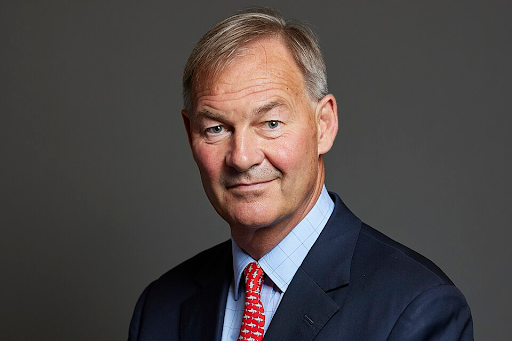
Featured Image Description: Restore Britain leader Rupert Lowe
Image Credit: Raphael McMahon (own picture)