
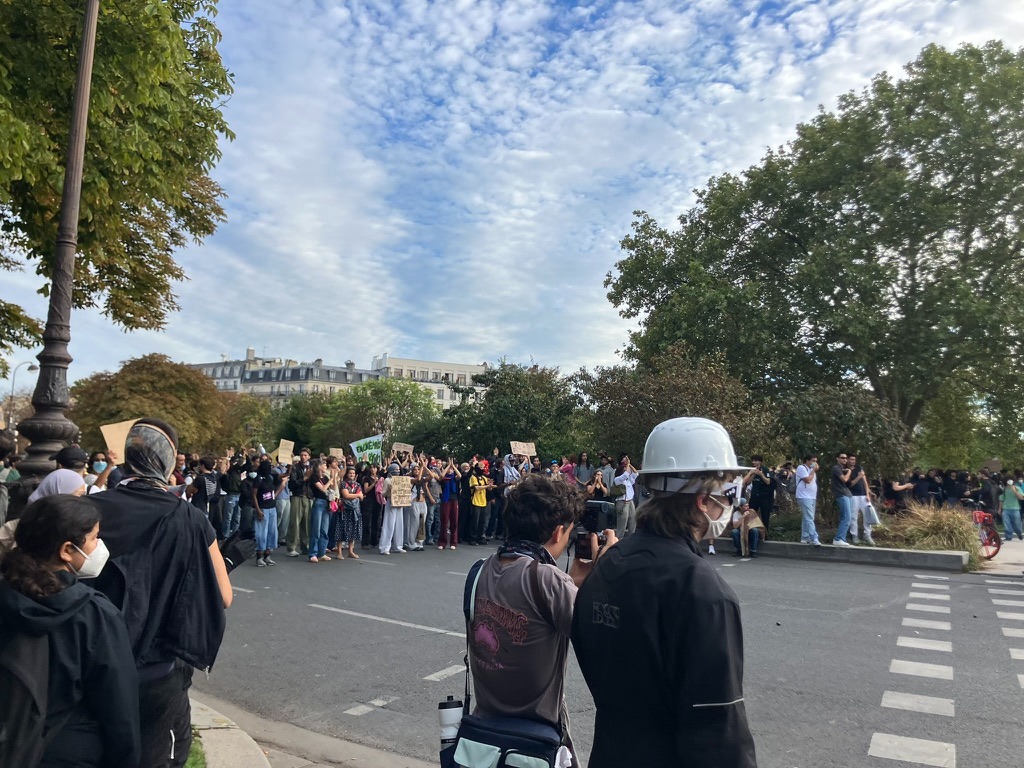
Paris, France – More than 160,000 people took to the streets of Paris yesterday as protests in solidarity with high school students continue.
Disgruntled pupils are demanding renovated classrooms and materials, more substitute teachers, better school schedules and greater access to higher education.
Though the government attempted to appease protesters through a slew of measures last week, the heavy-handed police response has fuelled anger against the state.
Following the first wave of protests, which began earlier this month, Education Minister Edouard Geffray set up a government website on October 6 for students to express grievances.
Two days later the minister announced the creation of a software which, with the help of AI, categorizes high schools all over France by their overall “situation”.
The minister explained on broadcast news that “114 high schools are in the red” and “400” in orange. As a result, 3,000 professors will be sent to those 114 high schools classified as red.
It is unclear what basis the schools are being measured on.
Geffray has also pledged to put in place a teaching pact that allows contractual professors to work extra time as substitutes.
But for many, these measures are seen as the carrot after the stick.
“What is obviously regrettable is having to wait for a high school protest to set this whole system in motion,” explained Christelle Koffmann, high school principal in Albi and elected representative of the national teachers union, in an interview with French news station RMC.
“We would have preferred it to have been launched in late August, when we need to put together teaching teams.”
Many protesting students had a similar reaction. In an interview with France 24, one high schooler agreed the measures by Geffray are a good first step while simultaneously raising questions as to why the government acted now, after several blockades, protests and unwanted violence.
Violence has taken up a huge space in public discourse over the last few weeks. According to a study by ACRIMED, an institute observing media coverage, 75% of the time on hourly news broadcasts over four days of the news channel France 2 was dedicated to discussing violence. Of the violence described, the large majority was done by high schoolers rather than police forces. In a radio interview on France Inter last week, the minister of interior Laurent Nuñez said law enforcement’s reaction was proportionate.
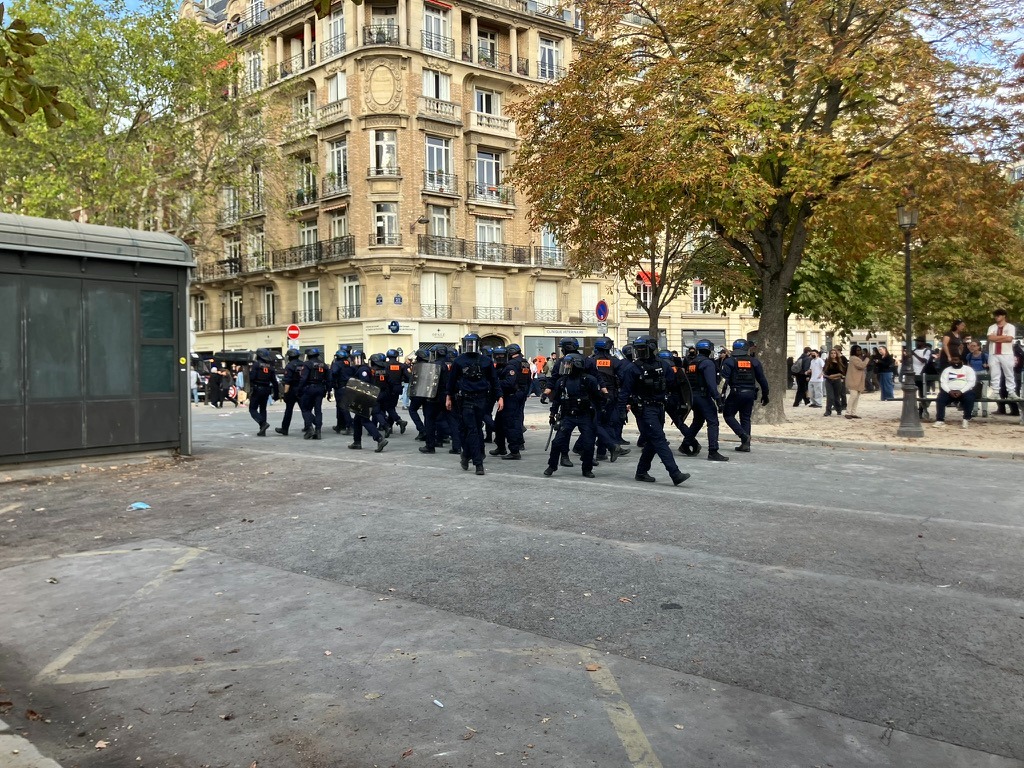
Since the beginning of the student mobilization, more than 6,000 people have been taken into police custody. 86% of them are minors.
“We are following with concern incidents related to the student protests and high school blockades in France, some of which have turned violent,” said Shabia Mantoo, spokesperson for the UN human rights office. “We call on everyone to ensure that they remain peaceful and that there is no disproportionate use of force by law enforcement.”
The proportionality of the use of force by police has caused concern in the past few weeks. The French National Consultative Commission on Human Rights (CNCDH) published a report on October 6 warning of “the clearly disproportionate nature of certain police interventions and legal proceedings targeting young people.”
The independent institute, which monitors the implementation in France of all recommendations in matters related to human rights and international humanitarian law, is particularly “concerned about the directive issued by the Minister of the Interior to the prefects stating that ‘the proportionate use of force must never hinder efforts to restore order.’”
According to sociologist at the National Center for Scientific Research (CNRS), Fabien Jobard, the overaction of the police force can be explained by their gradual militarization over the last twenty years.
This militarization refers to the introduction of equipment used to suppress urban violence, such as LBDs (flash-balls), tear gas grenades, and grenade launchers. On September 28, police fired a flash-ball at a 14-year-old which fractured his jaw in two places and broke several of his teeth. His parents are suing for attempted homicide.
Police violence is set to become a bigger issue in upcoming protests.
“We are tired of being disrupted and hurt for exercising our right to protest,” explained a university student, who asked to remain anonymous due to their involvement in a blockade at the university.
On Saturday October 17, a national protest supported by the gilet jaunes, the workers movement started in 2018 to protest a raising fuel tax, is set to take place.
Featured image description: France student protests in October 2026.
Featured image credit: Annarosa Zampaglione