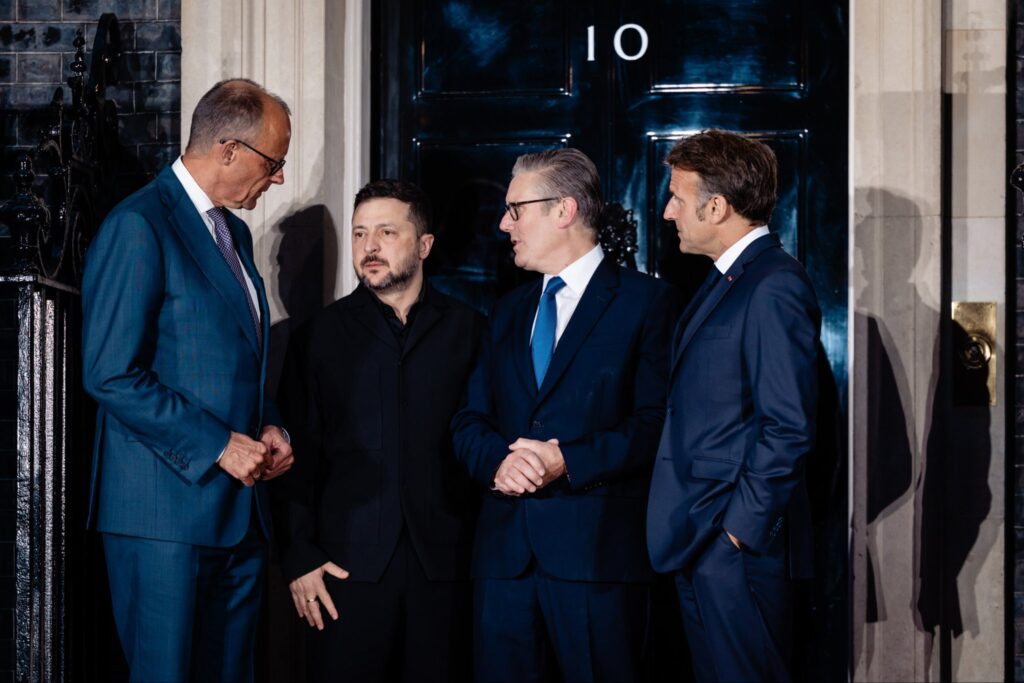

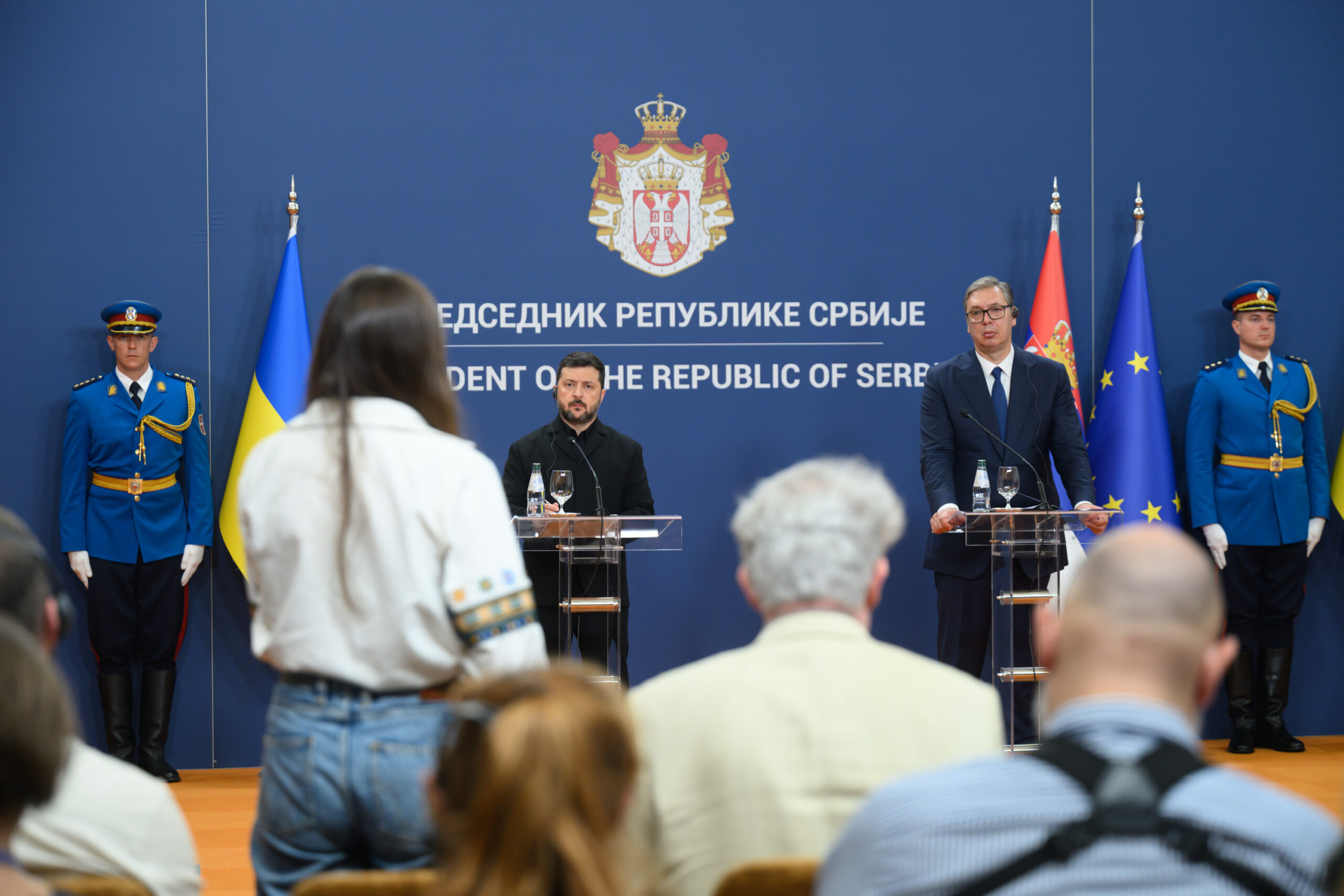
Bristol, United Kingdom – Ukrainian president Volodymyr Zelenskyy touched down in Belgrade on Friday, August 7 to meet with Serbian president Aleksandar Vučić, in the first state visit in eight years.
Talks focused on strengthening economic cooperation between the two eastern European states. Both Serbia and Ukraine are EU candidate countries, and despite not being neighbours, trade between the two countries amounted to $450 million (€385.8 million) in 2025, according to Vučić.
Serbia has also proven to be an important source of ammunition and weaponry for the Armed Forces of Ukraine. Last year, Russia’s FSB intelligence service accused the country of supplying Ukraine with arms including “hundreds of thousands of artillery shells and over a million rounds of ammunition,” despite Serbia traditionally being seen to be one of Russia’s closest allies in Europe.
Zelenskyy’s visit provides fuel to Belgrade’s “balancing act” policy of maintaining strong relationships with European states, as well as with Russia and China. During the Cold War, Serbia’s predecessor Yugoslavia pioneered the formation of the Non Aligned Movement, and today the country still emphasises that its foreign policy priorities will be determined by its own interests, and not those of larger powers.
Meanwhile, for Ukraine, the visit gives Kyiv the opportunity to show off its own independence in foreign policy matters, as well as demonstrating that it can create partnerships with countries that Russia considers part of its own sphere of influence.
As the war-torn country develops its own arms industry in the face of Russia’s full-scale invasion, Ukrainian arms manufacturers have acquired an increasingly large portfolio of clients interested in cheap and effective air defence and drone technology.
Read more: Why NATO allies are turning to Ukraine for the drone tech they once supplied
In the face of battle-proven deficiencies in more expensive U.S.- and Russian-produced military technologies, Belgrade stands to benefit from a defence partnership with Kyiv.
Territorial integrity non-negotiable
During a joint press conference, both Vučić and Zelenskyy reaffirmed their opposition to the changing of borders by force.
Vučić expressed his support for “the territorial integrity of all UN members, which means the territorial integrity of Ukraine,” going on to state that “there are no ‘buts’ in this matter.” Meanwhile, Zelenskyy clarified that Ukraine’s non-recognition of Kosovo remained “unchanged,” while taking questions from journalists.
Russia currently occupies over a fifth of Ukrainian territory, land it claims as an integral part of Russia after its unilateral annexations of Crimea and Sevastopol in March 2014, and further regions September 2022. Moscow’s landgrabs are only recognised in full by North Korea, while its annexation of Crimea is recognised by only six other countries.
President Vučić’s clarification of Serbia’s non-recognition of Russia’s conquests serves as further proof that even nations politically close to Moscow will not accept its new claims. For Russian president Vladimir Putin, the rebuke will sting even more as the country gears up for another round of mobilisation, after losing close to 1.5 million soldiers to injury or death.
Ukraine’s position on Kosovo is equally clear. Kyiv has never recognised the unilateral 2008 Kosovar declaration of independence, equating it with an illegal seizure of state power. Serbia still claims the area as its autonomous province of Kosovo and Metohija.
Ukrainian opposition to recognising the statehood of Kosovo has only hardened since 2014, when Russia seized control of Crimea and Sevastopol and annexed the regions under what it describes as the “Kosovo principle” of self-determination.
The visit clarified areas of mutual interest in defence technology, the growth in economic cooperation, and the promotion of international law.
Image source: Volodymyr Zelenskyy via X.