

Two high-speed trains collided in the province of Toledo on Wednesday morning, leaving at least 68 dead and 50 hospitalized.
The trains, carrying over 540 passengers between them, crashed into one another in the central region of Castile-La Mancha, in an event that has been attributed to a combination of technical and human errors.
A rear-end collision between a stationary Iryo train and a high-speed AVE train occurred at approximately 8:53am. According to Spanish newspaper El Mundo, the Iryo train had been stopped for 10 minutes due to a fault in the LZB signalling system.
However, according to the Transport Minister Óscar Puente, despite protocols that should have stopped trains from continuing, an order was given from the ADIF control station for trains to resume their journey. He described this decision as “inexplicable”.
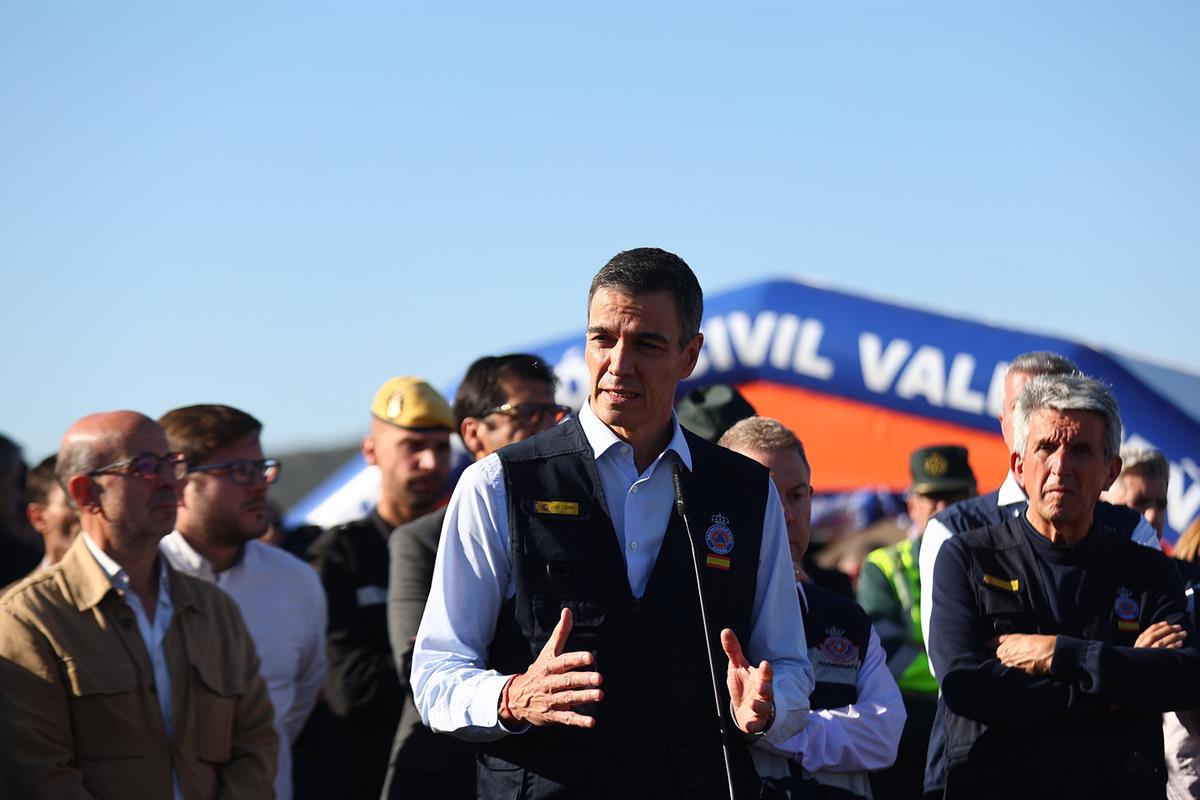
Prime Minister Pedro Sánchez travelled to the site this afternoon, along with Home Secretary Fernando Grande-Marlaska Gómez and the President of Castile-La Mancha Emiliano García-Page.
“Spain is in mourning”
In a statement to the press at the site, the prime minister announced three official days of mourning.
“Our first priority,” he said, “is the victims, their families,” he said, adding that “behind every person who has lost their life, there are broken families, broken lives”.
He also expressed his thanks to the “extreme professionalism” of the emergency services, who continue to search for survivors in the wreckage.
This is the latest in a series of incidents that have marked a devastating year for train crashes in the country. On January 18, 2026, a train crash in the southern region of Córdoba left 49 dead and almost 300 injured. Two days later, a commuter train in the region of Catalonia derailed, leaving one dead and 37 injured.
Read more: Spain voices discontent over prime minister’s absence following deadly train accident
These events have sparked a reckoning in Spanish society with the national transport system, with some pointing to what they see as systematic flaws.
“It’s been very of course shocking, especially because this is the exact same line that experienced a very deadly accident as you know earlier this year,” said Catalan worker Paula Pazos, speaking to EU Reports.
In his statement, Sánchez drew attention to the crash in Adamuz, Córdoba. He stressed that there is currently no evidence to suggest a link between the causes of the two crashes.
Speaking to wider issues in the public transport system, Paula added: “The fact that this deficit in basic mobility services has become part of our ID [in Spain] just goes to show how hopeless we are without real reform in the railway system.”
“There’s all this data about all this funding that’s going into, public funding that’s going into infrastructure and railway infrastructure more specifically, and yet there’s not a single Spanish person that can have a positive opinion about Renfe [the state-owned national railway company] or about the railway network and system overall, just because it’s been a constant disappointment.”
“It’s just too dark at this point, both in terms of transparency and in terms of casualties,” she concluded.
An investigation into the events has already been announced, and the Spanish police are questioning the traffic controller responsible for the area. This sentiment was echoed by Sánchez in his statement, who stated that “if there has been negligence, it will be known, if there have been failures in the security system, they will be firmly dealt with.”
Figures across the political spectrum have expressed their shock and sadness at the events.
The leader of the conservative Partido Popular (PP) party Alberto Núñez-Feijóo said in a statement on X that he was “very concerned about the news we are receiving” and expressed his “support for emergency workers in the area”.
In a later statement to the press, Feijóo said that “pain does not mean we have to be silent”, and called for an “immediate government investigation”, followed by a judicial investigation.
In the wake of the tragedy, all political parties aside from the ultra-right Vox party suspended their campaign agendas for the day. Vox leader Santiago Abascal announced in a social media statement that “the best way we can honour the victims is to continue our work of tirelessly condemning the degradation of the infrastructure and institutions that the corrupt mafia have left us.”
General elections in Spain are set to take place in one month, on November 29.
Football games scheduled for today in the Spanish Copa del Rey competition have also been postponed.
Featured image: via La Moncloa
Author: Pool Moncloa / Sandra Armada. Puesto de Mando Avanzado de Urda (Toledo) – 28.10.2026