
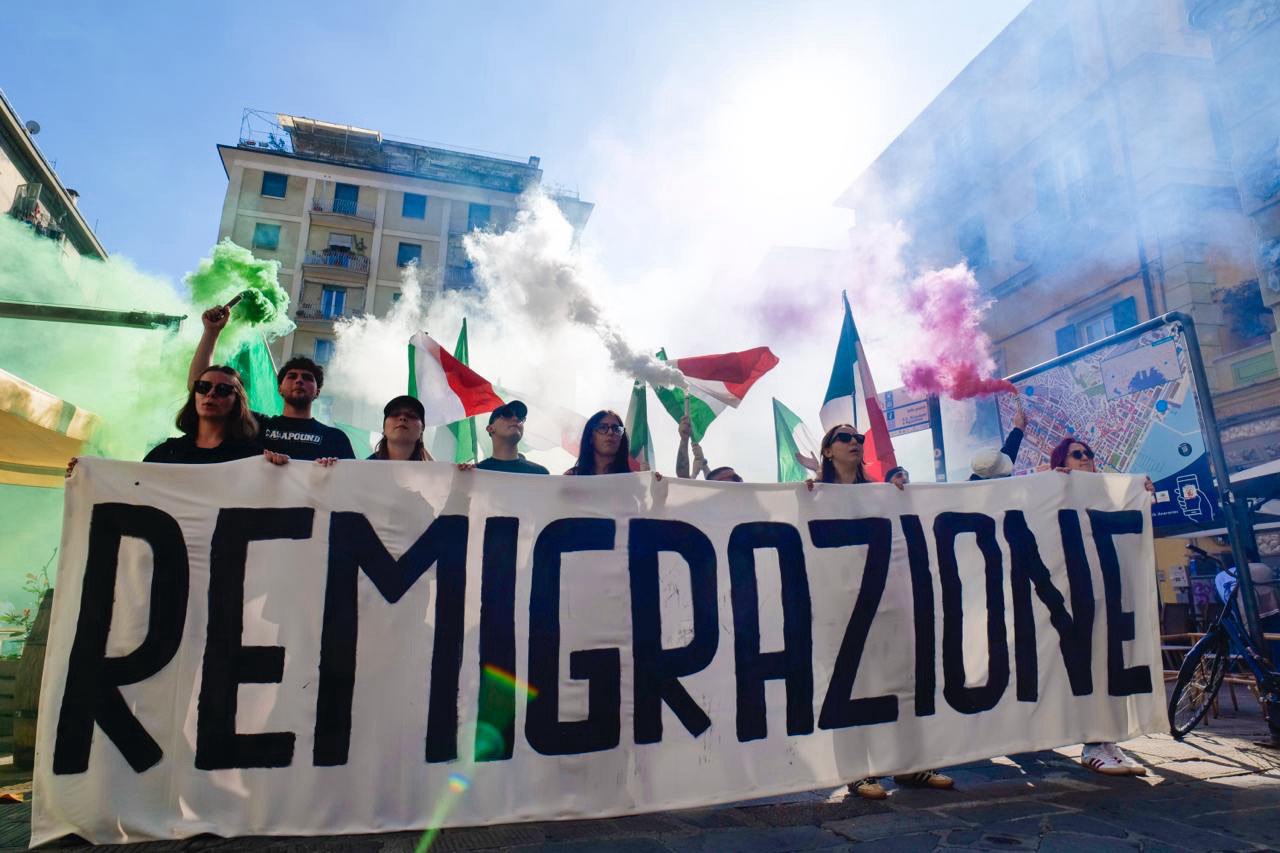
Tens of thousands of demonstrators marched through Rome on Saturday, June 13, to both protest and support migration. The marches were prompted by the Remigration and Reconquest citizens’ initiative bill, which was put forward to Parliament by the people following 50,000 petitioner signatures.
The bill was a joint initiative by four far-right groups – CasaPound Italia, Rete dei Patrioti, VFS, and Brescia ai Bresciani – seeking “concrete action” on remigration – the mass expulsion of immigrants and their descendants – as well as a firm barrier against further “uncontrolled migration.”
The legislation’s organizers described current migration levels in Italy as “a phenomenon that threatens social cohesion and the very survival of the peoples of Europe.” Supporters also openly declared they were seeking to gain support for their goals through mass mobilisation rather than conventional electoral politics.
CasaPound spokesman Luca Marsella described the event as a day of national reconquest.
“We want to kick the illegal immigrants out, force them out, because they shouldn’t be here. And since we’re not politically correct, we’ll say we want to send the legal immigrants home, too, the ones who clearly haven’t assimilated or integrated,” he said.
The proposal was then swiftly blocked by the centre-left members of Parliament on Saturday, to which Marsella responded: “If they try to stop us when we submit them, I will call every one of you to storm the Parliament.”
Foreign far-right activists join in
Many of the demonstrators performed the fascist salute – first used by Italian nationalist Gabriele D’Annunzio in 1919 and then adopted by Germany’s Adolf Hitler – as they marched through Rome, while also shouting Duce (Leader). The title belonged to the notorious fascist dictator Benito Mussolini, who performed his own “March to Rome” in 1943.
The outward support for Mussolini, who ruled Italy from 1922 to 1943, has been an upward trend in recent years, with neo-fascists making yearly pilgrimages to his burial site at Predappio.
Read more: Italian Council to take over Mussolini’s former residence
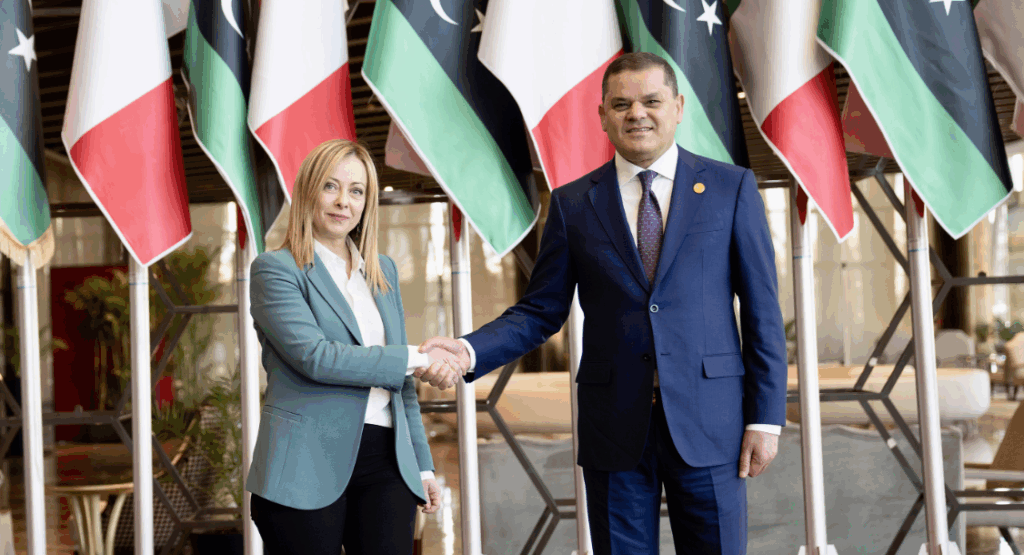
Prime Minister Georgia Meloni and her right-wing party, Brothers of Italy (FdI), have themselves been accused of tolerating such activity. However, Meloni’s government has also recently expanded legal migration in an attempt to tackle labour shortages across Italy.
The Meloni government has pursued a bifurcated policy of expanding legal migration in the form of a multiyear work visa quota – 500,000 permits for the 2026-2028 period – while simultaneously cracking down on irregular migration through tightened border controls.
Regardless, the demonstrators in Rome were allegedly joined by far-right activists from Poland and Hungary, who were reportedly denouncing journalists as “communists” or “terrorists” while chanting Islamophobic and fascist chants.
Counter-protesters rally
Anti-fascists and leftists also organised their own counter-demonstrations, as thousands more flocked to a rival march on the other side of Rome, organised by left-wing groups and trade unions.
The counter-protesters marched with signs decrying racism and exploitation.
“We are here today in this square first and foremost because we are angry that the rally in the Prati district in favour of forced repatriation was not banned,” stated Natale Cola, secretary of the CGIL trade union. “We believe that platform is contrary to the Constitution. We call on the political forces that support forced repatriation to address the real issues.”
Organisers stated they not only opposed the marches by these far-right groups, but also wanted to address broader issues around war, exploitation, and the current Meloni government.
Also taking to the streets that day was the Movement for the Right of Housing, which campaigns against exploitation in the rental market.
“This march is not just about expressing our opposition to fascism; it is about saying no to imperialism and standing against the genocide in Palestine,” another organiser stated. “Together, we are standing up to those in power and to this government.”
Adding to the activity across the city was a further demonstration held by pro-rights groups, who, unrelatedly, had also chosen the day to march in favour of banning or restricting abortions and contraception.
These four marches required careful coordination from Rome’s police force, which in the days prior finalised a security plan aimed at preventing contact between clashing protest groups.
Thousands of police were deployed across the city, although no violence was reported between any rival groups.
Featured image: via Remigrazione e Riconquista.