
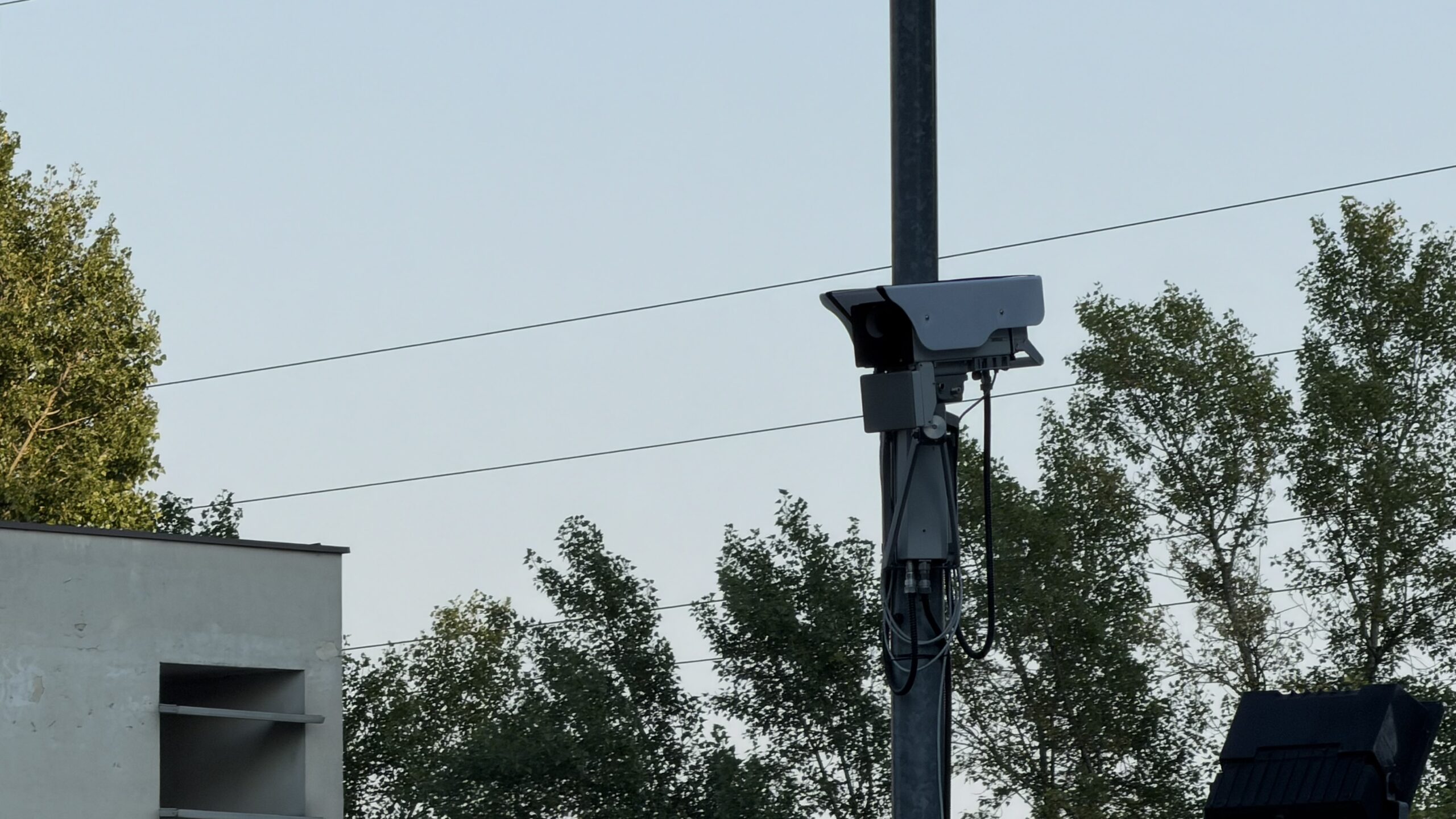

The government of Slovakia has admitted that speed cameras purchased for its roads were manufactured by a Russian company on August 12, following weeks of denials and opposition warnings that the devices could be used for surveillance.
The country’s National Security Authority (NBU) confirmed the cameras’ Russian origin after technical inspection, prompting the dismissal of two Interior Ministry officials and the termination of the state’s contract with supplier Soitron.
Peter Bator, former NATO diplomat and Progressive Slovakia party member, explained that the Russian government could be using these cameras to monitor activity in Slovakia. Since Slovakia borders Ukraine, this could theoretically let Russia track army equipment travelling to Ukraine, along with Ukrainians who have fled to seek refuge in Slovakia.
The operation appears to have obscured the cameras’ Russian origins. Research carried out by independent Slovak newspaper Denník N found the cameras were originally manufactured by St Petersburg-based company Simicon, then routed through three intermediary companies, including one in Cyprus, before being sold to the Slovak government.
Initially, the government denied the cameras were Russian, although opposition party Progressive Slovakia warned otherwise. At a press conference on Wednesday, Interior Minister Matúš Šutaj Eštok confirmed the NBU’s findings, said the ministry had been “lied to” by suppliers, and separately faulted the Slovak Institute of Metrology for failing to flag the cameras’ origin during certification.
Šutaj Eštok further dismissed two ministry employees and terminated the government’s contract with IT company Soitron, ordering it to remove the two test devices from the roads, which had not yet been deployed for live traffic monitoring.
Both the Slovak Institute of Metrology and Soitron have pushed back against the Interior Minister’s account. For its part, the Institute said it is responsible for confirming products’ technical and metrological compliance with Slovak law, not for assessing digital security threats.
Jack Pannell, senior researcher at think tank British Foreign Policy Group, told EU Reports that this Slovak scandal is just one part of the cyber-threat from Russia:
“Even without Russian technology, there has been evidence of Russian cyber-attacks on CCTV and traffic cameras in other countries where aid is being distributed to Ukraine.”
This is not the first time links between the Slovak government and Russia have been made. As an EU member state, Slovakia is expected to align its values with other member states, yet it holds long-standing historical and economic ties with Russia; not only is the nation’s energy dependent on Russian gas, but Russia also invests in Slovak industries.
Various Slovak political leaders have reinforced these ties, including Prime Minister Robert Fico, who was the only EU leader to attend the May 2026 Victory Day celebrations in Moscow.
Reactions in Slovakia haven’t been entirely uniform, however. Oscar Brophy, originally from County Kerry, Ireland, has lived in Bratislava for 10 years, and reports for the Slovak Spectator. He told EU Reports that “it wouldn’t necessarily be the end of the world if they’d been installed”, since “so much of our data is being scraped by places like the USA and China already.”
Regarding concerns that the cameras could have tracked Ukrainians and associated aid, Brophy expressed that, “realistically, I think they’d have other means of gathering that intelligence if they wanted it.”
Use of the cameras was put on hold while the scandal was under investigation, and following confirmation of their Russian origin, will not be used going forward. Further inquiries are expected and Slovaks, especially in opposition-led cities like Bratislava, are calling for Šutaj Eštok’s dismissal.
Featured image: via autobazar.eu