
Raphael McMahon contributed to this article.
After footage of Sudanese national Hadi Alodid attacking someone in Belfast with a knife circulated widely on social media, the city descended into a wave of anti-immigration violence.
Disorder was reported soon after the incident on Newtownards Road, a traditionally unionist stronghold in East Belfast. Masked men began setting fire to homes that were believed to house migrants.
Some politicians, including Belfast South MP Claire Hanna, argued that innocent residents were being targeted on the basis of their skin colour. Hanna called the attacks a “pogrom”.
Unrest also spread beyond the city, as a police car was set ablaze in the town of Portadown southwest of Belfast.
Northern Ireland has long been the most conflict-prone part of the UK, where tensions between the majority-Protestant British unionist community and the majority-Catholic Irish nationalist community have persisted long after the Good Friday Agreement of 1998, an accord which largely brought peace and equal political representation after three decades of conflict.
Although the majority of the immigration-related rioting appeared limited to unionist localities, there have also been reports of nationalists supporting the protests. Jon Boutcher, Chief Constable of the Police Service of Northern Ireland (PSNI), disclosed that certain members of both loyalist and nationalist communities had encouraged disorder online.
This nascent and improbable alliance, though unlikely to extend beyond the migrant issue, reflects growing opposition to immigration from outside the British isles in British and Irish communities.
Anti-migrant sentiment on the rise, particularly amongst unionists
In Northern Ireland, anti-immigration protests have become more frequent in recent years and participation in them is beginning to transcend sectarian and ideological lines.
In 2024, the BBC reported that both British loyalists and Irish nationalists had taken part in a protest in Belfast city centre, during which a café and members of the media were attacked by anti-immigration demonstrators.
And in June 2025, after two Romanian teens were arrested on suspicion of sexual assault in Ballymena, protests erupted there and in other Northern Irish towns. Police and the residences of immigrants were attacked. There too, there were reports that both nationalists and unionists took part in civil unrest.
British and Irish politics Professor Johnathan Tonge at the University of Liverpool spoke to EU Reports about the cross-community dynamics of anti-migrant sentiment in Northern Ireland.
Anti-migrant sentiment in Northern Ireland is “fairly widespread”, Tonge told EU Reports. “We’ve put the proposition ‘immigration has been good for Northern Ireland’s economy and society’ in each Northern Ireland general election survey since 2010 and the answer has come back negative each time. Most people do not see immigration as a positive”.
Meanwhile, Queens University Belfast Professor of Political Sociology Katy Hayward spoke to the changing attitudes towards migrants in Northern Ireland, pointing out that this increasingly negative attitude towards immigration also applies to popular feelings about asylum seekers.
“[Since 2022/2023] there has been an increase in those saying they don’t think they have a duty to protect those fleeing persecution or to be welcoming [immigrants] in Northern Ireland,” Hayward told EU Reports.
Nevertheless, the experts also clarified that anti-migrant sentiment appears more widespread on the unionist side. In early July, an effigy of a mosque was burned in the Country Tyrone village of Moygashel as part of the loyalist tradition of lighting bonfires to celebrate Protestant heritage and the 1690 victory of King WIlliam II.
On the tower of pallets being burned there were also signs that read “secure our borders” and “end the threat of radical Islam”.
“The proposition [about immigration being good for Northern Ireland] is rejected by nationalists as well as unionists, but the negativity towards immigrants is more extensive among unionists; nationalists still tend to see themselves as underdogs and so some are sympathetic to immigrants, or neutral at least”, Tonge continued.
While both unionist and nationalist political leaders condemned the violence in the most recent Belfast protests, the distinction between the more traditionally conservative unionists and the more progressive nationalists did become apparent in their diagnoses of the causes of the unrest.
The leader of the Democratic Unionist Party (DUP) called for the closure of the “open and porous border” between Northern Ireland and the Republic of Ireland in response to the riots, whereas Sinn Féin member of the Northern Irish Assembly (MLA) Deirdre Hargey called the unrest “reminiscent of the pogroms in 1969 in Belfast” and blamed the violence and “depressing scenes” on the British far-right.
Increasing skepticism north of the border?
Irish nationalism has traditionally been an anti-colonial, progressive ideology. Mainstream nationalist parties, including Sinn Fein, often campaign on an economically left-wing platform of supporting the welfare state, improving workers rights and building more social housing.
On social issues, mainstream nationalist politicians also tend to be progressive, which means that proponents of Irish nationalism have mostly rejected exclusionary visions of nationalism.
Instead, Irish nationalism has traditionally been rooted in a principle of championing Irish sovereignty from Britain, as opposed to championing Irish ethnic supremacy. Nationalist political leaders are therefore by and large “supportive of asylum seekers and legal immigrants,” Hayward stressed.
Those leaders also insist that those views remain predominant in their communities. Máirtín Ó Muilleoir, a Sinn Fein former MLA and former Lord Mayor of Belfast, told EU Reports that he had “no knowledge of any anti-immigrant culture or perspective in nationalist areas at all”.
Paul Frew, a DUP MLA, disagrees, citing the presence of both nationalists and unionists at the Ballymena unrest.
“I can guarantee that [nationalists were present] during the Ballymena riots last year. People who I believe were taking part in the riots or at least being on the fringes of that were from both unionist and nationalist areas of Ballymena, and from further afield”, Frew said while in conversation with EU Reports.
“They were of all faiths and persuasions […] I don’t believe for one moment that if you’re of a unionist persuasion that you’re more likely to be racist or to perpetrate violence,” Frew continued.
Ó Muilleoir did, however, acknowledge that “there are people who are fearful or racist in any society” and that “in the nationalist community we need to work very hard because if we ignore this [rise in xenophobia] and we end up with the same move to the right in the nationalist community.”
A demagogue, he warned, could gain popularity and convince people their problems, including lacking access to medical care, are due to “people who are black.”
This incipient demagoguery could, according to Hayward, be emerging in nationalist circles on social media already. On virtual platforms “you would hear [more] anti-immigration sentiment and some prejudice and resentment [as] people feel a bit less inhibited”.
There has also been a rise of Catholic nationalism and Christian nationalism throughout both Northern Ireland and the Republic of Ireland, she added, which is being reflected in some individual’s behaviors on social media.
According to The Irish Times, far-right social media networks have propagated narratives of collaboration amongst nationalist and unionists, and have amplified anti-immigration attitudes in Northern Ireland specifically.
Some of those networks reportedly originate in the Republic of Ireland, and have incited anti-migrant nationalist incidents such as the 2024 arson attacks against asylum seekers in Coolock, Co, Dublin.
However, socially conservative Irish nationalism does not feature on the agenda of any mainstream Northern Irish nationalist parties, Hayward added. Smaller political outfits such as the socially conservative, pro-reunification party Aontú, which operates north and south of the border and advocates for stricter immigration controls, is rising in the polls.
Growing international far-right cooperation
Ó Muilleoir was keen to emphasize to EU Reports that only a very small minority in Northern Ireland hold xenophobic views, regardless of their ideological affiliation. He pointed out, for example, that traditionally unionist Protestant Churches “gave sanctuary, comfort, and alternative accommodation” to migrants during times of violence.
The rise in anti-migrant sentiment in Northern Ireland is also not happening in an international vacuum; it coincides with rising skepticism towards immigration in both the Republic of Ireland and the British mainland.
“In working-class Dublin and some other areas in Ireland, there have been some nationalists/republicans who have been prepared to join forces with loyalists in Northern Ireland in attacking immigrants,” said Tonge.
Known far-right agitators from the Republic who attended the anti-asylum riots in Coolock, Co. Dublin in July 2024 also participated in the Belfast anti-immigration protests later that summer, for example. Chants supporting British far-right agitator and anti-Islam activist Tommy Robinson were also heard at the same demonstrations in Belfast.
However, Ó Muilleoir clarified that the Belfast riots form part of a trend that is more global than local. “People involved in this [protest] were and are deeply sectarian and they have hitched their wagon to this new global Elon Musk-fueled, Tommy Robinson-fueled xenophobia,” he said.
Bloomberg reports that 30% of the social media accounts promoting inflammatory statements following the Belfast knife attack came from the U.S. Meanwhile Musk, the South African-born businessman who owns social media platform X and was recently named the world’s first trillionaire, also called on people to protest “repeatedly and loudly” after the attack by Alodid.
Read more: Starmer condemns Musk’s “interference” in UK politics following Henry Nowak murder commentary
This relation of the Belfast unrest to the need to drastically reduce immigration to purportedly save Western civilization is a key theme in international far-right discourse, and is echoed by nativist politicians across Britain, Ireland and, more widely, Europe and North America.
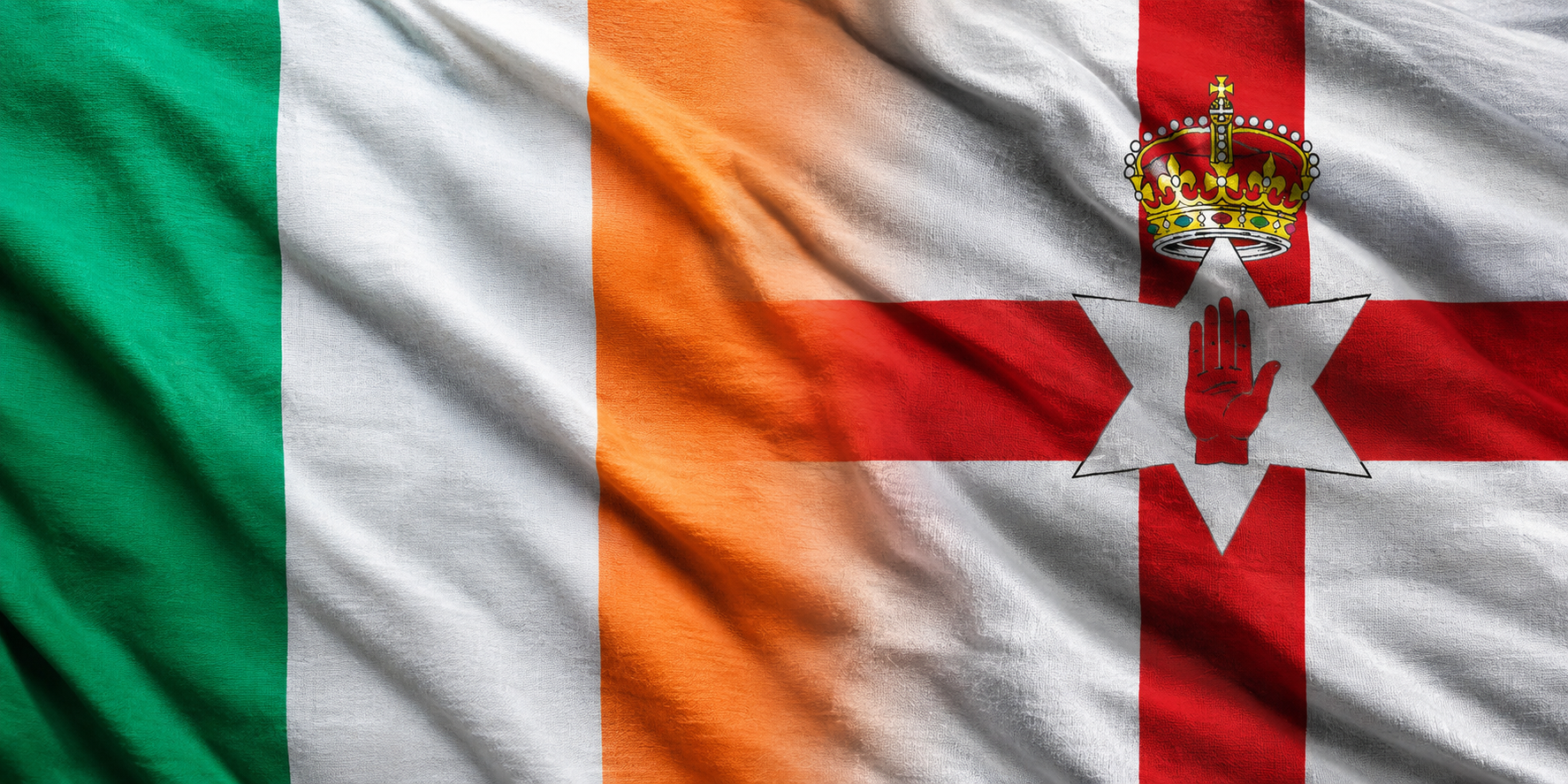
Featured image: AI illustration.