
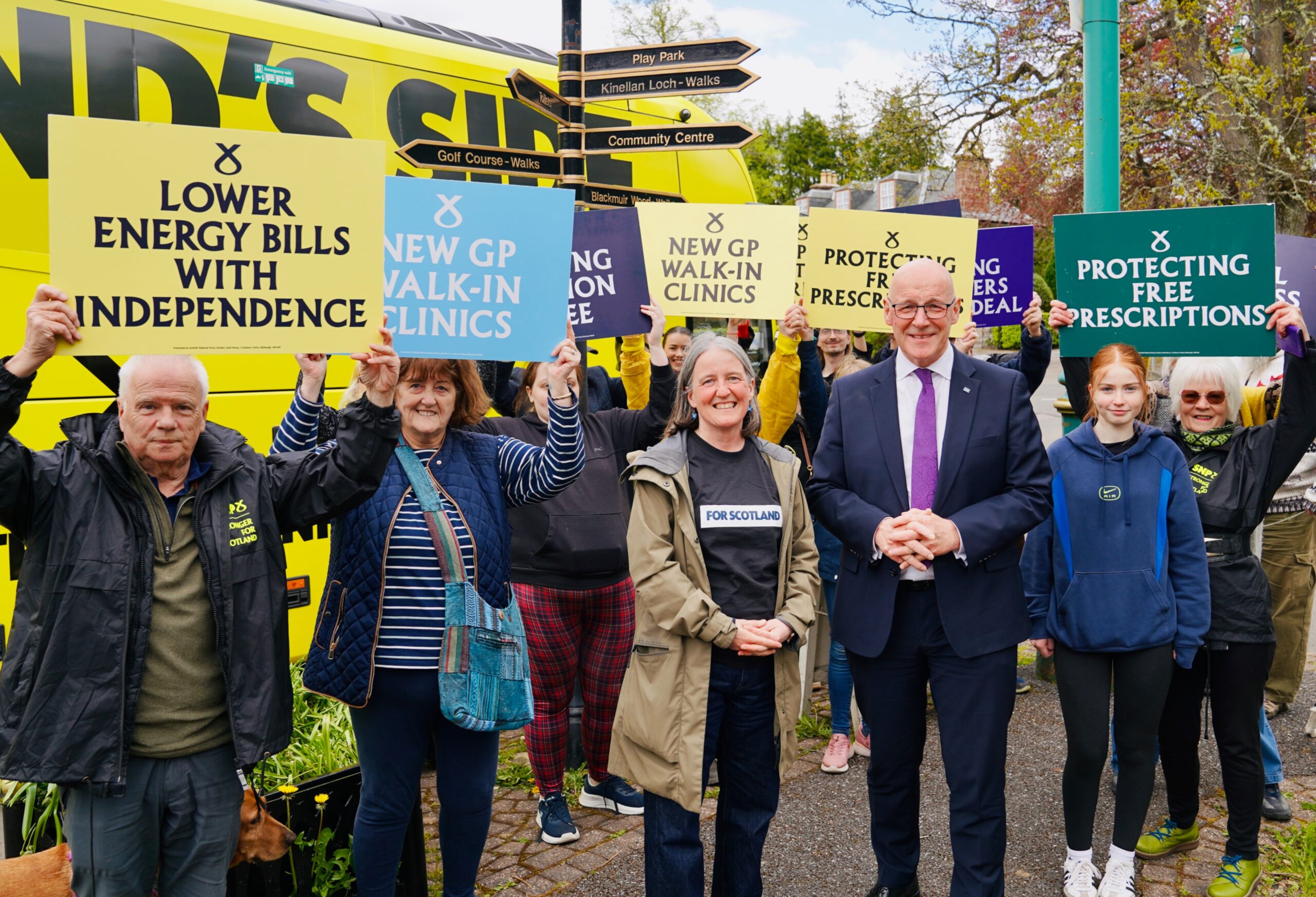

Members of the Scottish Parliament have this week backed a motion calling for a referendum on whether Scotland should remain part of the UK or become an independent nation.
The motion comes following the results of the May 7 elections for the devolved Scottish Parliament, which resulted in a fifth successive term for the pro-independence Scottish National Party (SNP) – who have been in government for 19 years.
Read more: Britain’s two-party system fracture signals seismic shift in European political landscape
Prior to the election, John Swinney, First Minister of Scotland and SNP leader, had stated that a further majority for the SNP should be seen as a mandate for a second referendum on the issue, over a decade after the first was narrowly won by the ‘No to Independence’ side in 2014.
Swinney had explicitly based the SNP’s election campaign around this goal, stating at their party conference: “This election, we are not just in it to win government, we are in it to win independence for Scotland.”
“For the sake of our security and our prosperity, Scotland returning as swiftly as possible to membership of the EU must be a core national priority – and should be a shared national purpose,” Swinney also said at a January 28 event in Edinburgh.
The First Minister had been clear that calls for a second independence referendum would be dependent on a clear majority for the SNP, stressing that if Scots wanted Scotland to become independent, his party should win a majority at Parliament.
As results came in following the election, it became clear that the SNP had in fact lost their overall majority within the Scottish Parliament at Holyrood – but remained the largest single party.
Following the contest, Swinney maintained that with the inclusion of new Green Party MSPs – who are themselves also for Scottish independence – there was now a record number of 73 pro-independence voices within Holyrood.
MSPs have since voted for a motion, initially put forward by Swinney, calling for Holyrood to be given power to call on a new referendum. 72 MSPs from the SNP and the Greens voted in favour, and 55 from other parties voting against.
The motion stated that the Scottish election results gave a “clear mandate that decisions about Scotland’s future are best taken in Scotland and that mandate must be respected,” further calling on the UK government to grant a Section 30 order – which would allow the Scottish Parliament to hold a referendum.
Following the vote on May 26, Swinney said he will initiate talks with Prime Minister Keir Starmer in two weeks’ time.
“Try as they might, the Westminster parties cannot wish away the movement for Scottish self-determination,” he said. “During the recent election, they threw everything at the campaign against independence, and they failed. Today is the start of a process that I believe will lead Westminster to a yes to a referendum – and Scotland to a yes to independence.”
First Minister Swinney also affirmed that, given a support for independence in all UK devolved territories – Scotland, Northern Ireland and Wales – it is clear that constituents are looking at the “damage of Westminster control.”
Ultimately, however, the power to grant such a referendum rests solely with the UK government at Westminster; something which Westminster has again rejected following the motion passed by Holyrood on May 26.
Downing Street has claimed there is no consensus for another referendum. “People need and want their governments focused on the issues that really matter – economic growth, the cost of living, and public services. Our focus must be on delivery, not division,” a spokesperson told the BBC.
UK Prime Minister Keir Starmer had previously affirmed that he did not anticipate another independence referendum taking place whilst he remained in office.
Opposition MSPs at Holyrood have labelled the SNP’s motion as “performative,” and have accused the Scottish government of ignoring the important issues affecting ordinary Scots – as well as distracting from the ongoing controversy around £400,000 worth of embezzlement by Peter Murrell, former SNP CEO and husband to former First Minister Nicola Sturgeon.
Swinney has remained adamant that this is something he will continue to push for. “I am not going to just kowtow to 10 Downing Street. The people of Scotland have decided that this Parliament has got an independence majority, and I am going to use that independence majority to deliver independence for our country.”
Featured image: John Swinney via X.