


U.S. rocket company LEAP has signed a Memorandum of Understanding to develop recurring launches from Sutherland Spaceport in northern Scotland as Europe faces a widening gap between its satellite ambitions and the rockets available to carry them.
The agreement with Highlands and Islands Enterprise (HIE), the Scottish development agency that owns the site, would make Sutherland the first LEAP launch location outside the United States and the company’s base for European customers.
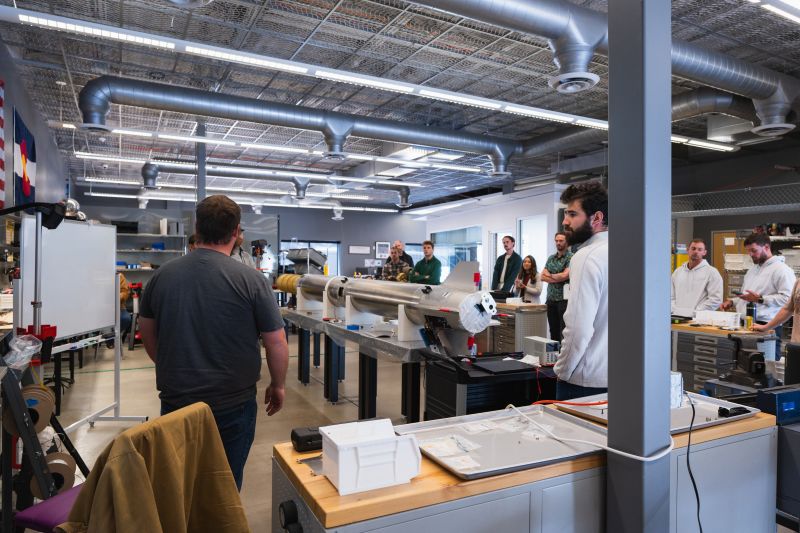
LEAP, based in Colorado, is building a dual-use logistics network to move critical payloads anywhere on Earth within minutes, and to carry small satellites into orbit. Operations at Sutherland would begin with its reusable Bullfrog rocket before progressing to the larger Bighorn vehicle.
The MOU is non-binding, and launches remain subject to technical assessment, regulatory approval and final commercial agreements. It is, however, the latest sign that LEAP is strongly considering the UK for its European headquarters.
A shortfall Brussels can no longer ignore
The deal landed weeks after EU Space Commissioner Andrius Kubilius warned that Europe is running short of launch capacity just as demand surges.
According to the Commission, EU flagship programmes including Galileo, Copernicus and the IRIS² secure connectivity constellation will require 62 launches by 2034. Ariane 6 is planned to fly ten times a year, yet the EU expects to need 14 Ariane launches in 2031 alone. Vega faces a similar gap, with eight launches needed in 2030 against a planned six a year.
Kubilius also noted that Europe accounts for just 11% of global public space investment, compared with 60% for the United States. Brussels has proposed €131 billion for defence and space in the 2028 to 2034 EU budget, and plans to publish an action plan on access to space in 2027.
The Commissioner singled out ground infrastructure especially as a bottleneck. Europe has one operational spaceport in French Guiana, and he argued that emerging sites should be connected so they can share services and raise launch cadence, much as airports cooperate.
A distributed model for a fragmented market
LEAP’s business model aligns closely with that vision. Instead of relying on a few large launch sites, the company pairs mass-produced vehicles with modular factories and transportable launch equipment. Each factory is designed to build more than 30 vehicles a year.
“We’re not just building a rocket. We’re building a global logistics network, and a network needs launch sites wherever customers require them,” said LEAP CEO Chris Beckman. “Sutherland is an ideal starting point for a network that begins in Europe.”
Bullfrog flew for the first time in May from Mojave, California, and launched less than 30 hours after arriving at the range, according to Payload.
The UK sits outside the EU but remains a member of the European Space Agency, and its northern sites offer access to the polar and sun-synchronous orbits favored by Earth observation satellites. The country has yet to host a vertical launch, however.
SaxaVord in Shetland holds the only full licence, and Rocket Factory Augsburg’s maiden flight from there has been delayed. Germany’s Isar Aerospace recently completed the first commercial launch from European soil, from Andøya in Norway.
A second attempt at Sutherland
The MOU revives a site that stalled when its original operator, Orbex, entered administration in February. HIE bought the spaceport’s assets in August.
“There’s worldwide demand for modern launch facilities and Sutherland is perfectly positioned to be used by a range of companies and help establish Scotland as a major centre of European spaceflight,” said David Oxley, HIE’s director of strategic projects.
Scotland’s space sector already extends well beyond launch, too. The industry generated £381 million (€456.8 million) in income, according to the Scottish Government, and employs more than 7,000 people, with a government target of 20,000 jobs. Glasgow builds more small satellites than anywhere else in Europe, and the country accounts for around a fifth of all UK space jobs.
Dr Natasha Nicholson, CEO of industry body Space Scotland, said the MOU shows “Scotland’s attractiveness not only as a launch location, but as a place to build and grow space operations.” She pointed to the country’s launch infrastructure, supply chain and links across the UK and European space sectors as “a compelling platform for growth” for LEAP.
Talks with UK stakeholders also cover manufacturing, testing, supply chain partnerships and local recruitment in the Highlands and Islands.
Featured image: LEAP via LinkedIn

Disclosure: This article mentions a client of an Espacio portfolio company.