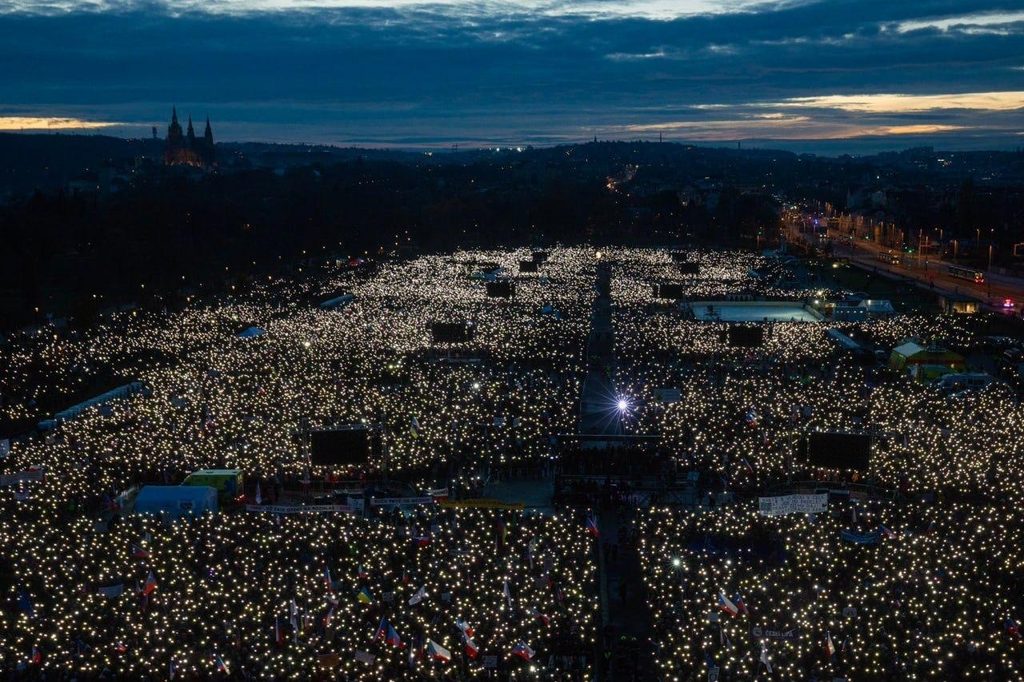
Czech public media workers held a one-day strike on November 3 to protest the media reforms proposed by Prime Minister Andrej Babiš and his government. According to the proposal, the funding of public media would be shifted from license fees to state funding, alongside a reported 15% reduction in funding.
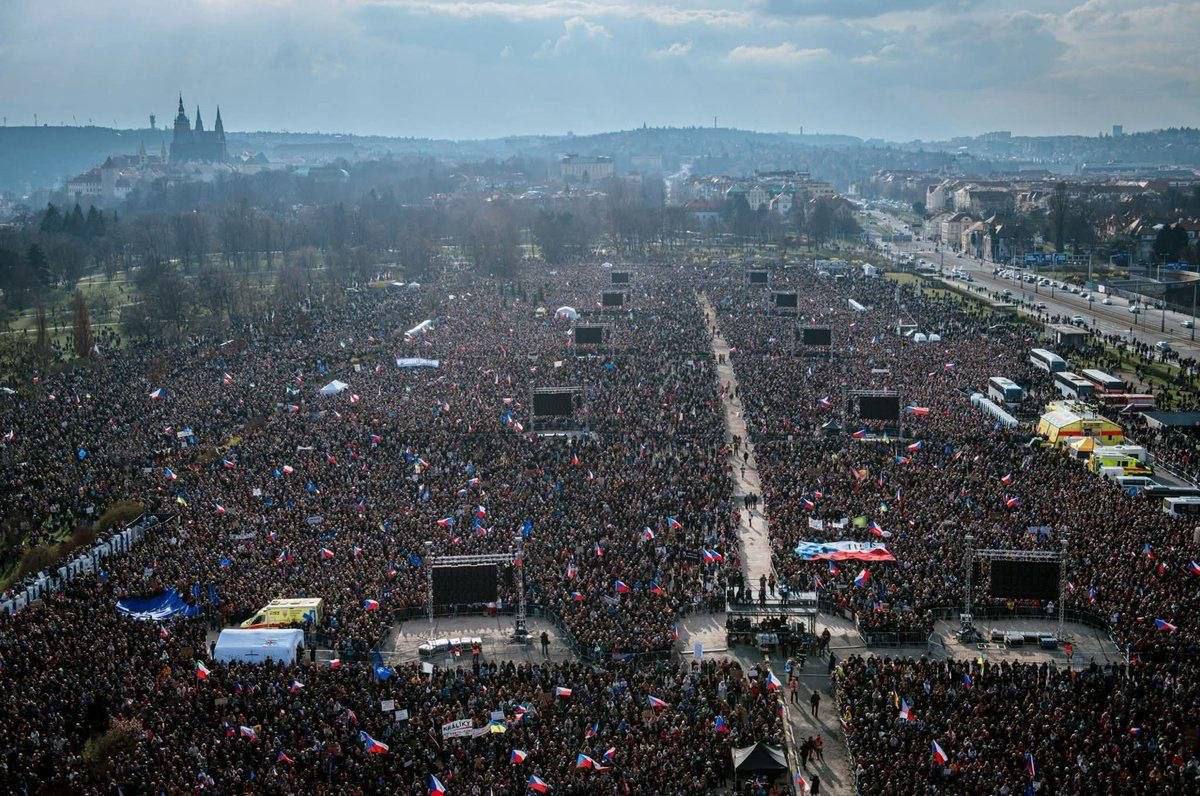
To support the strike and oppose this proposal, thousands of protesters have taken to the streets of Prague, Brno, and Ostrava in recent weeks.
The plans have aroused concerns centring on potential threats to journalistic freedom and the consequences of financial reliance on the government. Despite this, the Czech government insists the reforms would save households money while preserving media freedom.
“Their funding will be more stable, more predictable, and better protected than it is today,” Babiš claimed on X.
Czechia’s proposed overhaul of public broadcasting reflects a wider European debate over how to protect media independence. While protests and strikes in Czechia show widespread opposition to the idea of state funding, the structure of media financing across Europe shows state funding is not inherently incompatible with independence.
The decisive questions are how much discretion governments retain over funding, what legal safeguards exist, and whether political institutions respect public media independence.
What Slovakia’s switch reveals about the risks
Dr Marína Urbániková, associate professor at Brno-based Masaryk University and Prague’s Charles University, spoke to EU Reports about the results of her comparative study of press freedoms in 13 European countries.
Her conclusion determined that while moving from licence fees to state-budget funding generally increases risks to political independence, funding adequacy and long-term predictability, national culture and political history plays a huge role in upholding the integrity of state-funded media.
“State-budget funding makes funding decisions less visible and more exposed to political priorities, electoral cycles and competing spending demands. This creates greater scope for funding to be used as a tool of political pressure,” Urbániková said.
This claim is clearly evidenced in Slovakia, where the change to state-funded media in 2023 led to the statutory share of GDP allocated to public service media being reduced from 0.17% to 0.12%, resulting in the broadcaster losing almost a third of its budget.
In the wake of this decrease in budget for Radio and Television of Slovakia (RTVS), the European Centre for Press and Media Freedom wrote that “slashing the budget undermines sustainability of RTVS’s funding and represents a risk for the public media’s independence, threatening media freedom in Slovakia.”
How Norway keeps state money at arm’s length
Norway serves as a valuable counterexample, showing how state funding can work where there is strong political consensus and a culture of respecting public media independence.
Under the Norwegian Media Support Act, the government proposes fixed four-year financial frameworks for public broadcaster NRK and direct press grants. Locking in budgets across election cycles prevents ruling parties from threatening annual cuts over critical coverage.
Meanwhile, the Media Liability Act and the NRK Charter legally prohibit owners, publishers, and government ministers from instructing or overruling appointed editors. As a result of these safeguards, Norway sits atop the RSF media freedom index for 2026.
Per the index, Serbia is Europe’s most poorly-rated media freedom landscape for 2026, in spot 104 globally, followed by Bosnia-Herzegovina in the 90th slot. Czechia’s landscape, however, remains “vulnerable to political cycles,” and sits on spot 11, scoring 83.01, as compared to its 10th spot and 83.96 score last year.
The funding model matters, but so does the political environment in which it operates. State funding can create greater opportunities for pressure, particularly where governments face few institutional constraints. The fact that the political environment plays such a pivotal role in the integrity of state-funded media makes robust institutional safeguards all the more important.
Why funding matters: The safeguards
“Not even licence fees, household charges or dedicated media taxes are immune to political pressure, particularly when their level or key parameters can be changed through ordinary legislation,” Urbániková explained.
This shows that the importance lies in the design of the system, rather than the system itself. “The weaker the political culture of respecting public service media independence, the stronger the legal safeguards need to be,” she added.
While Czechia does have safeguards against the abuse of power that a state-funded model risks, the European Broadcasting Union wrote to Babiš expressing concern over the strength of these safeguards.
“We believe the current proposal risks creating financial dependency on political decision-making due to reduced funding levels, limited indexation and the absence of independent oversight,” despite Czechia’s “strong tradition of independent public service media,” the union wrote.
The EU has its own safeguarding policies that aim to preserve media freedom across its 27 member states, including the European Media Freedom Act that became fully implemented in 2025 and requires EU member states to ensure the protection of editorial independence. The act goes as far as to implement a Media Pluralism Monitor to identify potential risks to media pluralism.
This seems to have influenced the Czech government to hesitate on the implementation of its new proposal. Culture Minister Oto Klempíř proposed pausing parliamentary consideration of the funding reform until MPs begin examining legislation implementing the European Media Freedom Act in Czechia.
The proposal followed a video call with European Commissioner Michael McGrath.
Brussels, protests and what comes next
While national governments still hold considerable responsibility for ensuring media freedom in their countries, the European Commission can monitor implementation and pursue infringement proceedings where it considers EU law has been breached.
In the Czech case, regardless of the country having proposed a switch to state-funded media, it does not immediately breach the EU’s standards. Rather, its vigilance, alongside protests from thousands of Czechs, are holding the government to account over press freedom.
Urbániková argued that “reform should emerge from a discussion involving the government, opposition, public service media, and experts, with the aim of building the broadest possible consensus.”
Recent developments suggest that the Czech dispute may move closer to this approach, with the government signalling a willingness to reconsider its proposed funding arrangements following widespread public opposition and concerns over their compatibility with European media freedom standards.
However, delaying legislation or revising the funding mechanism will not guarantee public media independence. Any replacement system must provide adequate and predictable funding while limiting the government’s ability to use financial decisions as a means of political pressure.
Ultimately, Czechia’s dispute may reveal less about the future of one country’s broadcasters than about Europe’s ability to ensure that public media independence is protected in practice, rather than simply promised in law.
Likewise, the European Media Freedom Act provides a common framework, but its effectiveness will depend on whether governments are willing to uphold its principles when they conflict with their own political interests.
Featured image: Tim White via X