
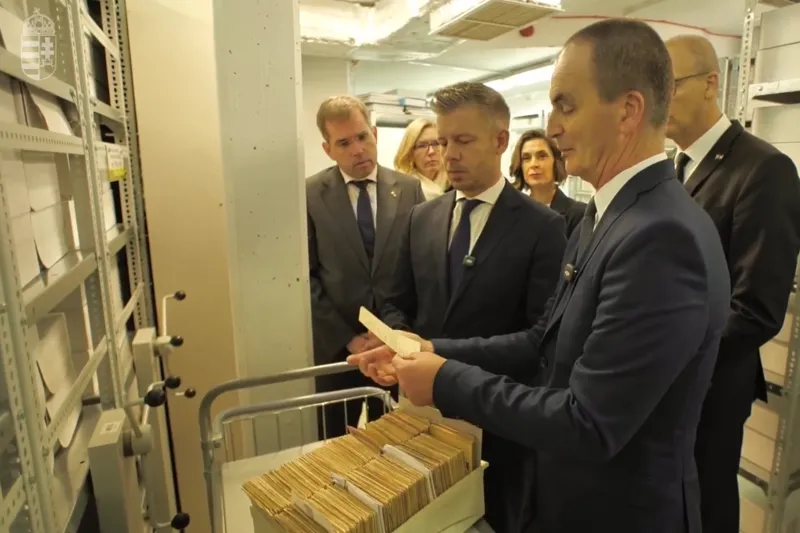
Hungary released around 60,000 Communist-era secret police files on November 4. The online public database allowed Hungarians to see—for the first time in more than 36 years—which of their fellow countrymen held a state police record under the old regime.
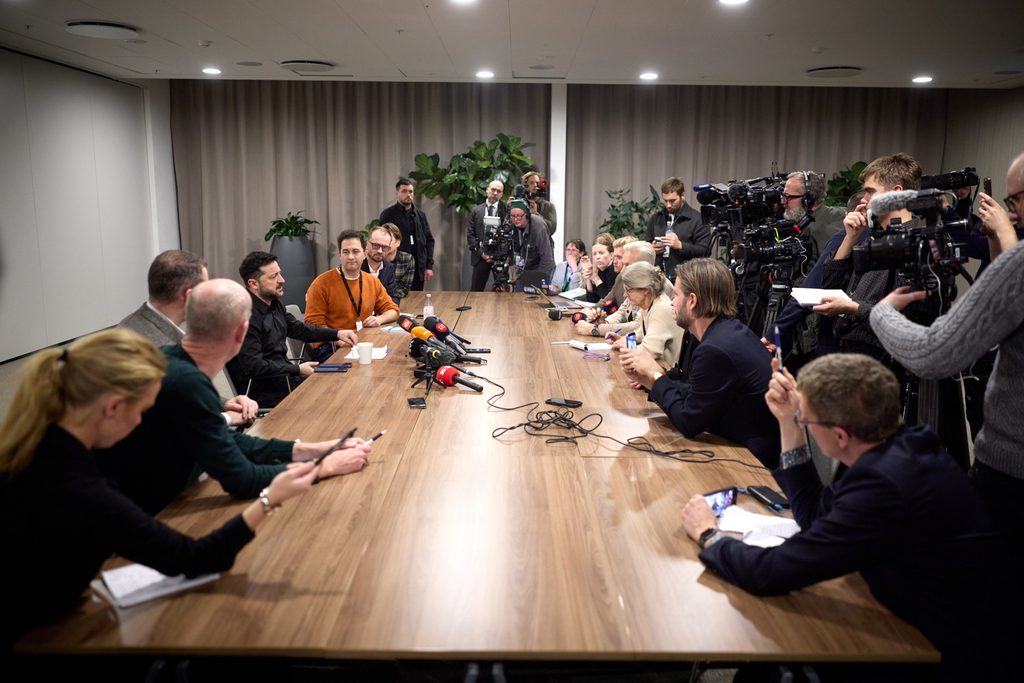
The release of the records was a prominent promise of Prime Minister Péter Magyar as he ran for election earlier this year.
“I ask everyone to treat this long overdue publication of documents with dignity and humanity … as many families will now face difficult information often related to a deceased member of their family,” he said in a briefing after the records were made public last week.
Under communism, Hungary’s secret police were the regime’s main instrument of terror. In the late 1940s and early 1950s, the State Protection Authority (ÁVH) tortured and killed perceived enemies of the state and staged show trials. After the 1956 revolution, the Interior Ministry’s III/III department took over, spying on churches, dissidents and intellectuals through a network of informers that, by some estimates, numbered 150,000 people over four decades.
Many of these informants were ordinary citizens, and some were blackmailed into reporting on those around them.
For decades, Hungary’s successive governments have deprioritised or even declined to release the records publicly. A substantial number of records were also deliberately destroyed during the 1956 Hungarian Revolution, the early 1970s, and especially through the country’s transition to democracy. A Hungarian Helsinki Committee report estimates that around 107,000 state security files were destroyed between December 1989 and January 1990.
The newly-released records are only the first batch of the remaining files being circulated; the government has promised that around 9,000 additional files will be released by February 25, 2027, Hungary’s Day of Remembrance for the Victims of Communism.
Wrong names and missing stories
Already, however, the release has caused considerable controversy in Hungary. In particular, a data-processing error saw over 160 victims of state surveillance wrongly identified as secret police collaborators.
Former Hungarian parliamentary official Sándor Lezsák was among those affected. His name appeared in the searchable database as though he had been a collaborator, when in truth he had been among those spied on by the Communist government.
He publicly challenged the implication, and officials apologised and amended the records. Péter Magyar also issued a public apology.
The database has prompted further confusion and outrage beyond its misattribution errors. Gabriella Papp, a Hungarian citizen speaking to EU Reports about the files, said that while the incorrect labelling was “a database error, corrected immediately,” the 60,000 records themselves reveal little about the stories behind them.
“The story is key and has to be checked one by one mostly by the family,” she said.
For instance, someone may have been approached by the state to act as an informer, but refused; the records would still list their name on the database.
Equally, someone may have agreed to act as a state informer out of fear of repercussions of refusing in the context of a substantially repressive regime environment, but never actually filed a single report about a fellow citizen.
Alternatively, they may have made notes intended to mislead the state and protect their neighbours, deliberately concealing their fellow citizens’ involvement in resistance movements or proclaiming their loyalty to the government to protect them.
Papp told EU Reports that the database does not distinguish between these circumstances, implying that all those named were willing and truthful informers to the state.
She added that whilst some cases involve a “real informer”, who made reports “to make people’s lives harder”, she feels that how an informer was approached is “important” and would distinguish morally between those who complied with the state “out of fear, especially after 1956”, and those who became informers to receive material advantages “or without any pushing”.
She also highlighted the contrast with Hungary’s neighbours Czechia, Romania, and Germany, which made the files openly accessible by their citizens after 1989.
“In Hungary, it never happened,” she said. “For direct ancestors everybody could make a request to get the information about that relative, but there were no open databases.”
She believes “many of the actual people in power” in Hungary “have records and were informers. This prevented them from pushing for public release.”
Transparency, but not catharsis
Adam Furst, a Budapest-based advertising professional who voted for the new government in the April elections, called the release of the files “a pretty big deal” in an interview with EU Reports.
“Previous governments had repeatedly resisted making them public, so when the new government finally did, it was seen as a symbolic gesture of transparency.”
However, he described the release itself as “a little underwhelming in terms of actual details”, and shared Papps’ concerns about a lack of contextualisation. “The files didn’t really explain the exact nature or extent of each person’s involvement, so there were still a lot of unanswered questions.”
He added that “the process could have been much smoother.”
Beyond the misattribution error, he highlighted the release’s postponement by nearly a week at short notice.
“The new government originally wanted to release the records on October 23, a national holiday that commemorates the 1956 revolution, but also carries strong symbolic associations with Hungary’s democratic transition. Eventually, they had to postpone the release by almost a week because of the sheer amount of material that needed to be digitised and organised into a searchable database.”
Furst’s main concern, though, was the discrepancy between what the public had prepared for and what they actually received. “A lot of people expected some kind of catharsis, but what they got in many cases was fragmented and incomplete information.”
He acknowledged that this may have been inevitable, though. “Part of the reason is that many of these files were lost, deliberately destroyed or mishandled over the years.”
The existing files named “a number of well-known people associated with Fidesz, Orbán’s ruling party for the past 16 years, although people opposed to his system appeared in them as well.”
A host of public figures in the country were also named in the records. In Furst’s view, the most internationally recognised name is Katalin Karikó, the Nobel Prize-winning biochemist known for her pioneering mRNA research, which became foundational to the development of COVID-19 vaccines. Another recognisable name is János Martonyi, a former Hungarian Minister of Foreign Affairs who is well known in European diplomatic circles.
“Beyond them, the files contain names from the media, music, politics and the Church.”
Unlike Papp, Furst admitted he wasn’t sure how Hungary compares with its European neighbours, but similarly emphasised that “the common consensus is that one reason the records weren’t released for so long is that Hungary’s transition from communism to democracy in 1989 wasn’t exactly clear-cut.”
Specifically, the political system changed, but many who had held power or influence under the previous regime managed to retain it in one form or another. “Releasing potentially compromising information from that era wasn’t necessarily in their interests. Keeping the files closed arguably helped preserve parts of the old system and avoided opening up uncomfortable questions that people in power might have had to answer,” he said, adding that it also makes it easier to control the narrative, “which has been a central feature of Hungarian politics in recent years.”
Now, Furst welcomes the change. “Personally, I think it was a good thing to make these records public. I believe every country has to face its own past and take responsibility for its wrongdoings.”
But publishing them, he said, could also harm the victims, adding that there is no guarantee that everything written in the reports is accurate. “However, if someone’s name appears in the records, their relatives can request access to the relevant reports privately.”
“So, if the collective sense of closure felt a little underwhelming, perhaps the more meaningful process of closure can still happen within individual families,” he concluded.
Featured image: Peter Magyar via Facebook