
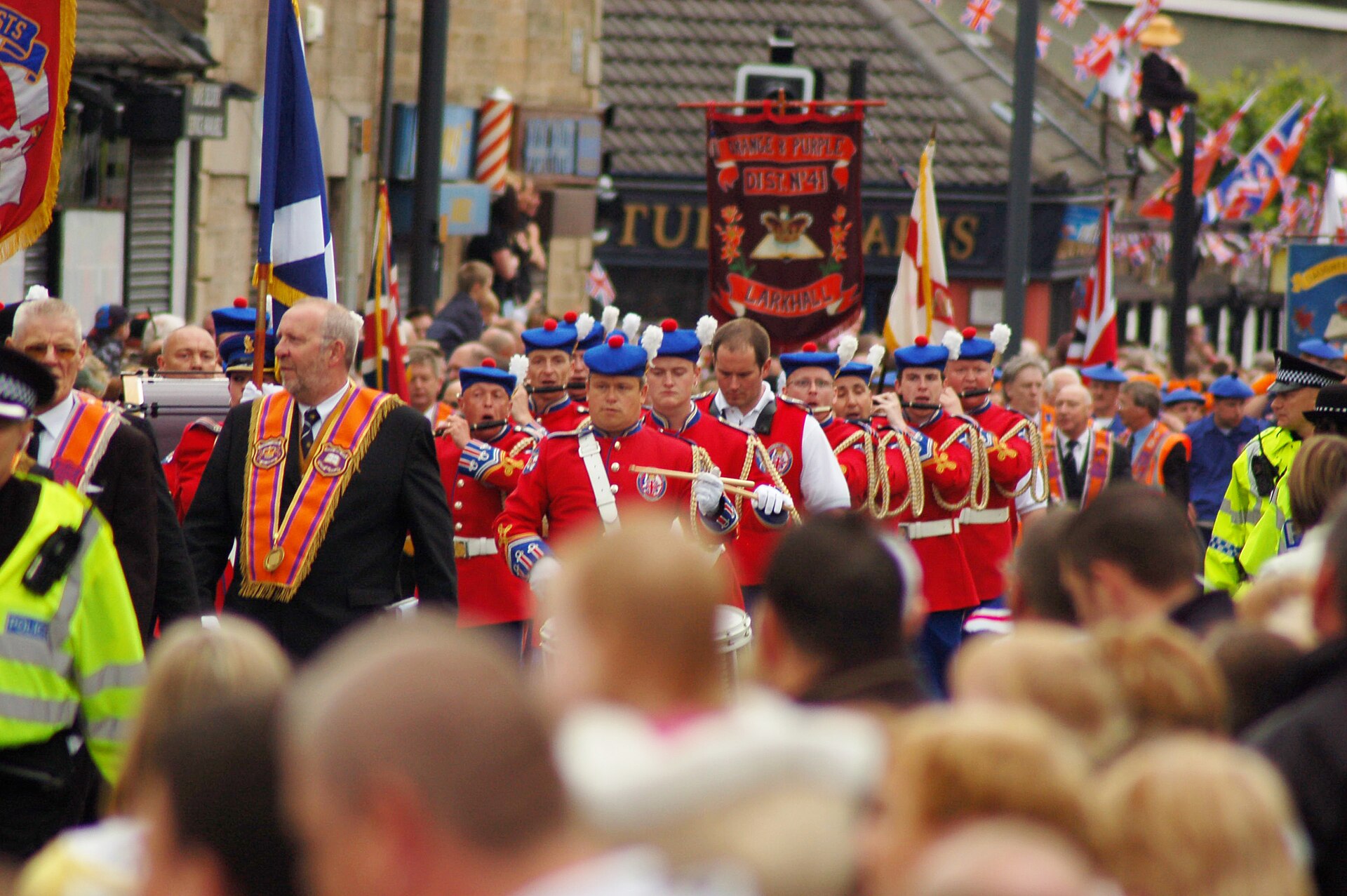
The UK’s Secretary of State for Northern Ireland, Sir Chris Bryant, confirmed that the controversial Drumcree parade, held by the group known as the Orange Order, will not be going ahead, following two weeks of protests.
The parade, which was planned to involve members of the Orange Order marching from Drumcree Church into Portadown, Northern Ireland, along the heavily Catholic Garvaghy Road, had been blocked from going ahead by a mass gathering of Irish nationalist protestors.
Bryant stated on Friday, October 9, that he’d been advised by Police Chief Constable Jon Boutcher that major intervention would be needed if the procession happened as planned, and that it carried an unacceptable risk of serious injury, disorder and a wider contagion effect across the country.
The Orange Order, nicknamed Orangemen, are an organisation comprising those committed to Northern Ireland’s continued union with the UK. They take their name from William of Orange, the seventeenth century Protestant King of England and Scotland who defeated his Catholic rival James II in a battle that is still celebrated by Orangemen each year since.
Read more: Trump’s united Ireland remark reopens debate London wants closed
These marches have been upheld by Northern Ireland’s Protestant unionist community as a key part of their identity and heritage. However, they have long been controversial due to being seen by Catholics and Irish nationalists as sectarian and purposefully intimidating towards Catholics.
Violence between Orange Order supporters and Irish nationalists had become a frequent problem during the Troubles – the period from the 1960s to the 1990s marked by continual terrorist violence by both nationalist and unionist paramilitaries, with bloodshed throughout Northern Ireland, Great Britain, and the Republic of Ireland.
Garvaghy Road had been one of the most hotly contested areas in which the Orange Order marched, with the Drumcree parade sparking violence and riots by both unionists and nationalists during the 1990s.
In 1998, the same year as the Good Friday Agreement which brought the Troubles to an end, the Orange Order was banned from marching specifically through Garvaghy Road, though they had continued to apply to do so since then.
Stoking old tensions
In July, an appeal was made against this ban, resulting in the Parades Commission granting the Orange Order the right to march down Garvaghy Road for the first time in almost thirty years.
This was met with immediate outrage by members of the Garvaghy Road Residents’ Coalition, and a mass gathering was assembled to block the Orange Order from progressing down the route.
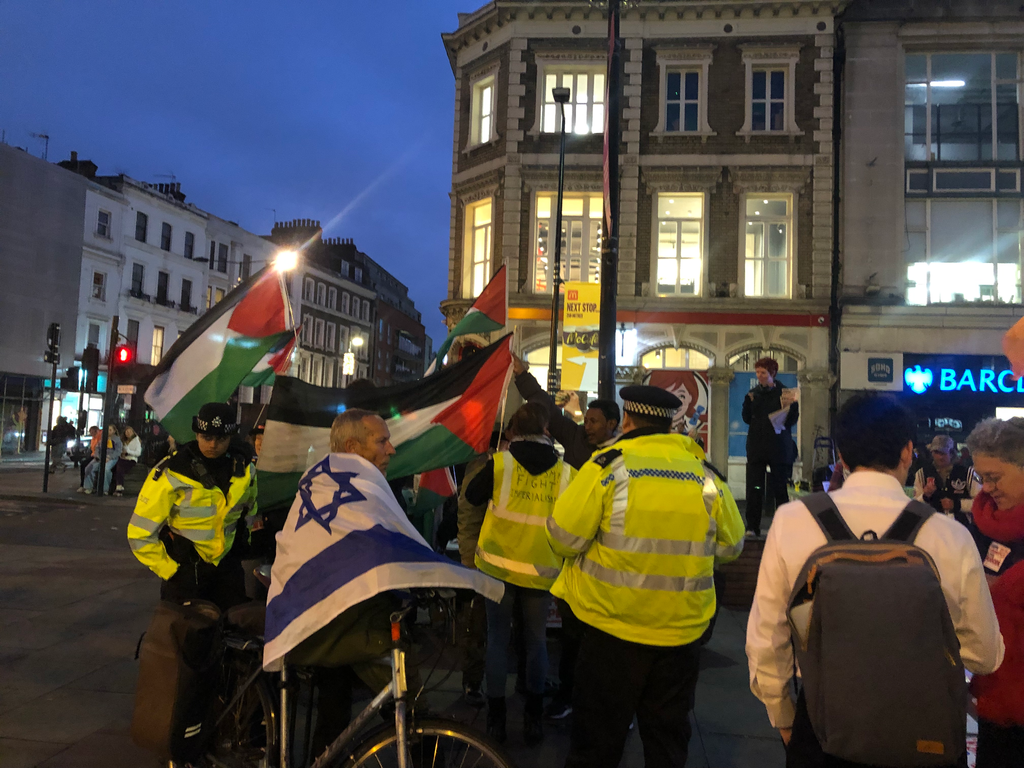
The blockade attracted widespread support from across the British Isles, with rival protests for and against them taking place in Glasgow, on October 4.
In London, Declan Kearney, a member of the Northern Irish Assembly, Stormont, and the Irish nationalist Sinn Féin party, compared the Orange Order to the fascist blackshirts of the 1930s, claiming that “the historical parallels are unmistakable”.
“The fascists did not pass through London’s East End, and the Orange Order will not pass Garvaghy Road,” he added.
Sinn Féin had called upon both Bryant and UK Prime Minister Andy Burnham to intervene and to halt the march. Similar calls were made by Members of the Republic of Ireland’s Parliament, the Dáil, Irish MEP’s, and a cross-party group of British MP’s and peers, who sent a letter to Bryant expressing their concerns that the march could reignite old conflicts if allowed to go ahead.
“Over the last 28 years, the progress across Northern Ireland has been extraordinary,” they wrote. “We have seen an entire generation grow up without experiencing the daily violence of the past. This specific parade was a notorious flashpoint for sectarian tension and violent disorder.”
In forcing the march through a majority-Catholic neighbourhood, the letter added, organisers would deeply “retraumatise” the local community that had spent decades healing. “Allowing this march to proceed risks undoing the hard-won progress and reopening old wounds.”
Lawyers representing the Parades Commission meanwhile maintained that what was being proposed would be very different to the kinds of inflammatory marches seen in previous decades. “The folk memory of what happened in the 1990s relates to something that’s categorically different.”
Carla Lockhart, MP for the Democratic Unionist Party (DUP), who has since been given extra security protection following abuse she received, had insisted that the 35 Orangemen posed from Portadown were “no threat to anyone.”
Bryant had hosted talks between the Orange Order and Garvaghy Road residents over the previous week, though these failed to reach an accord.
“I think this is the end of these conversations,” Bryant stated. “We haven’t come to a settled agreement and it’s a shame but my door remains open.”
The case remained in legal deadlock after the Court of Appeal announced on October 5 that it would be reserving judgment on the matter. The standoff at Garvaghy Road thus continued over the following week, culminating in Bryant’s decision to overrule the Parades Commission’s previous decision, and block the march from going ahead.
“I have not taken this decision lightly,” stated Bryant. “As the courts affirmed, the Portadown District had a lawful determination from the Parades Commission allowing the procession.”
The political fallout
The overturn was met with widespread relief by Garvaghy Road’s residents and busy Irish nationalist politicians.
“Twenty-eight years of peace and progress has been protected. People from every background and every corner of Ireland have delivered a clear and unambiguous message: our society will not be dragged back into the past. There is no going back, not now, not ever,” Sinn Féin president Mary Lou McDonald stated.
Regardless, the dispute has also raised questions around the position of Northern Irish First Minister Michelle O’Neill, who had personally joined the nationalists protests despute the Drumcree parade having been legally upheld.
She stressed that the law was wrong to permit the march, and that it was “a privilege to be among 15,000 people who came together to show their support for the Garvaghy Road community.”
O’Neill is the first member of Sinn Féin to serve as First Minister of Northern Ireland, and had in September joined Scottish First Minister John Swinney and Welsh First Minister Rhun ap Iorwerth in signing a letter calling on Andy Burnham to grant each of their constituent countries referendums on independence.
Her opponents in the DUP and other unionist parties have accused her and her colleagues in Sinn Féin of assisting in breaking the law, stating that it cannot be “business as normal” and branding her as the “First Minister of Lawlessness”.
Phillip Brett, a DUP Member of the Northern Irish Assembly, has called upon O’Neill to resign. “When you became First Minister, you took a pledge of office which is in place at all times. The police service of Northern Ireland have now stated, a protest which you were involved in and encouraged others to be involved in, was unlawful,” he said.
Traditional Unionist Voice (TUV) Assembly Member Timothy Gaston also put forward a motion of no confidence in O’Neill and three other Sinn Féin ministers, which the First Minister dismissed as “performative”.
O’Neill also confirmed that she has received a letter from the police over her involvement, but has rejected calls for her to stand down.
Meanwhile, the Portadown District has said its Orangemen will be remaining at Drumcree, and have put forward a legal challenge at the High Court against Bryant’s decision, which has been adjourned till next week.
In the meantime, Garvaghy Road residents’ appeal has been dismissed by the court, in spite of the Secretary of State ruling in their favour.
“We are aware Judicial Review proceedings are now being lodged against the Secretary of State’s capitulation to the rule of the mob,” they added. “The Portadown District will be remaining on Drumcree Hill pending the outcome of this legal challenge.”
Featured image: Orange Parade in Larkhall, Scotland, United Kingdom.
Author: Ross Goodman from Scotland, United Kingdom
Source: Wikimedia Commons
Creative Commons Licenses