

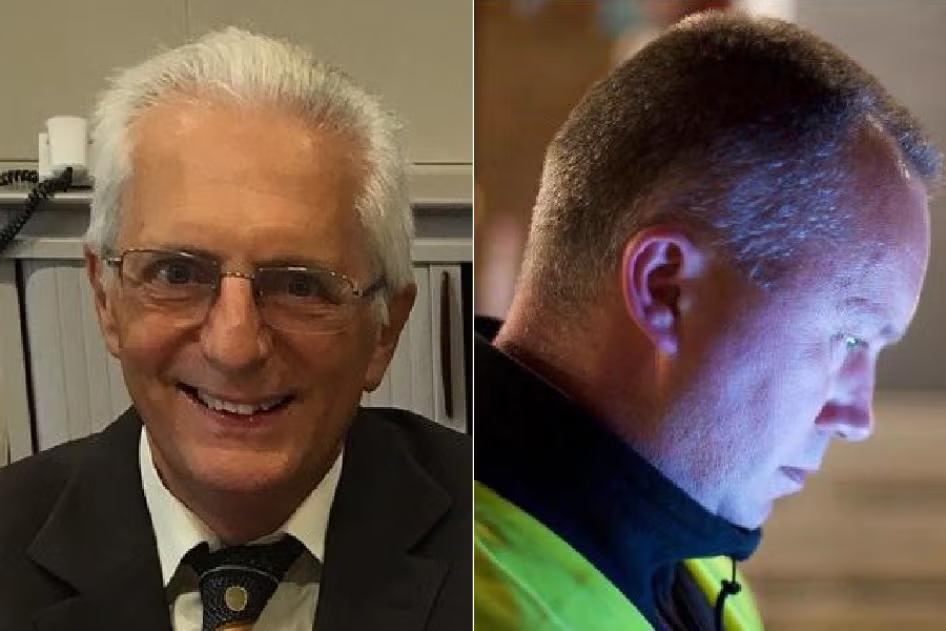

Tommy Olsen notified Greek authorities when people arrived seeking asylum on the islands of Kos and Farmakonisi. Panayote Dimitras sent officials their names and nationalities. That was July 2021. Five years on, both men are on trial for it.
Olsen, a Norwegian human rights worker, and Dimitras, a Greek rights defender, are facing trial alongside two Cameroonian asylum seekers at the Three-Member Court of Appeal for Felonies of the Dodecanese in Rhodes. The charges consist of participation in a criminal organisation, facilitating the illegal entry of eight migrants and facilitating their illegal residence.
They face up to 20 years in prison if convicted. Both men deny wrongdoing.
The two Cameroonian asylum seekers are also defendants in the case. Greek authorities allege that one helped steer the boat that brought the group to Kos, while the other helped organise the journey.
Their inclusion in the same case helps explain why prosecutors have characterised the events as part of an organised effort to facilitate the migrants’ entry into Greece. Both are accused alongside Olsen and Dimitras under the same criminal proceedings.
Who are Olsen and Dimitras?
Olsen founded Aegean Boat Report in 2017 to monitor migrant arrivals and conditions in the Aegean. The organisation has worked to document distress incidents and alleged pushbacks by Greek authorities.
Dimitras is spokesperson for Greek Helsinki Monitor, which has spent decades tracking rights violations and discrimination in Greece.
In July 2021, Dimitras allegedly passed on information about who had arrived and where they were from, according to the Observatory for the Protection of Human Rights Defenders. Olsen told authorities where to find them, so they could reach asylum procedures.
Greek prosecutors see it as facilitating illegal entry and stay, but the gap between the two readings of the same facts is what the case rests on. Human Rights Watch has said plainly that the two men’s actual work involved helping people access asylum procedures and documenting alleged abuses at the border.
Dimitras has also faced restrictions during the proceedings. He has been subject to a travel ban, required to report regularly to police, and ordered to pay €10,000 in bail since 2023.
The proceedings relate to events in July 2021, when the two men were contacted about people who had arrived on the islands. The case has taken several years to reach trial, with Olsen’s extradition proceedings in Norway adding a separate legal process to the Greek case.
The Norway complication
The case has not stayed confined to Greece, however. Olsen lives in Norway, and in March, Norwegian police arrested him after Greece issued a European Arrest Warrant for his extradition. A district court initially ruled the conditions for surrender were met, and he appealed.
On May 15, Norway’s Hålogaland Court of Appeal unanimously refused Greece’s request, citing inconsistencies with the Greek authorities’ account and arguing they didn’t amount to a crime under Norwegian law. Extraditing him risked violating his freedom of expression.
Olsen remains in Norway, represented in the Greek proceedings by his lawyer while the case continues to unfurl.
Not an isolated case
This isn’t the first time Greek courts have sought charges against people helping migrants seek asylum. In January, a Lesvos appeals court acquitted 24 aid workers on nearly identical charges—participation in a criminal organisation, facilitating illegal entry—after proceedings that had dragged on for more than seven years.
Both Amnesty International and Human Rights Watch have pointed to that acquittal when raising concerns about what’s now happening to Olsen and Dimitras. The same dubious human rights pattern, just involving different defendants.
It will now fall to a Greek court to decide whether notifying authorities about asylum seekers’ arrival is humanitarian work or a criminal offence. Human rights groups around the world are waiting to find out which answer it gives.
Featured image: via Human Rights Watch