

The European Commission has proposed major reforms to prepare the European Union for a future with 30-plus members.
Brussels unveiled the package on October 6, 2026, as Montenegro, Albania, Ukraine, and Moldova advance toward possible membership, targeting faster decisions, stronger rule of law safeguards, and budget changes before the bloc expands again.
The Commission’s review shows the EU can take in new members via targeted adjustments within the existing and future accession treaties, without a wholesale rewrite of the EU’s founding texts.
Read more: Europe celebrates as pro-EU front holds in Moldova election
Russia’s invasion of Ukraine has also pushed enlargement back to the center of EU strategy.
Rewriting how Brussels decides
The Commission wants member states to reduce unanimity requirements in selected policy areas and accession decisions. Instead, governments could use qualified-majority voting where current treaties already permit that shift.
Brussels particularly points to sanctions, human rights, civilian security and defence missions, tax fraud, energy taxation, and social protections as areas where passerelle clauses could be activated – provisions in EU treaties that allow the Union to change how it decides certain matters, moving from unanimity to majority voting or to the ordinary legislative procedure, skipping amendments.
For enlargement itself, the Commission recommends that the Council use qualified-majority voting to open negotiating clusters and take other intermediate steps in accession talks. Admitting a new member would still require unanimous Council approval and ratification by every member state.
Brussels also wants more enhanced cooperation when groups of countries seek deeper integration. That mechanism, which allows at least nine member states to move ahead together, has already been used to create the European Public Prosecutor’s Office and the Ukraine Support Loan for 2026-2027.
The proposal would revisit the size of the European Commission as membership grows. Current practice gives every member state one commissioner, despite treaty provisions allowing a smaller executive.
The treaties’ default option, a College equivalent to two-thirds of member states with equal rotation, remains available, but the Parliament, capped at 751 seats, would also need to redistribute seats to make room for new members.
“Enlargement of our Union is a geopolitical imperative,” Commission President Ursula von der Leyen said, stressing that institutions, policies and budgets must adapt as candidate countries advance.
Meanwhile, Enlargement Commissioner Marta Kos backed faster decision-making across an expanded bloc. “A bigger Union needs to be a more flexible Union,” she said.
Current members, however, must approve major elements of the policy shift prior to changes taking effect.
Stronger safeguards for new members?
The Commission also proposes stronger protections against democratic backsliding after countries join the EU. Under the plan, serious breaches could trigger funding cuts or restrictions on Council voting rights.
Any new institutional safeguard clause would apply for 15 years after accession, under which measures proposed by the Commission or requested by member states would be deemed adopted unless the Council rejected them by qualified majority within a set period.
Brussels says these safeguards would protect EU values without creating permanent second-class membership. “We do not want a two-tier membership,” Kos told reporters in Strasbourg.
The package goes further, establishing longer economic, internal market and justice safeguard clauses, which previous accession treaties limited to three years. A new “postponement clause” would let the EU delay a country’s accession as a last resort if it backslides between signing the treaty and joining, and new members would also be asked to commit not to block future enlargement decisions or use bilateral disputes to hold up Council decisions for a limited period.
Candidate countries could also gain gradual access to EU sectors before full membership; namely, energy, transport, digital policy, security, and defense.
Some candidates already see the benefits. Ukraine and Moldova, for example, joined the EU’s Roam Like at Home scheme in January, while Albania, Moldova, Montenegro, North Macedonia, and Serbia have begun taking part in the Single Europe Payments Area since October 2025.
However, access would depend on reform progress, policy alignment, and continued compliance with EU standards, meaning Brussels could reverse participation when candidates stop meeting agreed conditions.
The Commission also left the doors open to transitional limits on the free movement of workers after accession, as in previous enlargement rounds.
Paying for a bigger Union
On the topic of budget, the Commission points to its proposal for the 2028-2034 Multiannual Financial Framework as its main answer: candidates would receive pre-accession support through a new Global Europe instrument, combining grants, loans and guarantees, with payments tied to reforms and suspended or reduced if conditions are not met.
At accession, new members would be folded into the EU’s National and Regional Partnership Plans, with farm subsidies and other funds phased in. The Commission says extra commitment appropriations would prevent cuts to funding already planned for existing member states.
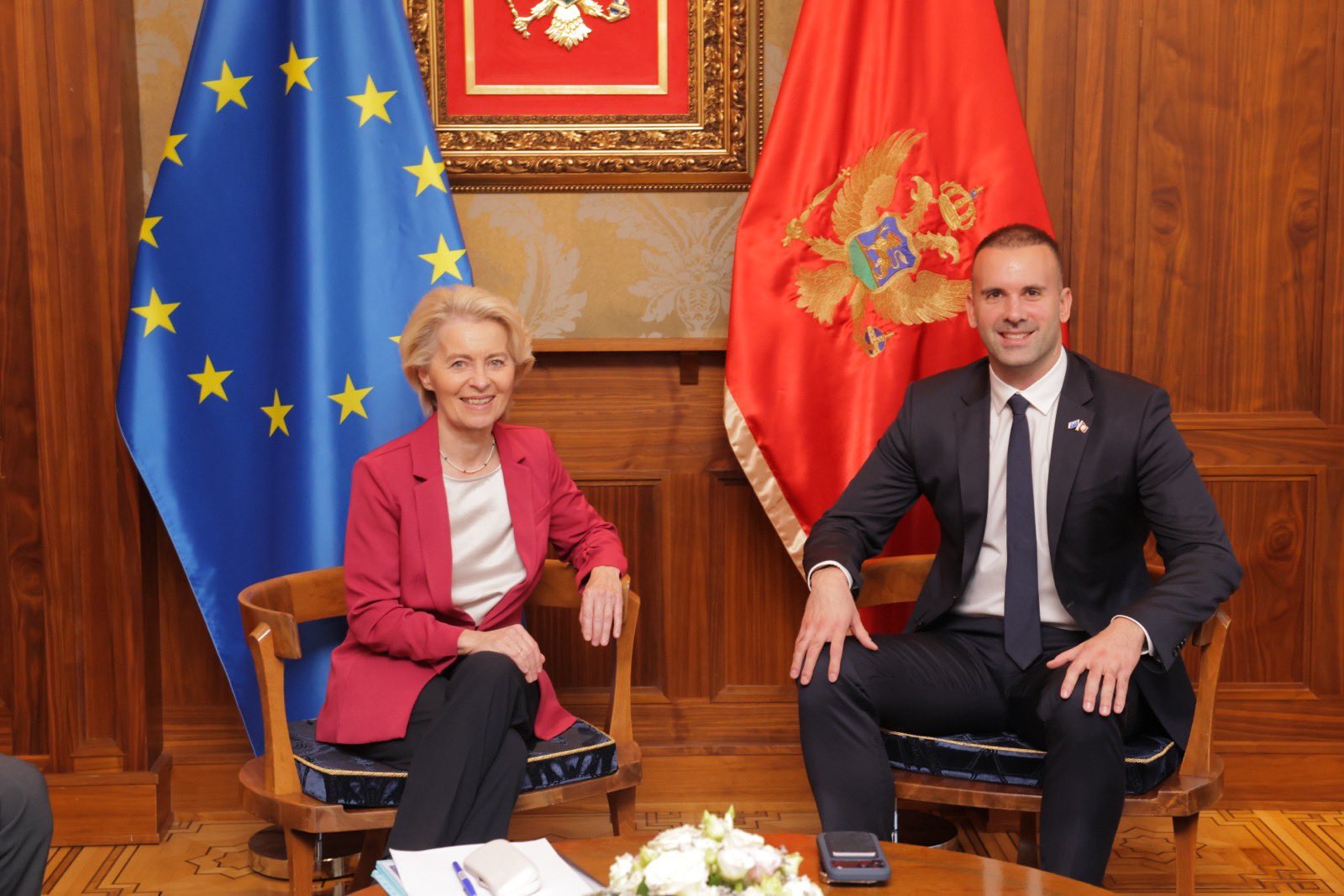
Montenegro remains the most advanced candidate and could finish technical accession negotiations by late 2026 or early 2027. According to an analysis by the Warsaw-based public research institute Centre for Eastern Studies, Russia’s full-scale invasion of Ukraine provided fresh impetus for EU enlargement, particularly in the Western Balkans.
Though roadblocks including insufficient implementation of reforms and disputes with Croatia have been prevalent since Montenegro began accession negotiations in 2012, the Commission supports the Balkan country’s ambitions of becoming the EU’s 28th member state, and proposed a €3.2 billion financial package to support its integration in June this year.
That package now serves, in fact, as a template for how Brussels plans to finance future accessions, and the new safeguard clauses would be applied first to Montenegro’s accession treaty.
Albania, Moldova and Ukraine also rank among the leading candidates, although their membership paths remain longer. The Commission plans to publish individual roadmaps for the four frontrunners in late October, which will set out priorities and next steps but no fixed accession dates.
Ukraine’s large agricultural sector presents a separate budget and market challenge for existing members. To offset concerns, Brussels has proposed limits on some agricultural support and special treatment for sensitive products.
Commissioners argue that the scale, structure and very high levels of productivity in Ukrainian farming justify arrangements that would significantly limit both EU financial support and market access for sensitive products, while helping Ukraine regain its export markets outside the bloc – in Africa and the Middle East particularly.
Kyiv pushed back on the same day, with Agriculture Minister Taras Vysotskyi telling POLITICO that Ukraine is open to transition periods, temporary quotas, and safeguards, but “cannot agree” to permanent restrictions on its farm exports, arguing they would run counter to the logic of full membership.
Poland, France and Italy have been among the member states most concerned about Ukrainian agricultural competition, per Ukrainska Pravda.
The Commission says the wider EU can absorb new members across most policy areas. Still, governments will debate the voting, budget, and institutional proposals before any changes become binding. EU leaders are expected to discuss the proposals at their October 15-16 meeting.
Featured image: Ursula von der Leyen via Unsplash+