
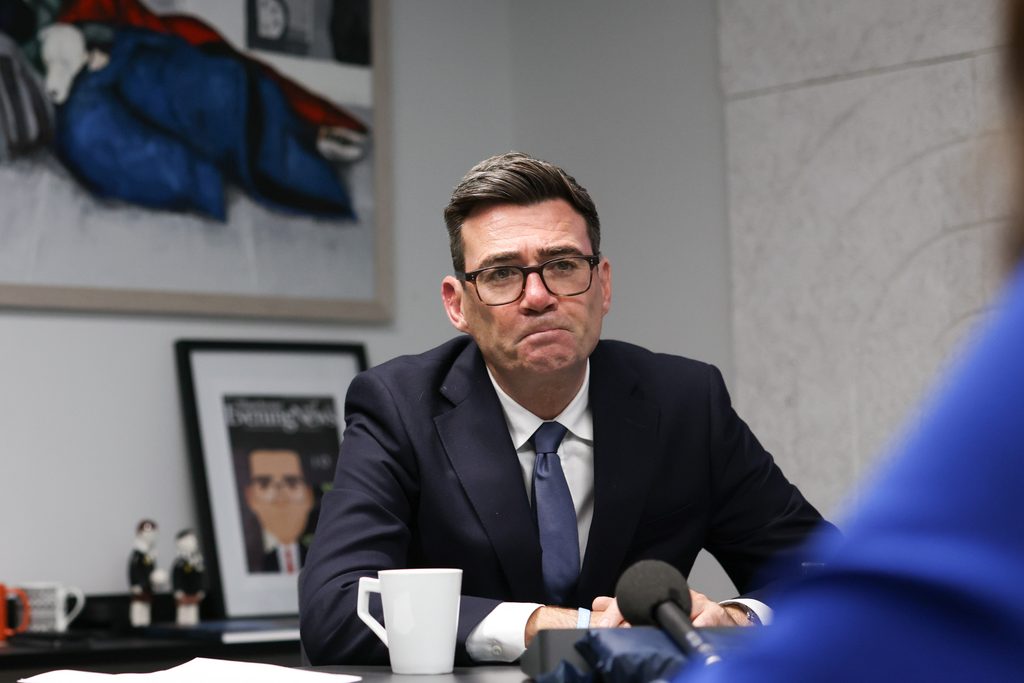
London, United Kingdom — UK Prime Minister Andy Burnham will reportedly announce “robust” new sanctions against Israeli settlements in the Palestinian territory of the West Bank before the upcoming Labour party conference in September.
A senior government source told The Times that the Prime Minister is expected to approve a trade ban on goods from Israeli settlements, along with sanctions on those involved in settlement expansion.
The move comes after Israel’s housing industry issued a notice inviting bids for the construction of 1,200 new housing units in the E1 area, a corridor of land situated northeast of East Jerusalem.
The West Bank is a landlocked territory situated on the western bank of the Jordan River. The UN considers it to be a Palestinian territory under Israeli occupation.
Israel occupied the West Bank, along with Gaza, during the 1967 Arab-Israeli war. The two areas, as well as East Jerusalem, are generally regarded by the international community to be the territorial foundations of a future Palestinian state.
However, Israeli settlement of the West Bank remains a significant barrier to the creation of such a state. Since the 1967 conflict, Israel has built approximately 160 settlements, which house 700,000 jewish individuals, in the West Bank.
The settlements are, according to the International Court of Justice, illegal under international law. Various European countries, including Spain, the Netherlands and Ireland have already imposed trade restrictions on Israeli settlements.
In conversation with EU Reports, Chris Doyle, the director and lead spokesperson of the Council for Arab-British Understanding (CAABU), welcomed the potential of a British ban on trade with the settlements.
“Settlements are a legal violation of the Fourth Geneva Convention, the transfer of civilian populations to occupied territory, and also a war crime as outlined in the Rome Statute.”
Under the 1949 Fourth Geneva Convention, an occupying power is barred from transferring its own civilian population into territory it occupies, or forcibly moving the local population out of it. The rule was designed to stop an occupier from reshaping the demographics of land it controls by force.
That same conduct is also criminalized at the individual level by the Rome Statute of the International Criminal Court (ICC), which lists the transfer of an occupying power’s civilians into occupied territory as a war crime.
“As the former mandatory power, as a member of the [UN] Security Council, it’s about time the [British] government said enough,” Doyle continued.
Burnham breaks from Starmer, hardens Israel stance
At the beginning of his tenure, Burnham signalled that the Labour government under his predecessor, Sir Keir Starmer, “had not got it right” when it came to formulating policy on the issue of the Israel-Palestine conflict.
The new prime minister said his party had been too slow in calling for a ceasefire in Gaza, and suggested that his administration would increase diplomatic pressure on the Israeli government to halt both the expansion of its military control over Gaza and the construction of new settlements in the West Bank.
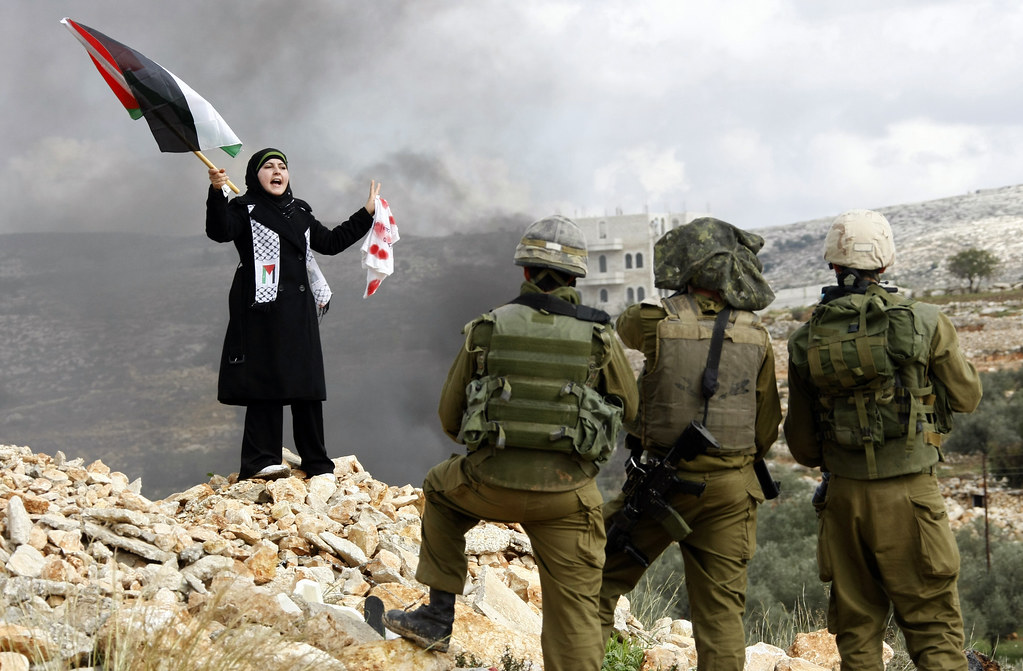
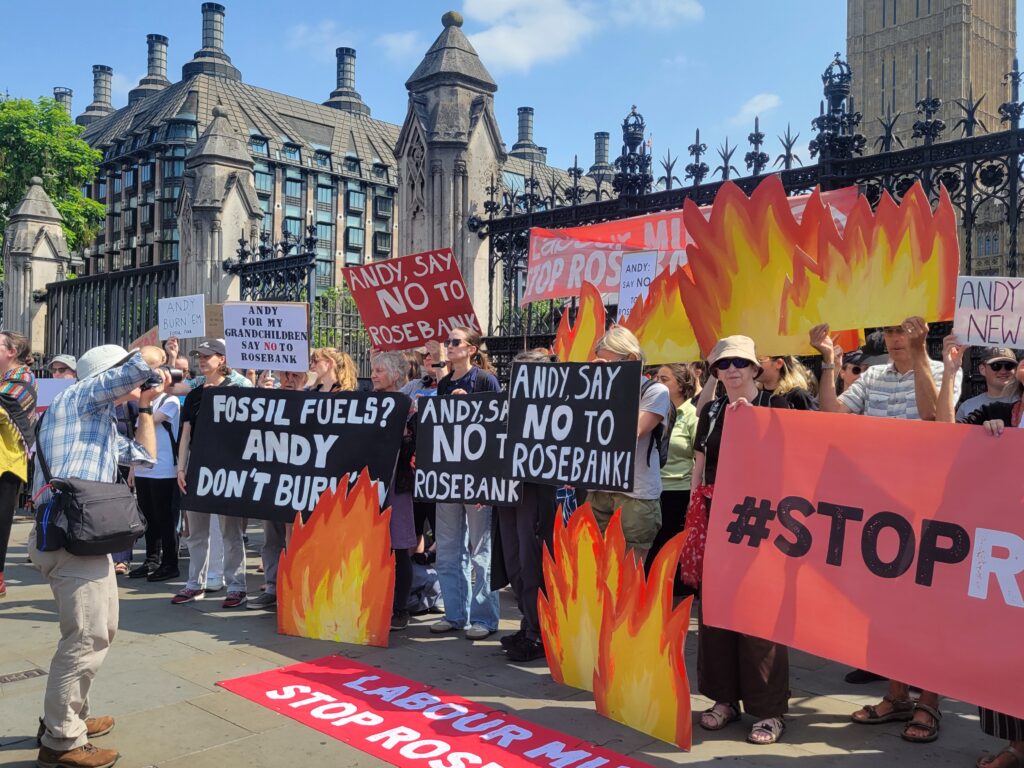
Image Source: Scottish Palestine Solidarity Campaign via Flickr
Many in the governing Labour Party have long sought to introduce the kind of sanctions now being contemplated against Israeli settlements. In June, over 140 Labour MPs signed an open letter to then-Foreign Secretary Yvette Cooper, urging her to end all trade with the settlements.
No ban was announced at that time, but the UK government did sanction six firms and one individual involved in enabling and financing settler violence in the West Bank.
The British government also updated its advice to British firms, urging them to disassociate from economic activity with illegal settlements.
There have already been signs that the current UK government’s stance on the issue is hardening. Current Foreign Secretary Ed Miliband condemned the planned E1 settlement expansion last week.
“E1 would cut across the heart of Palestine and risks separating the West Bank from East Jerusalem, which would endanger the viability of a two-state solution,” Miliband’s statement read.
If the E1 proposals are approved, the new settlements would effectively split the West Bank in two, separating East Jerusalem, which is widely considered to be the capital of a future Palestinian state, from the rest of the West Bank.
Miliband also clarified that the UK sought an “immediate reversal” to the E1 plans and warned that the country would set out comprehensive measures to protect “the viability of the Palestinian state” and target sanctions at those who participate in illegal settlement expansion.
Doyle argued that this kind of rhetoric from Miliband proves the Burnham government’s pledge to increase pressure on the Israeli government holds weight. “They have been far more assertive, less equivocal and less hesitant [than Starmer’s government],” the CAABU director argued.
The initial announcement of the recognition of the Palestinian State by Starmer’s government, he added, was “conditioned on Israel’s conduct”.
“I don’t think we are getting this from the new Andy Burnham administration. The statement that the Foreign Secretary Ed Miliband issued was very blunt; there was no laying out what Palestinian obligations were.”
Although the expected trade ban of Israeli settlements will likely be well received by the progressive wing of the Labour Party, which continues to advocate for the government to adopt a more overtly pro-Palestine stance, others in the Labour movement have expressed their opposition to the ban.
The pro-Israeli advocacy and lobby group Labour Friends of Israel stated that a boycott of trade with settlements is practically impossible, and “will become a de facto boycott of all Israel” which would, in their view, damage UK national interests, the British Jewish community, and Palestinian workers alike.
Doyle, however, dismissed these concerns. “Palestinian civil society, the Palestinian Authority, those [Palestinian] workers in Israeli settlements have all said: bring on the ban.”
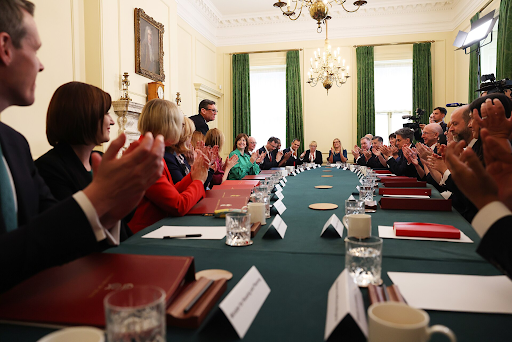
Featured Image: Prime Minister Burnham in his first cabinet meeting in July. Foreign Secretary Miliband is sitting opposite Burnham.
Image Credit: Lauren Hurley / No 10 Downing Street via Wikimedia Commons
License: Creative Commons Licenses