
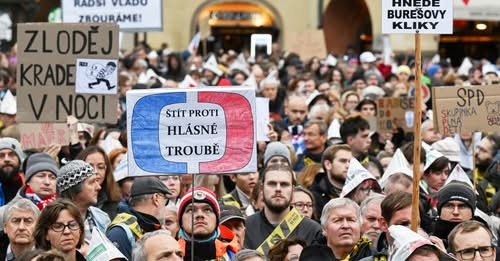

Czechs working in public broadcasting held a one-day strike on Tuesday, November 3 to oppose Prime Minister Andrej Babiš’ plan to reform the way in which media is funded, disrupting programming across Czech Television and Czech Radio.
The government aims to abolish the existing system of regular fees from individuals, households and businesses, and use the state to fund the country’s public radio and television.
The reform risks undermining journalistic independence by making public broadcasters more financially dependent on the government, creating opportunities for political interference in editorial decisions. The plan is also expected to reduce public media funding by approximately 15%.
Czech television replaced much of its usual output with shorter news bulletins and archived material, while Czech Radio broadcast music was interrupted by a statement explaining the action and a minute of silence.
Thousands of demonstrators gathered in Prague, Brno and Ostrava to demand the withdrawal of the legislation and a transparent public debate. The strike was backed by trade unions, university leaders and international media organisations, with another major demonstration planned for November 15.
This follows the October 25 protests, in which thousands of Czechs took to the streets to protest the proposal.
“You’ve gone too far, we won’t let this country be destroyed,” said a protester from the Million Moments for Democracy group. “It is mafia syndicates or the Soviet Politburo who make decisions at 4:36,” he added, referencing the time at which lawmakers gave the proposal the green light.
The government has insisted this plan is intended to save households money while retaining media freedoms.
The European angle
Brussels is now paying attention to the protests in Czechia. The European Media Freedom Act requires EU member states to ensure the protection of editorial independence, going so far as to implement a Media Pluralism Monitor to identify potential risks to media pluralism.
The European Federation of Journalists and more than 30 other organisations, including the European Broadcasting Union, condemned the Czech government’s plan.
The European Commission confirmed on November 3 that it had received a response from the Czech government to an earlier letter and was currently assessing it. The Commission said it was following developments closely and remained in contact with Czech authorities to ensure compliance with the Act.
Prague will now show whether EU rules can stop a government from reshaping public media through funding reforms.
What’s next
The legislation must pass two further parliamentary readings before becoming law, with further debate expected in the coming months. The government has also suggested changes to its original proposal, although it remains unclear whether these will address concerns raised by public broadcasters and protesters.
Meanwhile, opposition to the reform continues. The coming weeks will determine whether the government pushes ahead with the proposed changes or faces further pressure to reconsider its plans.
Featured image: International Federation of Journalists via Facebook