
Angie Acosta co-authored this article.
Dublin, Ireland – Public sector unions in Ireland have called a second 24-hour national strike for Thursday, November 12, after pay talks with the government broke down, setting up a walkout on the same day Dublin hosts around 50 European leaders for the European Political Community Summit.
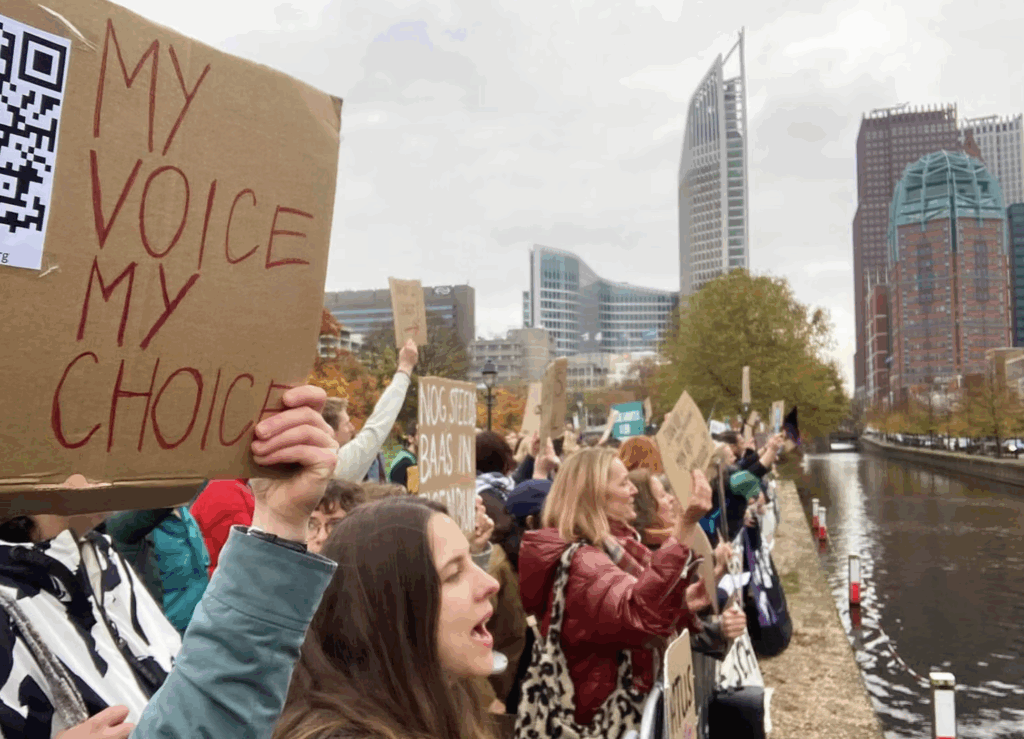
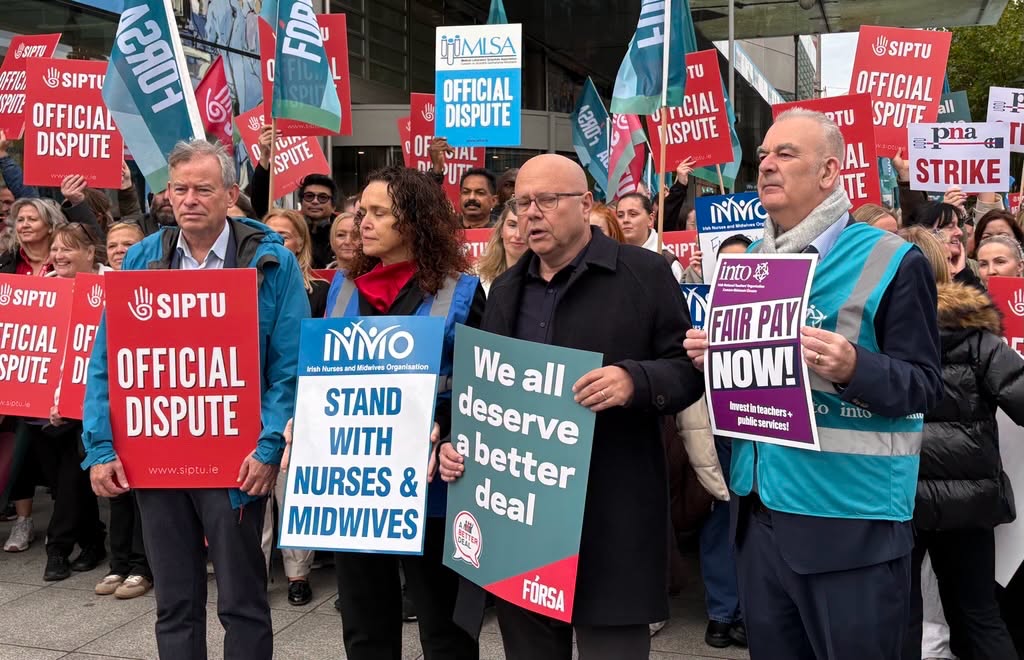
The decision follows weeks of tensions marked by an initial massive national strike on October 14, with around 300,000 participants across the country, according to The Irish Times.
Universities, schools, hospitals, and local government offices remained closed during the walkout, disrupting key public services across the country, including immigration and state documentation appointments.
In solidarity, some student unions, local business owners, and citizens also closed their services, further paralysing key sectors across the country, including education.
“The government failed to engage with the public sector workforce and our teachers in terms of securing a new deal for the second-half of 2026,” Diarmuid Creedon, a union official from the Irish National Teachers’ Organisation (INTO), told EU Reports.
On June 30, 2026, “the last pay agreement came to an end. Unions at that time endeavored to open talks with the government to ensure an ongoing public sector agreement could be negotiated,” Creedon added. “But the government and the unions were unable to open substantive talks within that.”
At the time, an agreement to enter dialogue led to the cancellation of the second 24-hour national public sector strike, planned for October 21.
Different unions across the nation continue to press their key demands, which include inflation-adjusted pay raises, improved working conditions, and stronger protections against the rising cost of living.
“We are seeing a continuous rise in the cost of everyday items for our members, for our teachers. And that would be across groceries, fuel prices, energy prices are continuously increasing. And unfortunately, our wages are not keeping pace with that,” explained the official from INTO.
Teachers working for the state are among the most affected, but they are not alone.
“All of society is feeling the pressures of an increase, the inflationary increases across the globe. And I suppose the international issues that we are seeing are impacting countries like Ireland now,” Creedon noted.
“That pressure to try and pay their everyday bills. So the empathy and support for the public sector strike action and the public sector industrial action was quite strong,” he added.
Before the first national strike, the Department of the Taoiseach urged unions to cancel the call to action, arguing that the planned escalation was difficult to justify.
“The basis of this decision is not clear and the planned escalation to a public service-wide strike causes unnecessary disruption to essential public services, inconvenience for the public and avoidable loss of earnings for public servants,” the Department stated.
Despite criticizing the strike action, the government kept the door open for dialogue to reach a common agreement, a process that, although now underway, remains uncertain.
“The best way to reduce uncertainty for public servants is for public service unions and associations to enter talks to reach a clear agreement on public service pay,” the Department added, affirming that officials remained available to “immediately enter intensive talks with the support of the expert services of the WRC.”
In a public statement also shared with EU Reports, the Association of Secondary Teachers Ireland (ASTI) outlined that the decision to suspend the second strike day came after the government agreed to appoint an independent third party, Kevin Foley, to lead focused talks at the Workplace Relations Commission (WRC).
“Welcoming the breakthrough, the ICTU PSC officers stressed that there remains a pressing need to rebuild trust and confidence in public service industrial relations,” the document reads.
The trust did not hold, though. After ten days of intensive negotiations, talks at the WRC ended without agreement late on October 30.
The WRC said certain issues had reached an impasse and asked the government-appointed group chaired by Foley to propose a resolution. Both sides are meeting that group separately this week, per Irish public broadcaster RTE.
According to the broadcaster, unions rejected a government offer of pay increases worth 7.75% over two and a half years, including a 1.75% rise for 2026 backdated to July, further increases totalling 5% across 2027 and 2028, and an additional 1% for local bargaining.
On Monday, November 2, the 19 unions of the ICTU Public Services Committee said the government had yet to make a credible offer and confirmed the new strike date, while also stepping up the work-to-rule measures already in place.
The timing raises the stakes for the government. The European Political Community meeting on November 12 is followed by an informal gathering of EU leaders in Dublin on November 13.
Minister for Public Expenditure Jack Chambers called the strike “extremely regrettable”, warning of disruptions to crucial services while talks remain underway.
For unions, the planned strikes were only ever suspended, nor permanently canceled.
“We need to see that we can trust our government again after their failure to live up to their commitments from the previous agreement and those local bargaining pieces that they haven’t fully settled at this point,” Creedon explained. “We need to see that trust built into the new agreement from our government.”
Featured image: Irish National Teachers’ Organisation via Facebook