
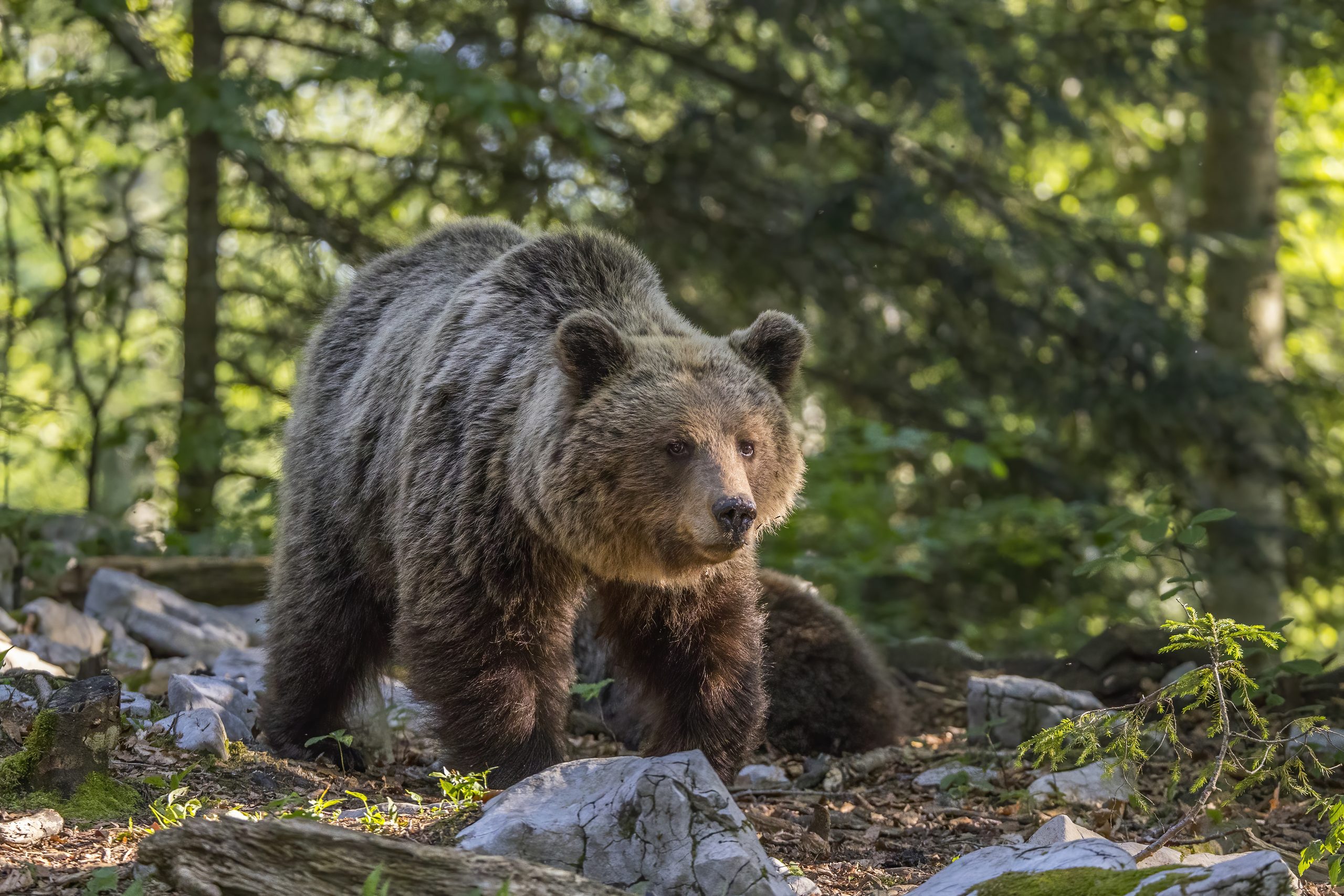

The Russian Siberia region, which makes up 77% of the country’s total landmass, has seen an abnormally high spike in bear attacks since the start of autumn. From monitoring Russian media, CNN estimates there have been around 16 fatalities since the end of August.
Experts point to a combination of factors, including a summer camp of heatwaves that may have wiped out the bears’ natural food supply, expanding human settlement and tourists feeding wild animals. However, the scientific evidence behind both the proposed causes and solutions remain limited.
Hunters across Siberia have declared open season on bears from October 12, according to Reuters.
Krasnoyarsk Krai saw the highest number of fatalities, followed by the Republics of Buryatia and Altai. The Head of the Republic of Buryatia, Alexei Tsydenov, described the situation as abnormal.
Among those killed was the father of NHL player Andrei Kuzmenko, who was attacked by a bear while fishing in the Russian region of Tyva.
Bears have been spotted closer to human population centres than usual, including homes, schools, and tourist sites. Some local authorities have closed roads and formed mobile hunting units to respond to sightings near human settlements.
Increased bear sightings in population centres have also been reported in Mongolia, which neighbours Altai, Buryatia, and Tyva.
What’s caused this sudden increase in attacks?
The underlying reasons for this season’s increase in attacks remain unclear. Several theories have been proposed across both state and opposition media.
One possibility is a failure in the brown bears’ natural food supply over summer. Russian ecologist Revaz Pruidze told state news outlet TASS that this shortage was pushing bears to search wider territory for food, bringing them close to human population centres.
In an interview with Noviye Izvestiya, Russian zoologist Mikhail Krechmar highlighted that a lack of pine nuts in particular may be driving bears increasingly into urban areas.
This concern has been reflected in Mongolia. After increased sightings of brown bears near human settlements at the start of September, the Ministry of Environment and Climate Change banned the harvesting of pine nuts for commercial and household purposes. The ban reflects concerns that a summer of heatwaves led to a significant failure in the crop.
Wild berries, another vital food source for brown bears, may also have been affected by the heat. In Arctic regions particularly, some berry crops have thrived in the warming climate, while others have seen significantly reduced yields.
Data from Copernicus, the EU’s Earth Monitoring and Observation programme, shows that temperatures in Siberia and Eastern Russia were well above average across the summer months.
In June, areas of Russia’s polar and west Siberian regions reached 7℃ above average. This trend continued into July and August, although eastern Russia experienced colder than average temperatures in the last month of boreal summer.
Population pressures
Noviye Izvestiya also reported that the population of brown bears in Russia has more than doubled since 1990, with official figures sitting at almost 308,000. At the same time, human settlements have grown, which may simply increase the likelihood of contact between the two.
Lisa Hartmann, a senior expert at the United Nations University Institute for Environment and Human Security, told EU Reports that a growing body of evidence links the rise in human-wildlife interactions to anthropogenic pressures.
In other words, as population centres and agricultural production expand into wildlife habitats, people and animals such as bears will naturally come into more frequent contact.
Several attacks this autumn have occurred at popular tourist sites in nature reserves. Pruidze told TASS that tourists who feed bears human food create preferences in the animals, which then seek out places where they can find it.
Hartmann raised a similar possibility. “[Bears] just get used to the people, they learn that they can just get food there in easier ways than they have in the forest,” she said.
“Also, human behaviour, like humans interacting more with animals […] and people feeding bears, for example, can get them into settlements.”
Looking ahead
The hunting drive is the latest in a broader crackdown. Authorities have reportedly killed more than 530 aggressive bears across Russia since the spring, according to The Moscow Times, and Krasnoyarsk has offered rewards of over 35,000 roubles (€3,738).
Not all experts back the approach. Sergey Kolchin, a large carnivore zoologist at the Russian Academy of Sciences’ Far Eastern Branch, told CNN that killing aggressive bears near settlements is a necessary emergency measure, but warned that indiscriminate shooting would leave wounded animals more likely to attack people.
Hartmann said the risk of attacks would persist even with a significant decrease in the bear population. “If there are just two bears, and if they need food, they will still come to the settlements.”
“We have to remind ourselves that the bears are a population just like humans. The intent of the bear is not to kill people but is to survive and to find resources.”
As human-wildlife encounters increase, she emphasized that finding sustainable ways to adapt will be key. Greater awareness of climate change effects and the risk of further ecological damage will be fundamental, especially for municipalities and local governments.
Per Hartmann, the focus should shift towards long-term ecological sustainability, including ensuring species have space to live undisturbed by humans, and that future urban expansion does not encroach further into wildlife areas.
“It’s ultimately our fault [for] causing climate change and with the pressures we’re putting on the ecosystem, that animals are looking for new spaces to live and for finding food,” she told EU Reports.
“It’s a very sensational topic, but there’s a very real ecological perspective on this. I’d like to put out the call for conservation, for nature-based solutions planning, to make space for finding a way for cohabiting this space that we have.”
On October 12, Siberian hunters
Russia’s carbon footprint
Russia’s own climate record adds to these pressures. The Climate Action Tracker, an independent project measuring state climate targets against the 2015 Paris Agreement, rates Russia’s climate policy as critically insufficient; the economy remains largely dependent on fossil fuels, with the fossil fuel industry holding significant influence over energy policy.
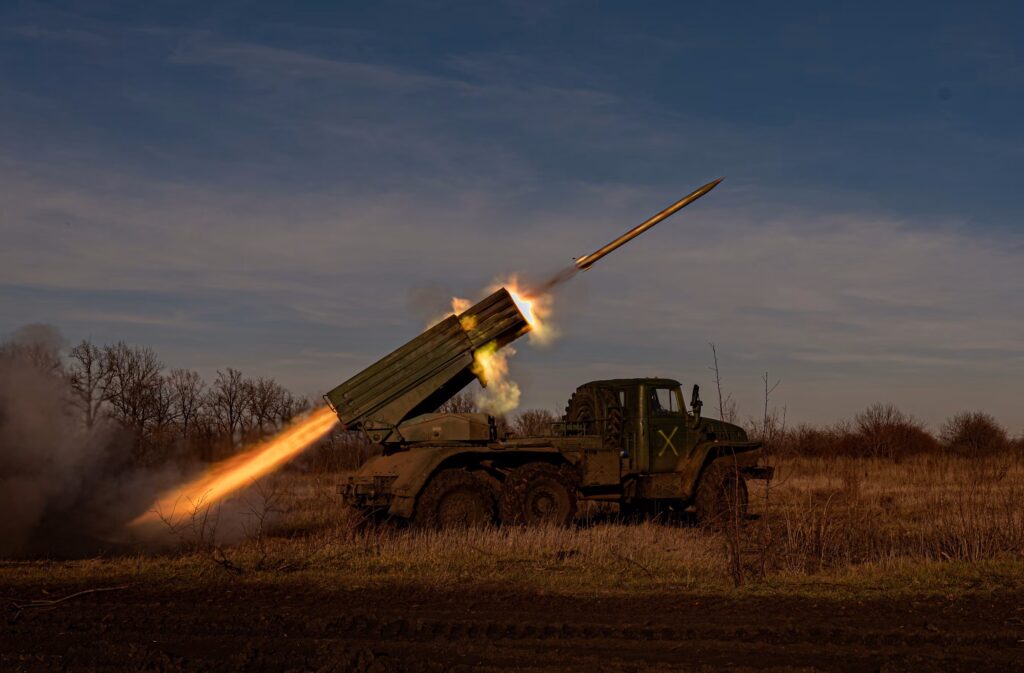
In addition to energy emissions, Russia’s overall carbon emissions have skyrocketed since its invasion of Ukraine. According to a report by the Initiative on Greenhouse Gas Accounting of War (IGGAW), 230 metric tonnes of CO2 equivalent were generated during the first three years of the invasion – around the same as Austria, Hungary, the Czech Republic, and Slovakia’s annual emissions combined.
IGGAW has called for Russia to be held liable for environmental damage and increased emissions as a result of its war in Ukraine, at $185 USD (€165.8) per tonne of CO2. As of February 2025, this would be over $40 billion USD (€35.8 billion).
Featured image: Eurasian brown bear (Ursus arctos arctos) female, Stari Kot, Slovenia
Source: Wikimedia Commons
Author: Own work, from Sharp Photography, sharpphotography.co.uk
Creative Commons Licenses