
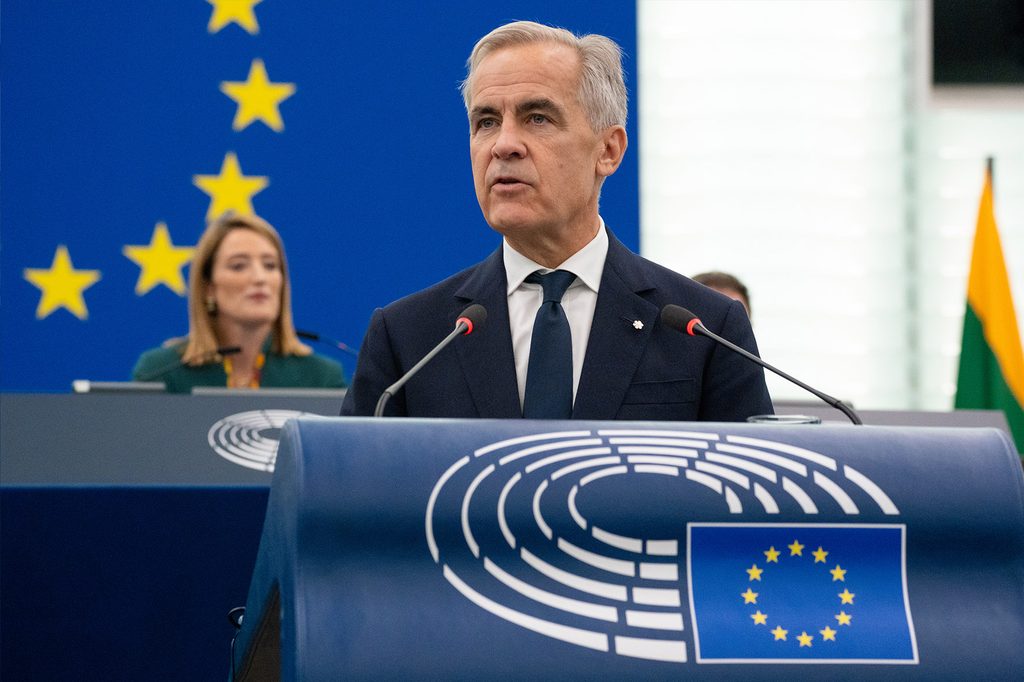
UK Prime Minister Andy Burnham has reopened Britain’s Brexit debate by announcing plans to explore closer ties with the European Union, including possible changes to the country’s long-term relationship with the bloc.
The announcement came during the September 29 Labour Party Conference in Liverpool, where Burnham said the government would assess different options ahead of a UK-EU summit scheduled for November 20, 2026.
The move marks the first time since the 2016 Brexit referendum that a British prime minister has raised the possibility of returning to deeper European integration.
“I cannot say to you truthfully that where we are is good enough. Brexit has done more harm than good,” Burnham said.
“We need to restore a higher level of growth and prosperity for Britain. So, I will take the opportunity around the summit to lay out to the country what I believe the different options are for Britain’s long-term relationship with our European partners.”
Four roads to addressing migration
The prime minister detailed several paths for the UK-EU relationship moving forward: maintaining the current arrangement, joining a customs union, entering the single market, or returning to full EU membership.
“When I walked up to Downing Street on my first day at the job, I promised to give Britain a circuit breaker, to get us out of the rut we’ve been in, to get us believing again,” Burnham stressed, “you may disagree with some or all of what I’ve said today but I have given you what you often say is missing from politics: honesty, ideas, and a clear direction for the country we all love.”
London, however, has not committed the government to any specific outcome during the current parliamentary term.
The prime minister linked the discussion to economic growth and Britain’s wider position in Europe, with migration remaining a key topic.
“Brexit hasn’t given us control. We’ve lost some of the control we had over our economy, as a decade of low growth has put us in a weaker position. And we’ve lost some of that control over immigration,” he said.
“At its most fundamental level, this is a debate about fairness, so I understand the anger about what’s happening in the channel,” he added, referring to the small boats carrying migrants and asylum seekers across the English Channel from France, which he blamed partly on the loss of cooperation with European countries.
These crossings were almost unheard of prior to 2016, and significant numbers did not begin to be detected until 2018. Arrivals have climbed rapidly, peaking at about 46,000 in 2022, with around 41,500 crossings last year, per the Oxford Migration Observatory.
Leaving the EU also meant the UK is no longer part of the Dublin system, which allowed some asylum seekers to be returned to their EU country of first arrival.
Political parties respond to renewed Brexit focus
The proposal follows years of political debate over the impact of Brexit on trade, economic performance and relations with European neighbors.
Burnham replaced former Prime Minister Keir Starmer in July, and has continued efforts to reshape discussions around EU cooperation.
Recent polling showed differing views among British voters on future European ties. A YouGov survey in June found support for rejoining the EU exceeded opposition, while more voters supported closer cooperation without full membership.
Burnham’s four paths, however, have created new divisions among political parties throughout Britain. Far-right party Reform UK criticized the move, arguing that closer EU ties could reverse the outcome of the 2016 referendum.
“Andy Burnham has barely been Prime Minister five minutes and he’s already trying to sneak us back into Brussels via the back door,” said deputy leader of Reform Richard Tice.
“He says Brexit has done more harm than good but what’s done real harm is a Labour government that can’t deliver growth, can’t control migration and now wants to outsource the job to Brussels,” Tice added.
The Conservative Party also criticized Burnham’s approach, and argued that the government should focus on domestic economic issues.
Meanwhile, the Liberal Democrats supported stronger links with Europe. The party has promoted closer involvement with the single market and customs arrangements as part of its economic plans, with leader Ed Davey challenging Burnham in June to abandon the government’s timidity over Europe.
“The British public can see the hard truth that most politicians refuse to admit: the Conservatives’ Brexit experiment has failed,” Davey said at the time.
The European Union has indicated openness to deeper cooperation with Britain. However, EU officials have said the level of future engagement depends on decisions made by the UK government and public.
Geopolitics shape Britain’s EU strategy
Burnham’s push also comes as international developments reshape security and economic relationships. Russia’s war in Ukraine, for one, has pushed European governments into a rearmament drive, and Britain has faced pressure to deepen defence cooperation with its neighbors.
In 2025, in fact, London and Brussels signed a Security and Defence Partnership, a framework for cooperation that includes defence industry and innovation.
Britain’s closer engagement with Brussels has also been driven partly by the need to diversify trade in the face of Donald Trump’s aggressive tariff policies.
The government has sought a role in European defence manufacturing – with mixed results. The UK tried to join the EU’s €150 billion Security Action for Europe (SAFE) fund, which offers member states cheap, long-term loans for joint arms procurement, though talks collapsed in November 2025 after the European Commission reportedly asked Britain to pay between €4 billion and €6.75 billion to participate. Canada allegedly paid a one-off €10 million fee.
British firms thus remain “third-country” suppliers and UK-made components are capped at 35% of the value of any SAFE-funded project. London has instead relied on bilateral defence pacts with countries including France and Germany.
Regardless, the fact remains that Britain’s relationship with Europe remains a major political issue a decade after the 2016 referendum. With the current prime minister setting out the options ahead of November, and Reform leading the polls, Europe looks set to become one of the defining issues of that campaign.
Featured image: 10 Downing Street via Flickr
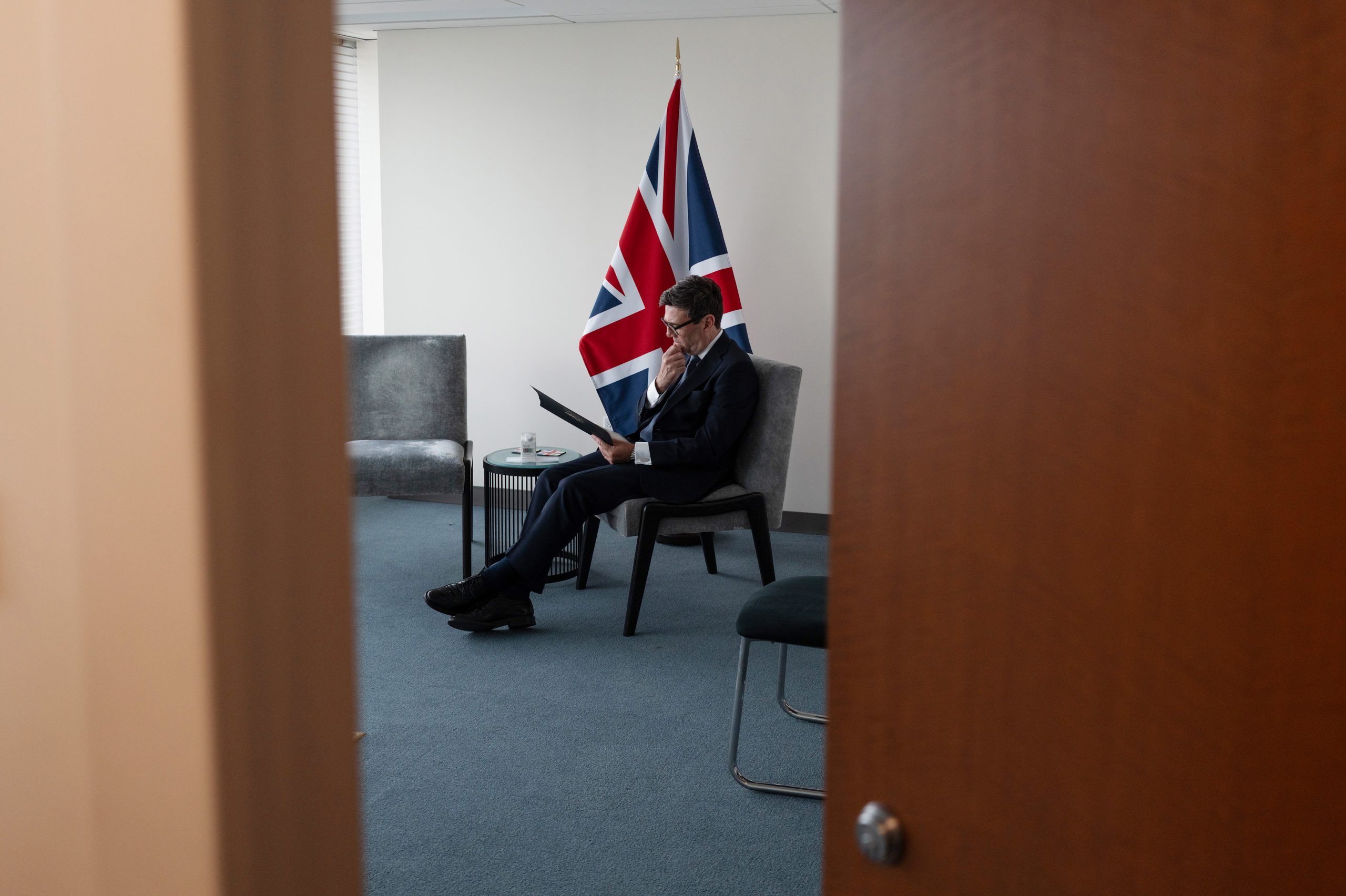
Minister Andy Burnham attends the United Nations General Assembly at the United Nations Headquarters in New York. Picture by Simon Dawson / No 10 Downing Street