

Local and regional elections were held across the UK on May 7, with elections for local councils and mayoral authorities taking place throughout England. Elections in Scotland and Wales were also held for each of these country’s devolved parliaments.
As results have come through over the following days, there have been staggering losses for the governing centre-left Labour Party – just two years on from its landslide win at the 2024 general election – as well as a surge in support for the right-wing populist Reform Party.
Whilst the elections held in England were solely for the selections of local authorities, they had been portrayed as being a ‘referendum’ on Prime Minister Keir Starmer amid ongoing speculation about challenges to his leadership from within the Labour Party following historic levels of unpopularity in the polls.
These local contests carry with them huge implications not only for the Prime Minister’s continued leadership, but also for the dynamics of Britain’s political system as a whole and for the spread of the populist far-right across Europe.
“Local elections are always used by British voters to pass judgement on whoever is in power at Westminster,” Tim Bale, professor of politics at Queen Mary University of London, told EU Reports.
“It’s one thing for Labour MPs to read polls which show how unpopular their government is; but it’s quite another to have that demonstrated in real elections.”
Reform, which currently has eight MPs in the UK Parliament, had been leading in the polls for the past year, and has now gained more than 1,400 new councillors. Reform Party leader and co-founder Nigel Farage has called the popularity spike a “truly historic shift in British politics.”
“It’s a big, big day. Not just for our party, but for a complete reshaping of British politics in every way,” he added.
Wider implications
Reform has been able to take a large number of council seats not only from Labour, but also from the centre-right Conservative Party – one of the oldest political parties in the world. Alongside Labour, the two parties have dominated UK politics for the past century.
Meanwhile, in the Senedd (Welsh Parliament), the pro-Welsh Plaid Cymru independence party successfully displaced Labour in what has always been one of its key heartlands; the Senedd has been continuously run by Labour governments since its creation in 1999.
Labour has now been relegated to third place in Wales, behind Plaid Cymru and Reform, though no party has an overall majority.
Welsh First Minister Eluned Morgan has been among those to have lost their seats, becoming the first-ever leader of a government in the UK to lose their seat whilst in office.
“Welsh Labour has today suffered a catastrophic result,” stated Morgan. “It ends a century of Labour winning in Wales, and the party will need to take a really hard look at itself and understand the depth of the challenge that we face. The age of two-party dominance is dead. We need to recognise that multiple parties are now in contention across Wales.”
In spite of their losses, Conservative Party leader Kemi Badenoch has described the local elections as a success for the party and her leadership in the context of the party’s recovery from its catastrophic defeat in 2024.
Badenoch stated that “the Conservatives are coming back” as the results began to come through, with the party successfully taking Westminster City Council from Labour and holding on to several other seats that had been expected to go to Reform.
Independence?
The overall losses for both the Conservatives and Labour has led many commentators to speculate that we may be seeing not only a surge towards the populist right, but also a fracturing of the two-party system that has held sway over British politics since the beginning of the country’s parliamentary democracy.
The Liberal Democrats and the Green Party have both made gains, with the Greens successfully taking the London mayoralty of Hackney, though nationally their share of seats was less than some had anticipated.
“To everyone who voted for me, I truly thank you for putting your trust in me today,” stated incoming Hackney mayor Zoë Garbett. “Today we start the fight back. In this election, over and over, people kept telling me that they felt let down. Council services are failing those who need them most, and people are struggling to make ends meet. Across London and the country, people have made it clear that they are desperate for an alternative to this failing Labour government.”
Green Party leader Zack Polanski also declared that two-party politics is now “dead and buried,” stating: “It is very clear that the new politics is the Green party versus Reform.”
Meanwhile, in Scotland, the Scottish National Party (SNP) remains the largest party in the Scottish Parliament at Holyrood, having won their fifth successive term after 19 years in government.
Whilst they have fallen short of an overall majority, Scottish First Minister and SNP leader John Swinney has nevertheless renewed calls for a referendum on Scottish independence, maintaining that with the number of seats also won by the Scottish Greens, there were “now more pro-independence MSPs than at any time in the history of the Scottish Parliament.”
With pro-independence parties now governing in Scotland, Wales, and Northern Ireland, various commentators have raised the possibility of the break-up of the UK itself. Michelle O’Neill, Northern Ireland’s First Minister and Vice President of the Sinn Féin party, described the local election results as a “moment of seismic change.”
“I don’t think there can be any clearer sign that Westminster’s time is coming to an end for the people here and the people in Scotland and Wales,” she said.
The decision to hold a referendum on the independence of the UK’s constituent countries ultimately rests with Westminster, however – a prospect they have consistently denied.
Will Starmer stay or go?
The other key question following these elections will be whether Prime Minister Starmer can now hold on to power; it had already been widely speculated that senior figures in Labour could mount a rebellion if results were as bad as had been feared.
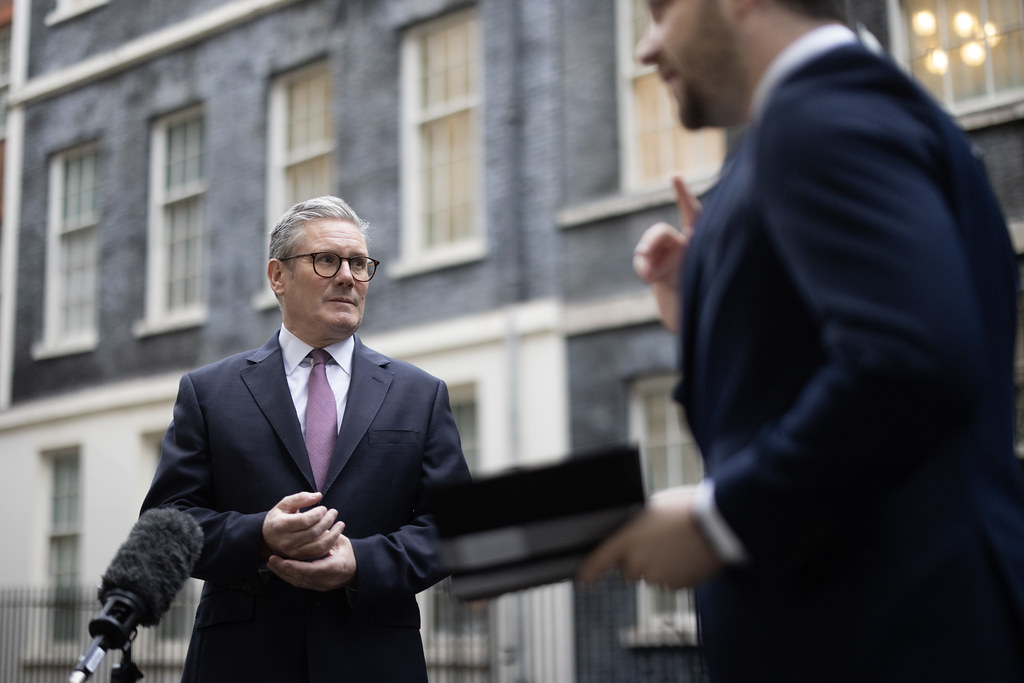
Starmer has declared that he takes responsibility for his party’s poor performance, but that he nevertheless intends to stay on as Prime Minister.
“The voters have sent a message about the pace of change, how they want their lives improved,” Starmer stated. “I was elected to meet those challenges but I’m not going to walk away.”
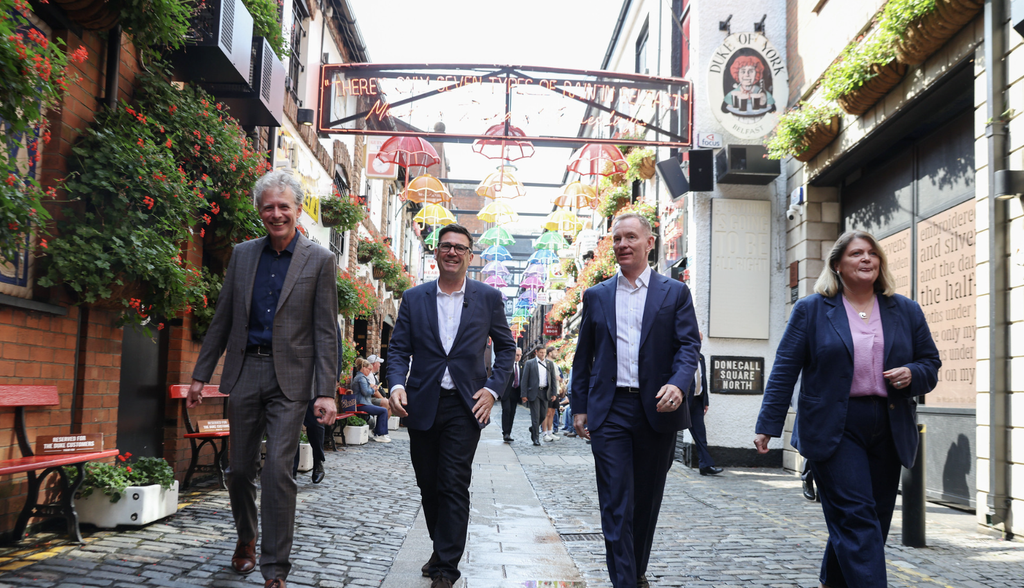
There is no obvious successor to Starmer. Supposed frontrunner Andy Burnham, the Mayor for Greater Manchester, had effectively been blocked from running in January when the Labour Party’s National Executive Committee prevented him from putting himself forward as an MP. Others had been rumoured to be considering a bid for the leadership, however, including Labour’s former Deputy Leader, Angela Rayner, and Health Secretary Wes Streeting.
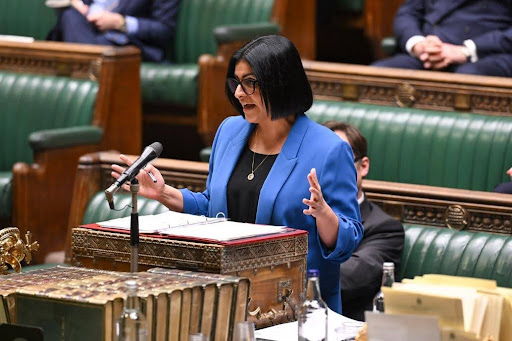
Backbench MP Catherine West stated that she intended to mount a leadership challenge herself if no member of the cabinet does so. Whilst she has since backed down from this threat, she, along with more than 50 other Labour MPs have called for Starmer’s resignation.
“There will be plenty of panic in the PLP [Parliamentary Labour Party],” Bale noted. “That doesn’t necessarily mean Starmer is going to be challenged straight away – there are still plenty of Labour people who want to get Andy Burnham back to Westminster before a contest kicks off. But, make no mistake, for the PM, it’s a question of when, not if, he goes.”
Economic landscape
Traders were surprised in late March by the positive performance of the pound sterling internationally in the face of the ongoing conflict in Iran. However, there remains apprehension from the markets as to how this may change should there be a sudden change in leadership – particularly if a more left-leaning candidate such as Burnham or Rayner prevails.
“I think if we did see the leadership challenge, the market would at least initially see that as a reason to sell the pound,” Lee Hardman, senior currency analyst at MUFG, told Reuters.
It also remains to be seen if the success Reform has enjoyed can be replicated at the next general election, set for August 15, 2029. As a new insurgent party that was rebranded in the aftermath of Brexit, Reform has remained relatively untested, with its most experienced MPs largely being former Conservatives.
Farage has maintained that Reform should now be seen as the next party of government, stating that its performance in the locals proves it is not simply a “fluke or a protest vote,” but a “truly national party” that is “here to stay.”
It is likely that many in the Labour Party will be adamant that a change not only in leadership but also in direction is now essential in order to prevent the far right from getting into government.
“The results won’t predict the result of the general election but they will provide momentum for Reform, which may help Farage in 2028/9,” Bale added. “They might also bring forward a change of leader for the Labour Party, which may ultimately help the government recover some of its lost support.”
Featured image: Number 10 via Flickr
Creative Commons Licenses
Author: Simon Dawson / No 10 Downing Street