
London, UK – The STAR-PASS European Citizens’ Initiative has launched an official bid for the long-awaited EU passport cover.
Registered by the European Commission on November 25, 2025, STAR-PASS invites EU citizens across all 27 member states to choose an additional passport cover that visibly displays their European identity rather than their country-specific one.
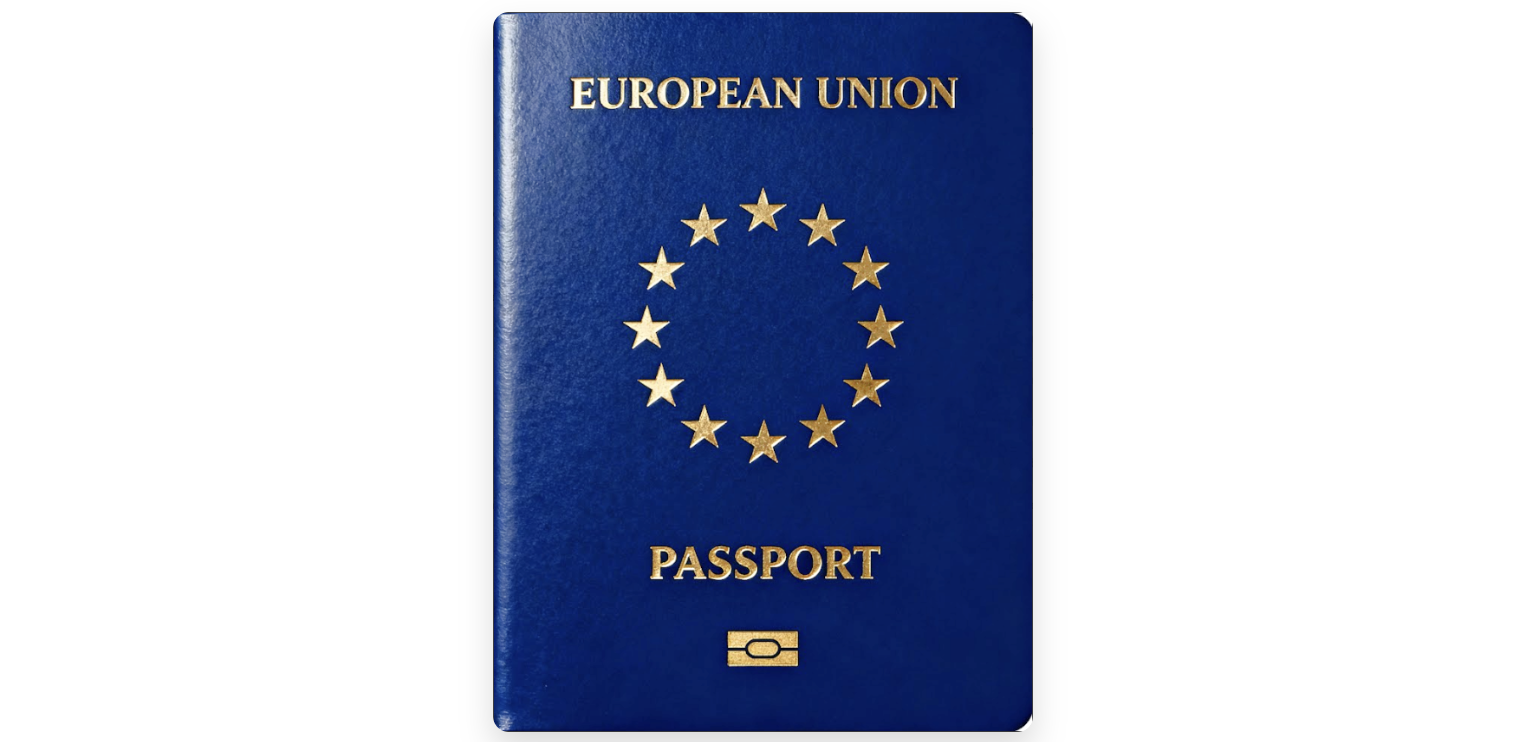
At its core, the initiative calls on the European Commission to introduce an optional passport design featuring the iconic blue background and gold stars of the EU flag, accompanied by the words “EUROPEAN UNION”.
“STAR-PASS is not about replacing member state designs or anything else currently displayed on European passports,” said STAR-PASS co-founder Davide Biasco to EU Reports. “It is about adding something, a choice, for every EU citizen to make their European identity visible”.
To succeed, STAR-PASS must collect one million verified signatures from citizens in at least seven member states within a 12-month period, and although the campaign kicks off on May 9, 2026 – Europe Day – it would facilitate the issuance of 30 million new passports every year if successful.
The cost of the initiative to governments is marginal; the EU-starred passport covers would only be an addition to current options, and there would be no compulsory redesign of existing documents.
The identity choice
In the official press release for the signature kick-off, STAR-PASS describes this proposal as an act allowing people to express their freedom – deeply bonded with their identity – and therefore as an act of liberation rather than imposition.
“The initiative is about identity because this is how one identifies themselves,” Biasco explained.
“You are a European citizen when you have a nationality from any nation within the European Union – you already have both. The point is that the passport doesn’t clearly show that. So, why not?”
According to STAR-PASS, the option to feature European identity on passports could simplify travel and visa applications. For millions of Europeans who have studied, worked, or built lives across Europe’s national borders, this identity is real, tangible, and worth expressing.
But beyond identity politics, the implementation of the new design hopes to demonstrate to citizens that they can – and do – use the tools of EU democracy to shape their individual lives.
Despite Biasco’s enthusiasm, critics have long argued that European identity remains a distant and abstract concept. While the 2025 Eurobarometer data shows that 66% of citizens want the EU to play a more significant role in protecting them from global crises, this support is not uniform across the region.
In nations like Poland and Italy, for instance, support for a stronger EU role stands at just 44% and 43%, respectively, suggesting that for a large portion of the population, a shared European identity has yet to become feasible – let alone desirable.
According to Biasco, the European Citizens’ Initiative (ECI) remains one of the most underused instruments in European public life, but STAR-PASS offers a chance to prove its potential and show citizens that their voices carry significant weight.
The Erasmus impact
The roots of the initiative are also deeply tied to the Erasmus, the EU’s student exchange program launched in 1987 which funds university students to study abroad in another European country for up to a year.
“We’re speaking about the Erasmus generation now – a whole group of people who grew up in an environment where many of their peers experienced a significant part of their lives across Europe,” said Biasco.
The STAR-PASS founder also noted that throughout the years of the EU’s existence, the Erasmus experience has become a transformative journey for students, but for many, their European identity remains a mere abstraction due to their current passports not reflecting it in a recognisable way.
And, for European workers whose livelihoods depend on their mobility, the opportunity is all the more poignant.
“Europe is not an abstraction – it is the French student who spent a year in Berlin on Erasmus; it is the Dutch engineer who commutes to Antwerp each morning, the Romanian nurse working in a Spanish hospital, the Greek architect building homes in Ireland, and the Lithuanian family that celebrates Christmas in Portugal,” Biasco stressed.
For these individuals – and many others like them – Biasco argued that their European identities are not a political project, but a lived reality. According to the initiative, the core idea speaks powerfully to the generations who remember life before the European Union was established – those who lived through a Europe divided by endless checkpoints and for whom the hard-won freedom to move, study and work across borders has become a vital part of their lives.
STAR-PASS origins
The STAR-PASS initiative was introduced under the framework of the Lisbon Treaty as a tool for participatory democracy in the EU, although its formal launch dates to much prior.
Its founder, Romanian citizen Serban Alexandriuc, was inspired when, while travelling to the Caribbean islands, his EU passport did little to prevent him from being subjected to fingerprinting and a lengthy additional security check. After a long wait and eventual apologies from border control, he realised that his European identity needed to be more clearly recognised globally.
Alexandriuc then became determined to launch an initiative that would simplify border crossings for EU passport holders by making their European identity more visible on the document’s design.
“He had the idea several years ago, but then COVID happened, and things went a bit quiet,” said Biasco, reflecting on the origins of STAR-PASS.
Following years of research and preparation, Alexandriuc worked to ensure the initiative would deliver a meaningful, positive impact, and by September 2025, the required seven signatures from across the member states were secured.
This paved the way for the official approval of the registration by the European Commission on November 11, 2025, marking the formal birth of the STAR-PASS ECI.
Teresa Dos Santos Serra, a PR volunteer for STAR-PASS, told EU Reports that the founders and leadership behind the initiative embodies the true face of Europe, where diverse voices and backgrounds come together for a shared vision.
“For me, the EU STAR-PASS initiative is all about the focus on what unites us as Europeans,” said Serra, adding that it is freedom, opportunities and connections that matter the most – which do not hinder respect for national identities.
Featured image: Via STAR-PASS EU.