
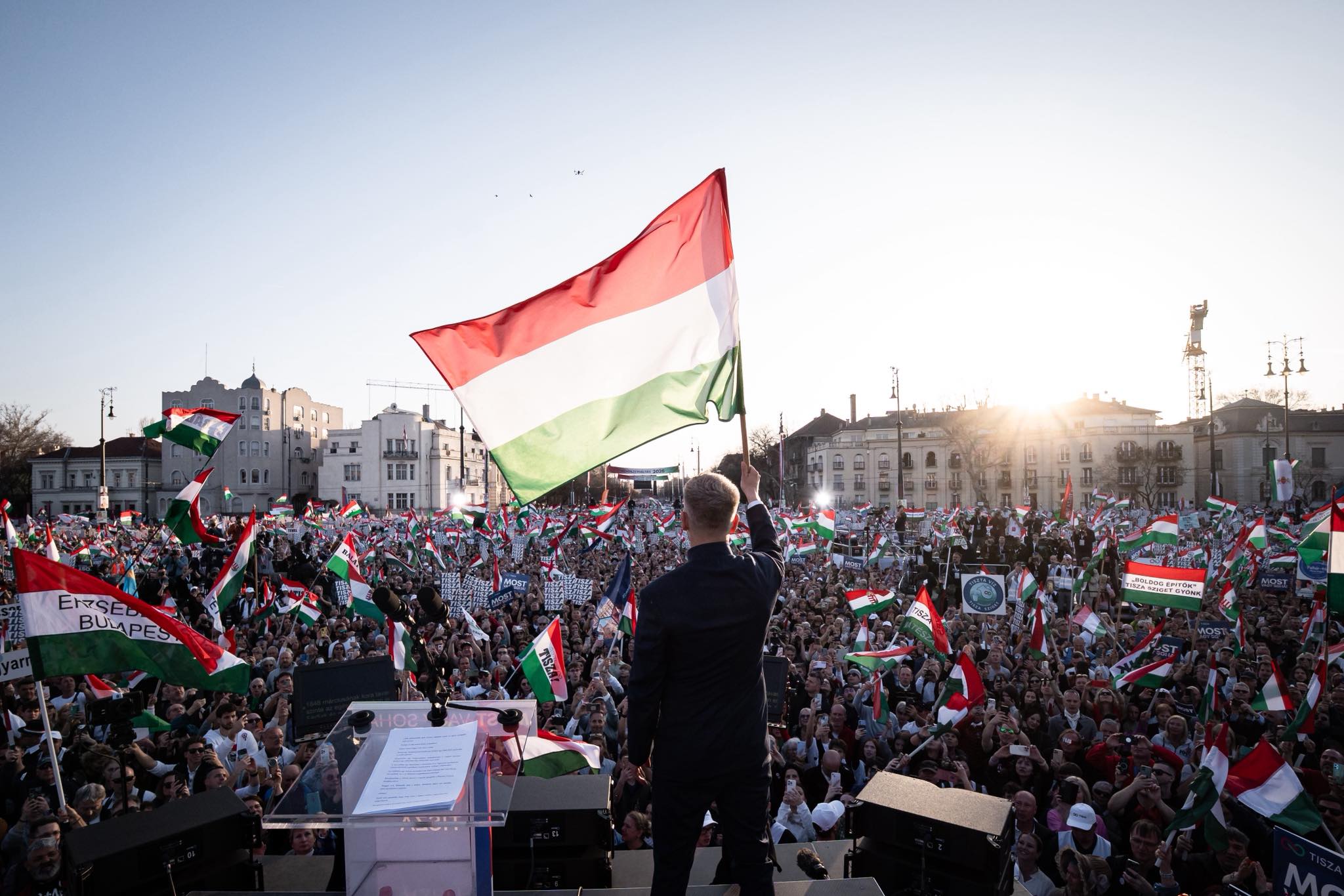
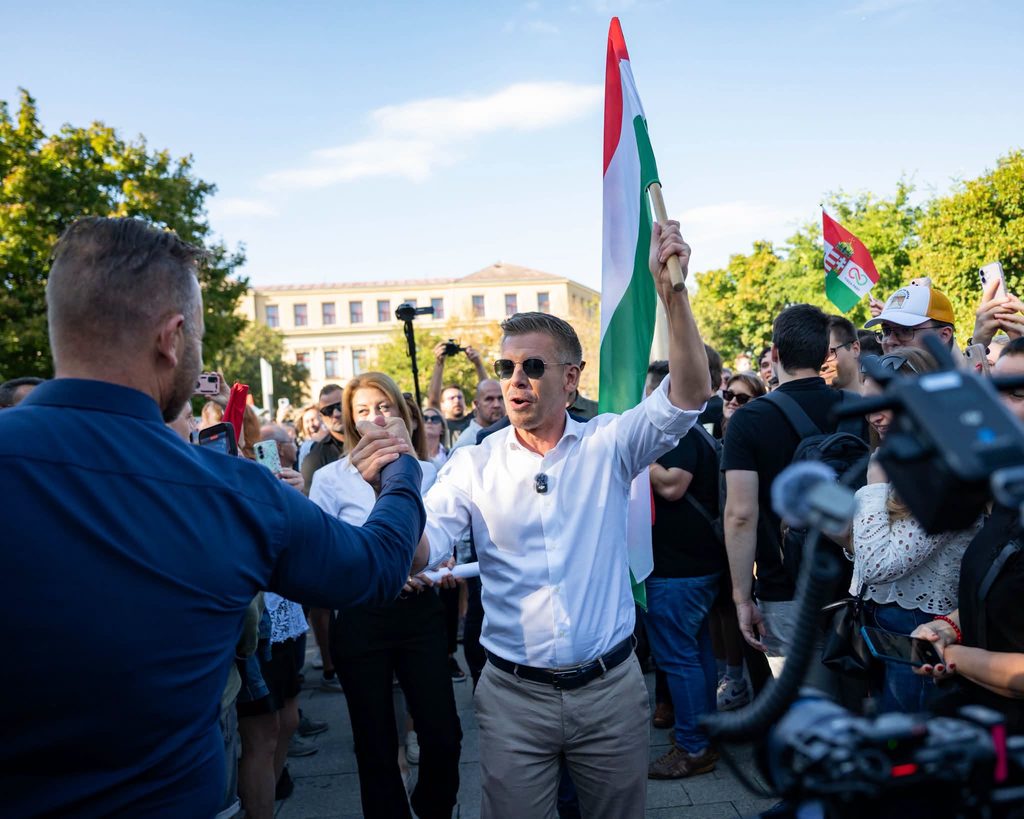
Incoming Hungarian Prime Minister Péter Magyar has pledged wide-ranging institutional reforms to Hungary’s political, civil and media landscape, ahead of his taking office on May 9, 2026.
Magyar’s Tisza Party won by a landslide in Hungary’s parliamentary election on April 12, ousting incumbent Viktor Orbán and his Fidesz party after 16 years in power. Orbán had drawn widespread criticism internationally for his illiberalism, closeness to Russian President Vladimir Putin, allegations of corruption throughout the political system, and manipulation of the media.
Read more: Orbán loses landmark elections in Hungary
Orbán remains as the sitting prime minister until Magyar is sworn in, following which he will be stepping down as a member of parliament and the leader of the Fidesz-KDNP bloc.
Hungarian President Tamás Sulyok confirmed he will be calling the inaugural session of the new parliament for that morning. Celebratory events will then be held at Kossuth Square in Budapest, near the Hungarian Parliament.
Magyar has already announced several of his choices for the new cabinet – comprising sixteen ministers – in what has been seen as a deliberate shift away from the more centralised form of government seen under Orbán; with separate ministries to be set up for education, health and social policy, and justice, as well as new limitations on the interior ministry, which will be strictly dealing law enforcement.
An end to the regime?
Some had raised concerns about the extent to which Orbán’s allies within the civil service and the judiciary may obstruct an incoming Tisza government, as well as over continuing bias towards the Orbán regime across much of the mass media – including the Hungarian state media authority, MTVA.
Hungarian commentators had previously raised the prospect that these institutions could paralyse any attempts at reform by Tisza. However, with the size of the majority they have achieved, the party will now be able to bring about “complete regime change.”
Read more: The end for Orbán?: Europe looks ahead to Hungary’s elections
Magyar has made his intention to bring about wholesale institutional reform clear through a series of combative interviews and speeches made in the wake of the election. The politician had declared on election night his intention to restore proper checks and balances to the Hungarian system and remove Orbán’s ‘puppets’, stating that those who “stole from the country have to face consequences.”
Following his meeting with President Sulyok after the election, Magyar called on the Fidesz-KDNP President to also stand down immediately following the handover of power, stating on X that Sulyok was “unworthy of representing the unity of the Hungarian nation. He is unfit to serve as the guardian of legality. He is not fit to serve as a moral authority or a role model.”
He has since further called for the resignations of numerous other top figures within the government, the judiciary, and the media, including the president of the Constitutional Court, the prosecutor general, and the president of the media authority, among others.
If these resignations are not forthcoming, the new Tisza government will take all the steps it can within the Hungarian constitution to force them out, Magyar has made clear.
“We expect the resignation of Orban’s puppets,” Magyar stated. “May 31 is the deadline until when they can submit their resignation. After then, we will live with our mandate and legal possibilities to remove them from office.”
Magyar also took fire at Hungary’s state broadcaster, pointing out in his appearance on MTVA that it was the first time they’d had him on in 18 months. Magyar compared MTVA to North Korean-style propaganda, declaring on air that he would be having the national broadcaster shut down upon taking office.
“One element of our programme is that this factory of lies will end once a Tisza government is formed,” Magyar said. “The fake news broadcast here must stop, and we will create independent, objective and impartial conditions to end this propaganda. What has been happening here since 2010 is something that Goebbels or the North Korean leadership would admire — not a single true word being spoken. This cannot continue.”
The presenter for MTVA denied that they had contravened any laws or spread misinformation about Magyar personally, nor about his family. MTVA also states that it had extended multiple invitations both to Magyar and to the Tisza party during the election campaign.
The tackling of corruption seen under Orbán, as well as the restoration of media and academic freedoms, are seen as essential steps for securing the €17 billion worth of funds to Hungary that had been frozen by the EU in response to the Orbán regime and its policies – €10 billion of which are due to expire by the end of August.
This freezing of EU funds had a severely detrimental effect on Hungary’s economy, worsening the country’s cost of living crisis and resulting in ever closer ties between the Orbán regime and the likes of China and the Trump administration.
The unlocking of these funds is an issue on which Magyar has said there is “no time to waste,” confirming on X that he will be travelling to Brussels this week to discuss the matter with European Commission President Ursula von der Leyen.
A new relationship?
Both Magyar and the various European union leaders have declared their hope that Tisza’s win will signal a reset in relations between the EU and Hungary. Already, Hungary has agreed to lift its veto on the €90 billion loan from the EU to Ukraine, as has key ally Slovakia.
This loan, seen as vital for Ukraine avoiding bankruptcy, had been a particularly strong point of contention between EU leaders and Budapest in the months running up to the election. The anti-Ukraine bloc led by Hungary had initially backed the loan on the provision that they would not be required to pay towards it. However, Orbán had made the Russia-Ukraine war a key part of his election campaign, claiming that a Tisza win would drag Hungary into Ukraine’s war.
Read more: Hungary blocks €90 billion in aid to Ukraine: European Parliament pushes back
Orbán claimed the veto was done in retaliation for the dispute over the Druzhba oil pipeline, although this now appears to have been resolved, with oil flowing again to Hungary and Slovakia after months of deadlock.
The lifting of the veto, as well as approval for fresh sanctions against Russia, was greeted by Ukrainian President Volodymyr Zelenskyy as “the right signal under the current circumstances.”
“It is important that the European support package becomes operational swiftly,” added Zelenskyy.
The Ukrainian leader has further urged EU leaders to move ahead with the opening of formal accession negotiations for both Ukraine and Moldova after having met with Moldovan President Maia Sandu at Chernobyl as part of remembrance events held to commemorate the 40th anniversary of the disaster.
The two countries’ accession bids had previously been blocked by Orbán, but whilst Magyar has remained reticent on the question of Ukraine’s membership of the EU – and is opposed to any kind of ‘fast-track’ for their applications – he has stated that he will not oppose accession applications so long as the usual processes are followed.
Some had continued to speculate about how far Tisza’s win might truly bring about change in policy by Budapest, noting the conservative Magyar’s previous opposition to further support for Ukraine as well as his positions on issues such as migration.
Magyar has confirmed that Hungary will continue to buy oil and gas from Russia, suggesting the EU should lift sanctions on Russian energy. He had, however, stated that he is looking to wean Hungary off its dependence on Russia, and that he would urge Putin to end the war in Ukraine.
The incoming prime minister has emphasized Hungary’s place within Europe and the choice made by Hungarian voters, stating after the election that Hungary voted “not just for a change of government but for a change of the regime.”
Featured image: Péter Magyar via Facebook.