
King Felipe VI of Spain spoke publicly about the country’s colonial past upon his visit to Madrid’s Museum of Archeology in mid-March, in what has been seen as a landmark moment of recognition from the Spanish Crown.
The King attended an exhibition at the Museum titled “Half of the World: Women in the Indigenous Mexico”, alongside Mexican ambassador to Spain Quirino Ordaz Coppel.
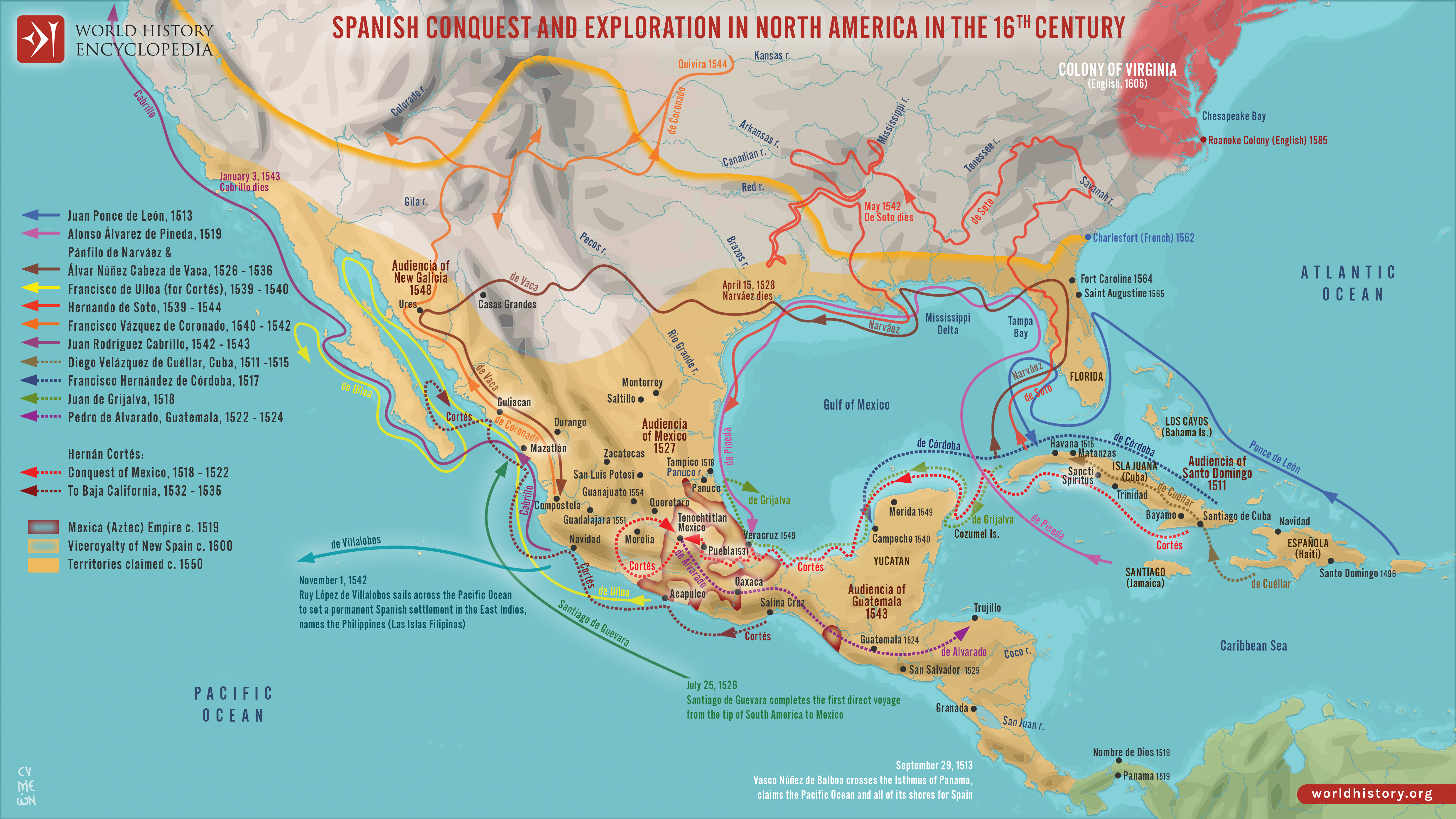
During the visit, the royal head acknowledged “abuses” and “ethical controversies” that took place during the 1500s as part of Spain’s conquest of the Aztec Empire – what is now Mexico – as well as its subsequent colonization of much of the rest of the Americas.
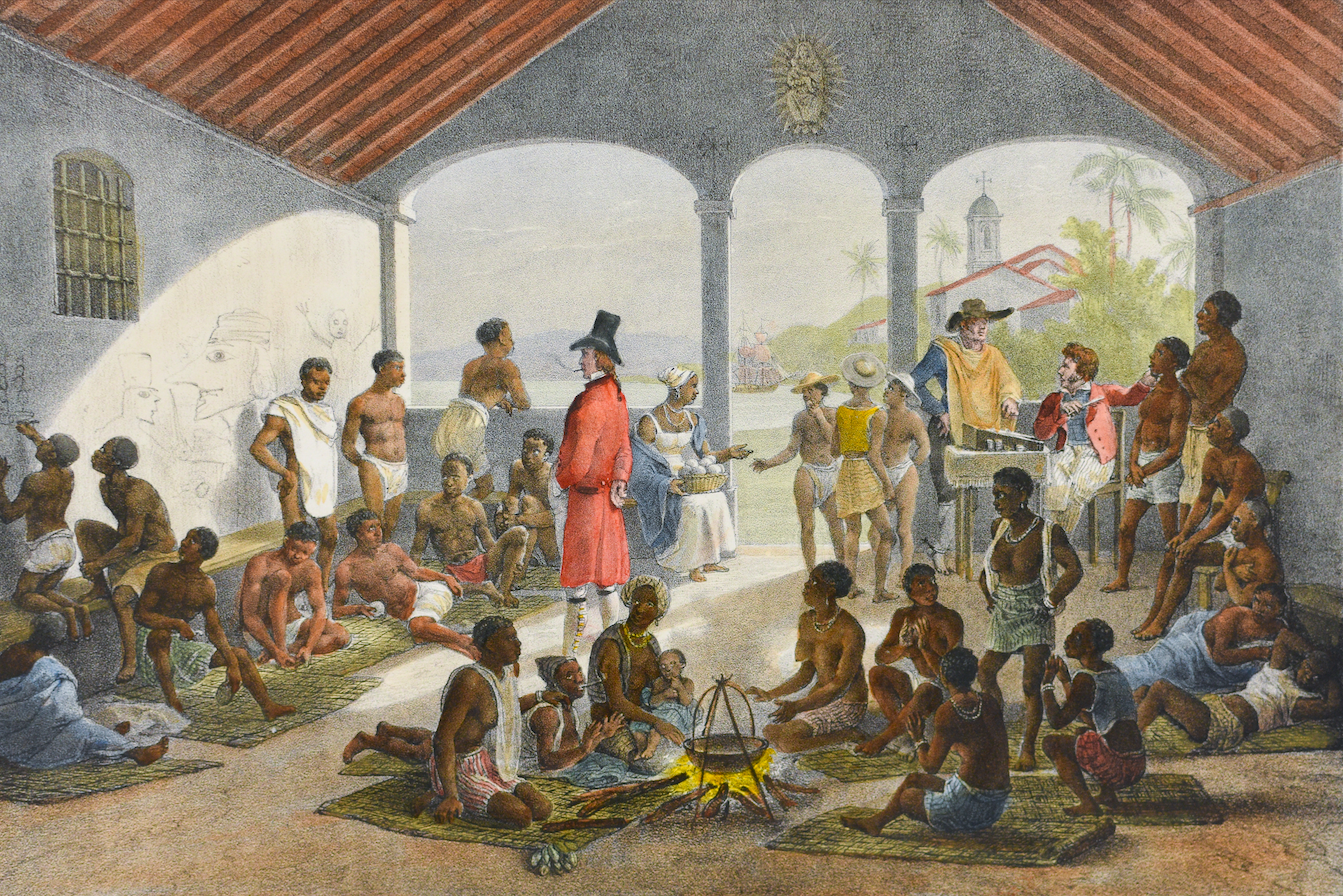
This has since remained a strong point of contention across the political divide, both in Spain and the Americas. While some claimed that Spain’s conquest of the region was as a civilising mission, others point out how it entailed the deaths of as much as 80 or 90% of Indigenous populations in Central and Southern America; either directly through Spain’s wars of conquest, or through enslavement and diseases carried over by Europeans.
If accurate, this represents the single largest-ever human mortality event in proportion to the global population at the time, second in absolute terms only to the death toll from World War II.
The Spanish Empire was one of the largest in the world at the time of its Americas conquests, and continued to rule over much of the region for the next three centuries – and was a great source of wealth and prestige for the monarchy.
Reopening old wounds
This history of colonialism has caused tension in recent years between Spain and Mexico particularly, with the Mexican government having repeatedly called for a formal apology from Spain.
In 2019, then-President of Mexico Andrés Manuel López Obrador wrote to both the King of Spain and to the Pope, calling for an official and public recognition of historical abuses committed during the conquest. No such apology was forthcoming, however. Instead, the Spanish government stated that events which took place 500 years ago “cannot be judged by the light of contemporary ideas.”
In response, Mexico’s current President Claudia Sheinbaum Pardo elected not to invite King Felipe to her inauguration in 2024, citing the Spanish Monarchy’s lack of any formal apology. This was met with anger by the Spanish government, with Spanish Prime Minister Pedro Sánchez describing the act as “unacceptable.”
Spain has since made attempts at redressing this, with some acknowledgements now being given of its imperial past.
Late last year, Spanish Foreign Minister José Manuel Albares publicly recognised the “pain and injustice” experienced by Mexico’s Indigenous population, during a visit to the same exhibition in Madrid.
“The shared history between Spain and Mexico, like all human history, has its light and shadow,” Albares stated. “There was injustice, and it is only right to acknowledge and regret it. That is part of our shared history; we cannot deny it or forget it.”
This line was echoed by King Felipe in his visit earlier this month – a rare acknowledgement from the Crown.
Whilst the King maintained that past monarchs had acted with “an intention to protect,” he accepted that this may not have been fulfilled “as intended,” and that there had also been “much, much abuse.”
“There are aspects of our past that, when examined through the lens of contemporary values, cannot make us feel proud,” the King admitted.
“However, it is essential to evaluate these events within their historical context, utilising an objective and rigorous analysis rather than excessive moral presentism.”
Too little, too late?
How far these statements will go towards repairing relations between Spain and Mexico remains to be seen.
The comments made both by King Felipe and Minister Albares have been welcomed by Mexico, with Sheinbaum acknowledging the “gesture of rapprochement” made by the monarch. She had previously expressed her congratulations to Albares on what she described as “this first step.”
“Forgiveness elevates nations,” Sheinbaum had stated previously. “It is not humiliating, on the contrary. Recognizing history, acknowledging grievances, asking for forgiveness – or expressing regret – and embracing it as part of history elevates governments.”
Nevertheless, Felipe’s statement still falls short of a formal apology for Spain’s actions during its imperial past. “It’s not everything we would have liked,” Sheinbaum stated in response to the King’s speech, “but it’s a step.”
“One could say that it is not everything we would have wanted, but it is a gesture of reconciliation by the King in terms of what we were talking about: an acknowledgement of excesses, exterminations that happened during the Spaniards’ arrival,” the Mexican president added.
“It won’t be enough,” maintained historian Humberto Beck of the Colegio de México university, who claims it will be seen merely “as a substitute for an official apology.”
“Making relations between the two countries contingent on this apology has been a mistake by the Mexican government that distracts from the deeper issues, which are reflection, a continuous process of memory and recognition on the part of both societies,” he told newspaper El Pais.
A wider pattern
This avoidance of any apology from Spain largely mirrors how most nations have operated when faced with similar demands.
Earlier this month in the UK, for example, dozens of British MPs likewise called for a formal apology from the government over its past involvement in occupied Palestine – from 1918 to 1948.
The Britain Owes Palestine campaign group had previously submitted a 400-page petition demanding an apology over alleged war crimes committed by Britain at the time. Liberal Democrat MP Layla Moran, the first British MP of Palestinian descent, stated:
“The consequences of those actions have profoundly shaped the conflict we witness today, yet successive governments have refused to acknowledge this record or offer a formal apology. If Britain is serious about promoting peace in Gaza today, it must begin by confronting its historical role, recognising the harm caused, and taking meaningful responsibility for it.”

No apology from the UK government has as yet been forthcoming, with its Foreign Office stating it does not routinely comment on such petitions.
Whilst countries such as Australia have, since 1998, held an annual ‘National Sorry Day,’ acknowledging abuses committed against Aboriginal people, these remain comparatively rare.
Such apologies are usually only made where countries feel compelled to do so – in cases where there would be a stronger political backlash if they did not, according to Boston University professor Thomas Berger.
“Apologies are not cheap. It is not simply having your leader say ‘I’m sorry’; it means a whole set of policies, including compensation, educational policies, commemoration policies, how to remember the past in museums, at cultural sites, and through holidays and events,” he argued.
Generally, such apologies have tended to be made only in cases where this is a significant movement within the country itself calling for one – as in the case of the Aborigines in Australia – or where it has been crucial for nations to reestablish normal, working relationships with the other countries involved.
This was the case for Germany after WWII, Berger noted, adding that it “was very much under pressure, economically, politically, geostrategically, to be sensitive to views of victims in democratic countries in particular – France, Holland, Italy, and Israel.”
The same arguably was true for Italy when it issued an apology to Libya in 2008, whilst it was in the process of signing a key agreement with the Gaddafi regime over trade and migration.
The UK similarly extended an apology to Ireland for the Great Famine in the run up to the Good Friday Agreement, even as it ignored similar requests for an apology from South Africa.
Contested legacies
More often than not, most governments will seek simply to issue statements of sorrow or regret rather than outright apologies in order to avoid further questions around issues such as reparations, as well as political backlash.
Mixed reactions to the Spanish King’s statement exemplify as much. While some on the left have welcomed the King’s comments – with Inclusion Minister Elma Saiz Delgado backing the King’s words – others on the right have expressed anger – particularly those who continue to defend Spain’s colonial legacy.
Alberto Núñez Feijóo, leader of the conservative People’s Party (PP), stated that “bringing under scrutiny in the 21st century things that happened in the 15th century is crazy.”
He went on to add that Spaniards should take pride in their history, emphasizing the positives of Empire – as well as the negatives.
“The arrival of Spain in America led to an exceptional linguistic and cultural community. Any Spanish action during the conquest can be compared favourably to any other action by any other empire of that period.”
The far-right VOX party has gone even further in defending Spain’s actions, hailing the conquest as “the greatest work of evangelization and civilization in universal history.”
Vox MEP Hermann Tertsch expressed his astonishment at the King for siding with those “who only seek to damage and discredit Spanish history.”
This was emphasized by British historian Felipe Fernández-Armesto, professor at the University of Notre Dame
“I’m happy to see that the King has emphatically and clearly not apologised,” Fernández-Armesto told EU Reports.
“It’s meaningless to issue apologies for matters beyond one’s own responsibilities. When popes or politicians do it, you can be sure they’re concealing misdeeds of their own. The King has said that moral judgements about the past must be free of presentism: that is true, and one should not blame people in the past for being themselves or for conforming to the standards of their days.”
“There has never been an abuse-free polity. Spaniards in general and Spain as a whole have every reason to be proud of the period when much of the Americas formed parts of the Spanish monarchy,” the scholar added.
“I don’t hear Madame Sheinbaum apologising for the massacre of Indigenous people in modern, independent Mexico. The whole enterprise of a global monarchy such as Spain’s was scarred with failure: that’s a matter for regret, but not for redress, apologues, but no apologies.”
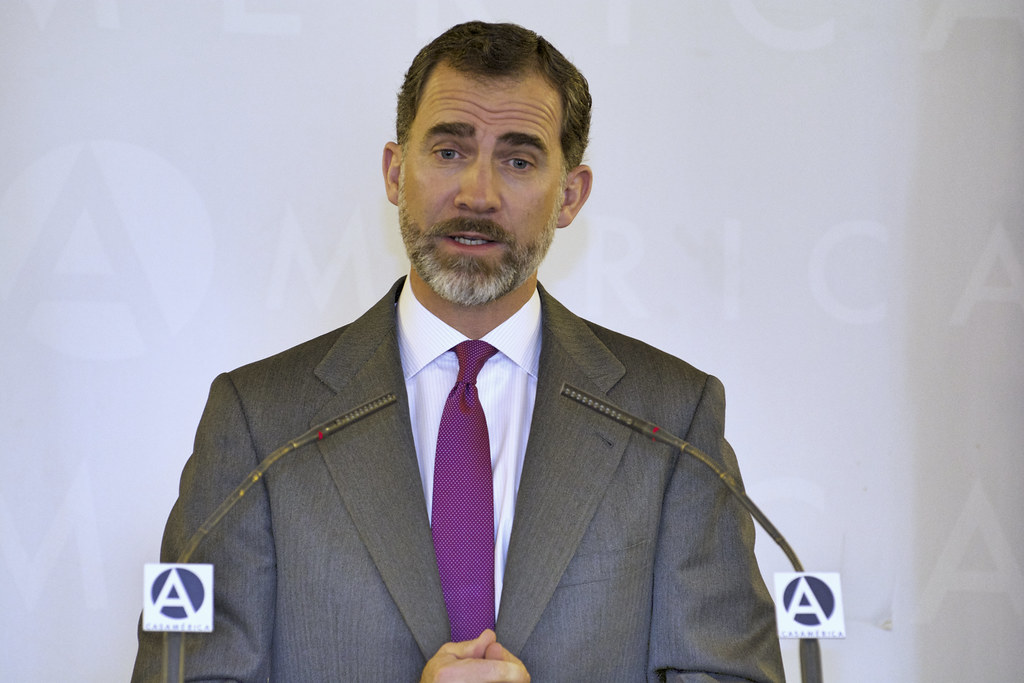
Featured image: S.M. el Rey ha clausurado el X Congreso Iberoamericano de Periodismo
Source: Casa de América via Flickr
Creative Commons Licenses