
The latter half of June brought much of Europe to a halt. The heat proved to be unbearable for many as several nations reached record high temperatures; France had 1,000 additional deaths compared with previous months between June 24 and 28 alone, while Spain recorded 1,029 excess deaths attributable to high temperatures.
Far from being a one-month anomaly, the first semester of 2026 has been the hottest-ever for Spain, while the deaths reported are more than double the 407 recorded in June of the previous year.
But June turned out to be the opening act, not the peak. Europe has not been through five separate heatwaves since late May, and the most recent put more than 135 million people under forecasts of temperatures above 35°C, with parts of France soaring past 42°C and the UK recording its hottest day of the year on August 13.
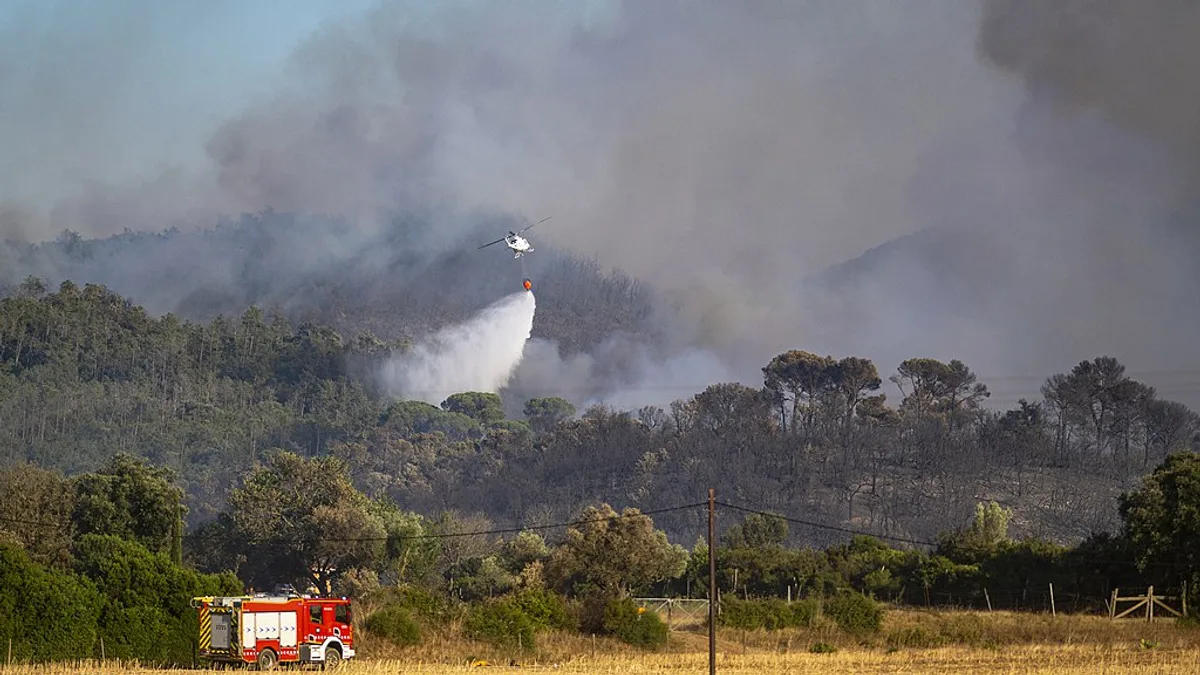
The heat has fuelled a brutal wildfire season alongside it: fires that tore through Spain and France in early August killed at least 17 civilians, six firefighters and two helicopter crew, and forced roughly 330,000 people from their homes, with the toll since moving east. And in Greece, two individuals and a soldier died fighting the wildfires in the Salamina island on August 16.
As Europe moves from one heatwave to the next, with thousands of lives lost across the summer, questions are being posed to governments throughout the region with more urgency than ever before.
What will it take to reverse this trend, and are people in power willing to make the pivotal policy decisions needed to achieve these goals?
The adaptation gap
The future paints an undeniably bleak picture for Europe’s environment: The Climate Change Committee (CCC) reported that in the UK alone, 92% of homes are at risk of overheating by 2050, peak river flows are projected to increase by up to 45% or higher, depending on the specific region, and water supply shortfall could exceed five billion litres per day.
“The current adaptation gap is substantial. We have seen little meaningful progress in preparedness for the climate impacts the UK is already experiencing, let alone those that lie ahead,” said Dr Richard Millar, director of adaptation at the CCC, while in conversation with EU Reports.
This gap is reflected not only in Britain, but across Europe. The European Environment Agency (EEA) warned the region is warming twice as fast as the global average, yet adaptation efforts remain uneven between member states.
While every European country has now adopted a national climate adaptation policy, the EEA concluded that there are persistent gaps between planning and implementation, with weaknesses in financing, monitoring and cross-border coordination limiting preparedness.
The consequences are already being felt, with weather and climate-related extremes causing an estimated €822 billion in economic losses and around 441,000 deaths across Europe between 1980 and 2024, while heatwaves accounted for approximately 95% of fatalities.
This summer alone has added heavily to the toll. Reuters reported an estimated 10,000 excess deaths in the region during June’s heatwave based on early data, a figure that has only grown as the later waves have rolled through.
“Extreme heat is the deadliest single climate-related health threat, yet many hospitals, care homes and schools are not designed to remain safe and comfortable in higher temperatures,” noted Dr Millar.
What adaptation looks like
Despite these trends setting Europe up for an seemingly ill-fated environmental future, measures to adapt to the effects of climate change have been implemented in many of the European major cities. Concrete solutions such as green urban spaces, cooling centres, heat-resilient building standards, early warning systems, and water storage have been explored.
Vienna, for one, has implemented a system of district cooling, where a centralized system generates chilled water and pipes it underground to cool buildings such as offices and apartments. The Austrian capital also dedicated €90 million to the expansion and modernization of this method, with the goal of increasing capacity from the current level of around 240 megawatts to approximately 370 megawatts by 2030.
Meanwhile, Copenhagen has invested heavily in adapting its infrastructure to deal with extreme rainfall events. Under its Cloudburst Management Plan, the city is redesigning streets, parks and public spaces to temporarily store or redirect excess rainwater during extreme storms.
New parks and retention basins have been engineered to channel floodwater away from homes and critical infrastructure, creating a system designed specifically for the more intense rainfall expected under climate change.
According to Kate Williamson, a research associate at SEI Oxford, there is an abundance of adaptive approaches that can be used to mitigate the effects of climate change, but not enough of Europe’s leaders are committed to implementing them at scale.
“We have enough evidence on cost-effective adaptation measures that work and generate benefits across society. Governments cannot hide behind uncertainty,” Williamson stressed to EU Reports.
Why policy is lagging
The political solution to these issues is anything but simple. While investing in adaptation measures would be hugely beneficial, it is also an expensive commitment that puts public support at stake.
Rather than tackling the root causes of Europe’s vulnerability to extreme heat, it is easier for policymakers to act performatively, offering temporary relief rather than committing to the permanent structural changes that would actually protect people.
Williamson put the choice facing governments bluntly: “Will adaptation be done in an improvisational, reactive manner that helps us cope in crises? Or will it be achieved through a long-term strategic approach that tackles the root causes of vulnerability?”
The answer, so far, has largely been the former. Adaptation requires spending money now for benefits that will only materialise decades later — a difficult case to make to electorates focused on immediate concerns.
Yet the cost of inaction is becoming harder to ignore.
Dr Millar argued the solutions themselves are not in doubt. “We know what needs to be done. Delivering solutions in just three areas – better cooling, flood protection, and a more secure water supply – would make a major contribution to closing the adaptation gap. Governments should prioritise these measures now.”
A serious national adaptation strategy, in other words, must not only deliver these legitimate solutions but communicate why the public should care.
Europe isn’t waiting for its next heatwave, but living through its fifth one this summer. With rising temperatures and death dolls fresh in the minds of the populace, governments must make climate adaptation today’s priority.
Featured image: via Srpske Novine
Creative Commons Licenses