


The global AI boom isn’t just transforming industries. It’s reshaping what it takes to build venture backed companies, while democratizing access to the world of startups.
Around the world, we’re witnessing a sharp uptick in the number of teenagers and pre-teens who are beginning to experiment with founding ventures, which has been fueled by access to tools, open-source models, and online learning.
As the age of founders drops in the wake of AI, one founder in particular stands out.
Bob Chopra is a 9-year-old founder working at the intersection of AI and education, demonstrating just how early entrepreneurial journeys can now begin. His company, IvySchool.ai, recently announced a partnership with India’s Delhi Public School (DPS), highlighting a major step forward for the country’s AI revolution that could serve as a blueprint for other educational institutions in the future.
His story raises an important question: when will Europe see its own generation of very young AI founders?
Founders across the globe getting younger
According to reports, founders are getting younger. In fact, some estimates indicate that the average age of AI founders who have achieved unicorn status has now dropped to the late 20s.
The trend has also been playing out in the real-world with accelerator cohorts and early-stage startup ecosystems, noting a sharp rise in the number of young founders in their programs.
Meanwhile, recent reports have noted the rise of teenagers launching venture-backed AI companies and raising millions of dollars to scale their product in the real-world, all before graduating from school or even attending university.
This shift is largely driven by the accessibility of generative AI tools, which dramatically lower the cost and complexity of building software businesses.

The region’s approach to developing the entrepreneurs of tomorrow
Europe’s tech scene punches above its weight with AI innovation, however the average age of founders hasn’t yet seen a notable reduction in the average age. At present, founders tend to be slightly older, leading towards a strong pipeline of entrepreneurs in their mid-to-late 20s.
Many of these founders emerge from universities or research institutions, which means the average age is going to be higher.
Programs like the European Institute of Innovation and Technology’s AI Founders Club actively nurture early-stage entrepreneurs and connect them with funding and mentorship. Meanwhile, a growing “Gen Z founder” wave is taking shape, with more individuals under 25 launching startups across the continent.
It’s important to note that Europe’s ecosystem still reflects a more cautious, structured pathway into entrepreneurship. Compared to the United States or parts of Asia, there is greater emphasis on formal education, regulatory compliance, and institutional backing before launching a company and this is reflected in the average age of founders here.
The barriers to entry for pre-teen founders in Europe
Although Europe does have a strong pipeline of founders in their mid-twenties, the continent hasn’t yet produced its own Bob Chopra. Despite the availability of the same AI tools that have helped young visionaries build high-value companies, there are several structural barriers in Europe.
First of all, European societies tend to prioritize formal schooling over early entrepreneurship with its strong education-first culture.
Regulatory frameworks are also strict here, with legal and financial restrictions in place that make it harder for minors to formally start companies.
Finally, European startup culture is often more conservative, with fewer pathways for extremely young founders to access capital. Europe’s focus on deep technical education, strong research institutions, and ethical AI leadership have historically favored slightly older, highly trained founders.
As we look ahead, can AI act as a great equalizer
What is changing now is the nature of tech itself.
In today’s market, GenAI tools are enabling individuals with minimal resources, or even formal training, to build and launch products. This democratization is already accelerating the formation of startups globally.
In Europe, this shift is beginning to erode traditional barriers. Teenagers can now prototype AI applications, reach global audiences, and even monetize products without needing large teams or capital. The rise of bootstrapped AI startups across cities like Berlin, Lisbon, and Tallinn reflects this trend.
Bob Chopra’s journey in India signals a broader global transformation. As AI tools continue to simplify creation and distribution, the barriers to entrepreneurship will fall even further.
With its strong digital infrastructure and growing AI ecosystem, Europe is well-positioned to follow suit in the near future.
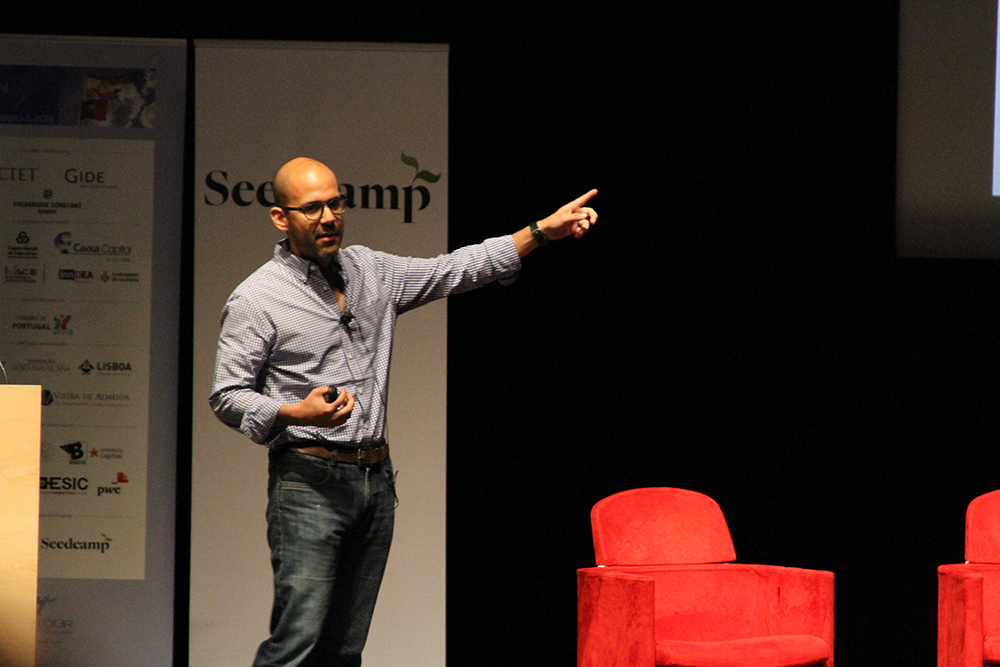
Article’s featured photo of Bob Chopra, Founder and CEO of IvySchool.ai