
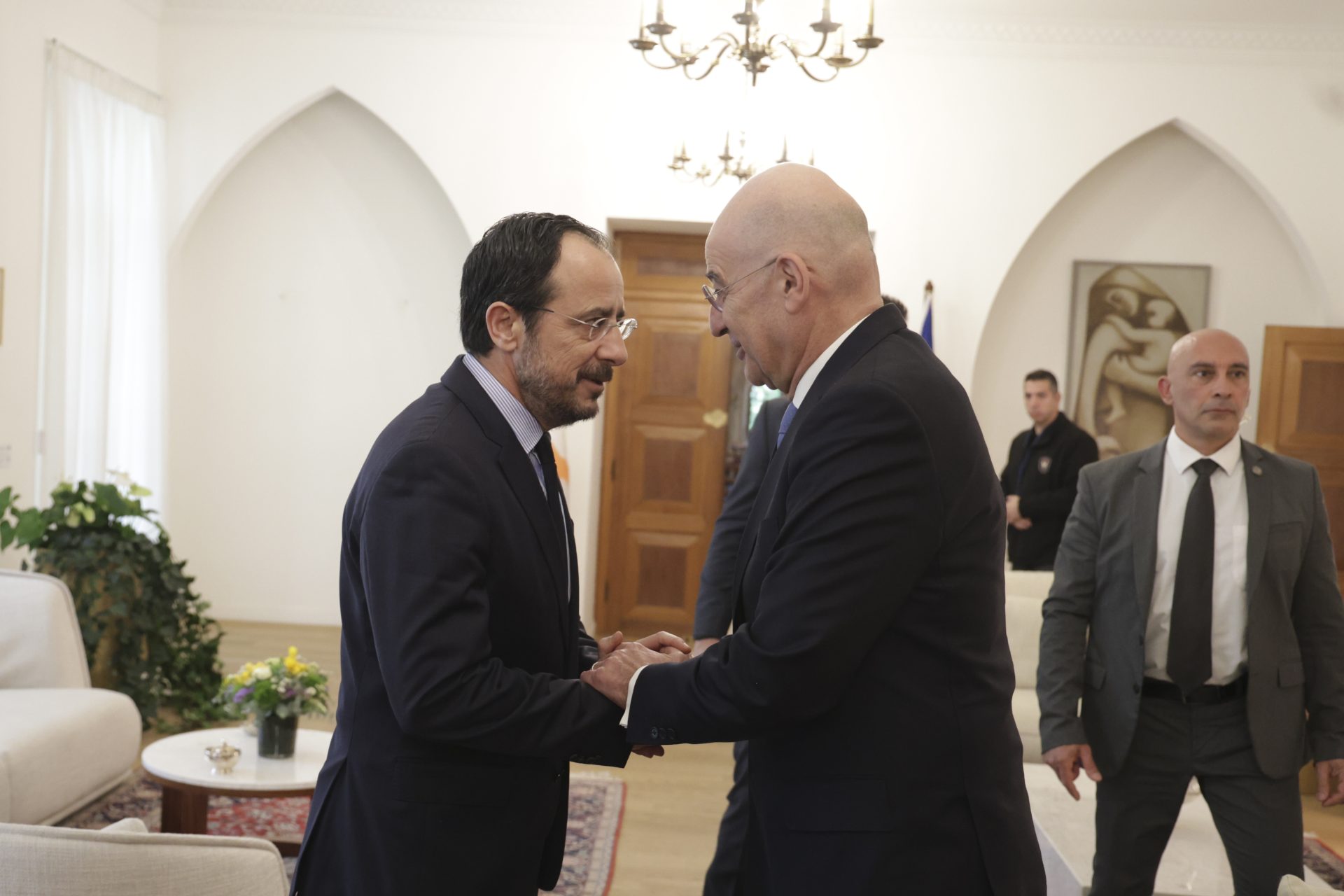
Warsaw, Poland – The Greek government dispatched Defence Minister Nikos Dendias to close ally Cyprus on Tuesday, March 3, following an Iranian attack on the UK military base located in the south of the island.
Athens has long been Cyprus’ closest ally and supporter. The two countries have a common defence doctrine, reaffirmed by Dendias on Tuesday, who assured Cypriots that “we are completely and absolutely at your disposal.”
On Monday, Greece had already sent military assets to the island nation, including two frigates equipped with Aster-30 air defence missiles and Centaur anti-drone systems, as well as four F-16 fighter jets for surveillance and interception operations.
Cypriot president Nikos Christodoulides expressed gratitude to Greek authorities, saying that “Greece is showing the way in which the European Union should respond”. Fellow EU member France is also due to send the small island nation anti-drone and anti-missile defence systems.
Cyprus is not involved in the U.S.-Israel strikes on Iran, nor is it a member of NATO, but the island hosts two UK sovereign military bases: RAF Akrotiri and RAF Dhekelia. The two bases are outside Cypriot jurisdiction, governed instead as British Overseas Territories, a condition set by London when it relinquished control over most of the island in 1960 to the newly-established Republic of Cyprus.
RAF Akrotiri was hit by an Iranian drone attack on Sunday, March 1, and a second drone attack was also intercepted on Monday evening, demonstrating that the Islamic Republic was capable and willing to strike the island.
The bases are both located near the major cities of Larnaca and Limassol, posing a major security risk to the country. Nicosia has therefore requested support from Athens and other EU member states to mitigate further risks.
Featured image: Cypriot President Nikos Christodoulides and Hellenic Republic Defence Minister Nikos Dendias on March 3, 3036.
Source: President of the Republic of Cyprus.