



Hydrosat, a thermal satellite company with headquarters in Washington and Luxembourg, announced on November 2 a high-resolution mid-wave infrared programme called Nyktòs, built for NATO and allied governments that want day-and-night tactical ISR they can task and control themselves.
To develop it, the company will open additional facilities in Europe and expand its network of European suppliers.
The move targets a market that EU institutions have spent the past year funding on a scale Brussels has never attempted before.
On September 28, the Council identified the first European Defence Projects of Common Interest, including a SPACE project covering space-based early warning, satellite communications, ISR, signals intelligence and space domain awareness. That project involves 16 countries, with projected investment of up to €24 billion by 2034, per the Brussels Morning newspaper.
Companies that can offer ISR built on European industrial foundations now have a concrete procurement channel to bid into.
Two sensors, one offer to governments
Nyktòs is the detailed half of a two-part system; the other half is Osiris, a longwave infrared constellation that Hydrosat says will begin launching in 2027 and image land and coastal areas continuously, by day and by night.
Whereas Ositis scans broad regions for temperature anomalies, Nyktòs is then tasked to look at specific sites in fine detail. In military language this is tipping and cueing, but in practice, it means a government spends its high-resolution capacity only where the wide-area picture says something has changed.
“Our vision is to bring these complementary capabilities into a coherent thermal observation system, helping governments and commercial customers understand what is changing, where it is happening and how it fits into the broader picture,” said Scott Soenen, Hydrosat’s CTO.
The company also says it can configure the balance between national and commercial capacity for each customer. A dedicated national mission could set its own rules on tasking, security and data access, and the company’s commercial fleet would supplement it, which closely matches how the Commission has described the European Space Shield, meant to draw on national and commercial space systems, backed by EU capabilities.
It also reflects a tension inside that plan: at the International Space Summit, Commissioner Andrius Kubilius urged member states not to break the Space Shield into separate national projects, but vendors that offer national customisation on a shared commercial backbone are effectively betting that both approaches will coexist.
The money behind Europe’s space defence turn
The financial case for companies like Hydrosat rests on a few large commitments made in quick succession.
At ESA’s ministerial council in Bremen last December, member states approved a record budget and a new European Resilience from Space programme; Josef Aschbacher also reminded ministers that the U.S. accounts for 60% of the global space budget against Europe’s 10%, and that defence makes up half of global space budgets but less than 15% of European investment.
Brussels has moved to narrow that gap. The Commission’s proposal for the 2028-2034 budget includes €131 billion for defence and space, while national governments move in parallel. Germany has committed €35 billion to space-related defence projects by 2030 and at The Hague, NATO allies agreed to raise defense spending to 5% of GDP by 2035, with 3.5% for core defense.
Space-based ISR is one of the more obvious ways to spend that money on capabilities European militaries currently borrow from Washington.
The ownership question
Hydrosat has headquarters in Washington and Luxembourg, and its customer base already spans both sides of the Atlantic.
The company won a stage 2 contract with the U.S. National Reconnaissance Office in 2026, building on work with the agency that began in 2023, but in Europe, it counts the Luxembourg Future Fund among the backers of its January Series B.
The company says its new European facilities and supply chain will support technology development, spacecraft integration, mission operations, data processing and thermal analytics in the region, bringing it closer to government customers and industry partners.
Meanwhile, capital in European defense tech is increasingly transatlantic. US investors now provide 47% of European defence tech funding, compared with 12% in 2020, as EU instruments are designed to strengthen Europe’s own defence industrial base—meaning procurement officials will probably look closely at where hardware is built, where data is processed and who controls the companies supplying it.
Hydrosat’s first two Osiris satellites are scheduled to launch in 2027, and the company has not yet given a timeline for Nyktòs. On the public side, the Commission plans to have the European Space Shield operational by 2030, and the SPACE project’s spending runs to 2034.
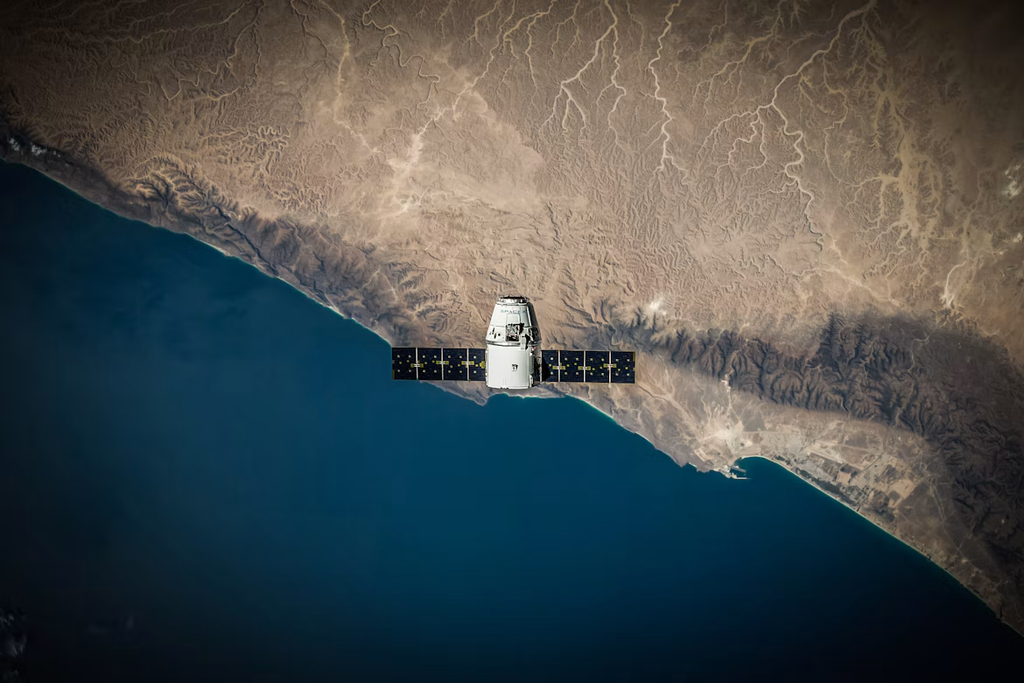
Featured image: via Hydrosat
Disclosure: This article mentions a client of an Espacio portfolio company.