
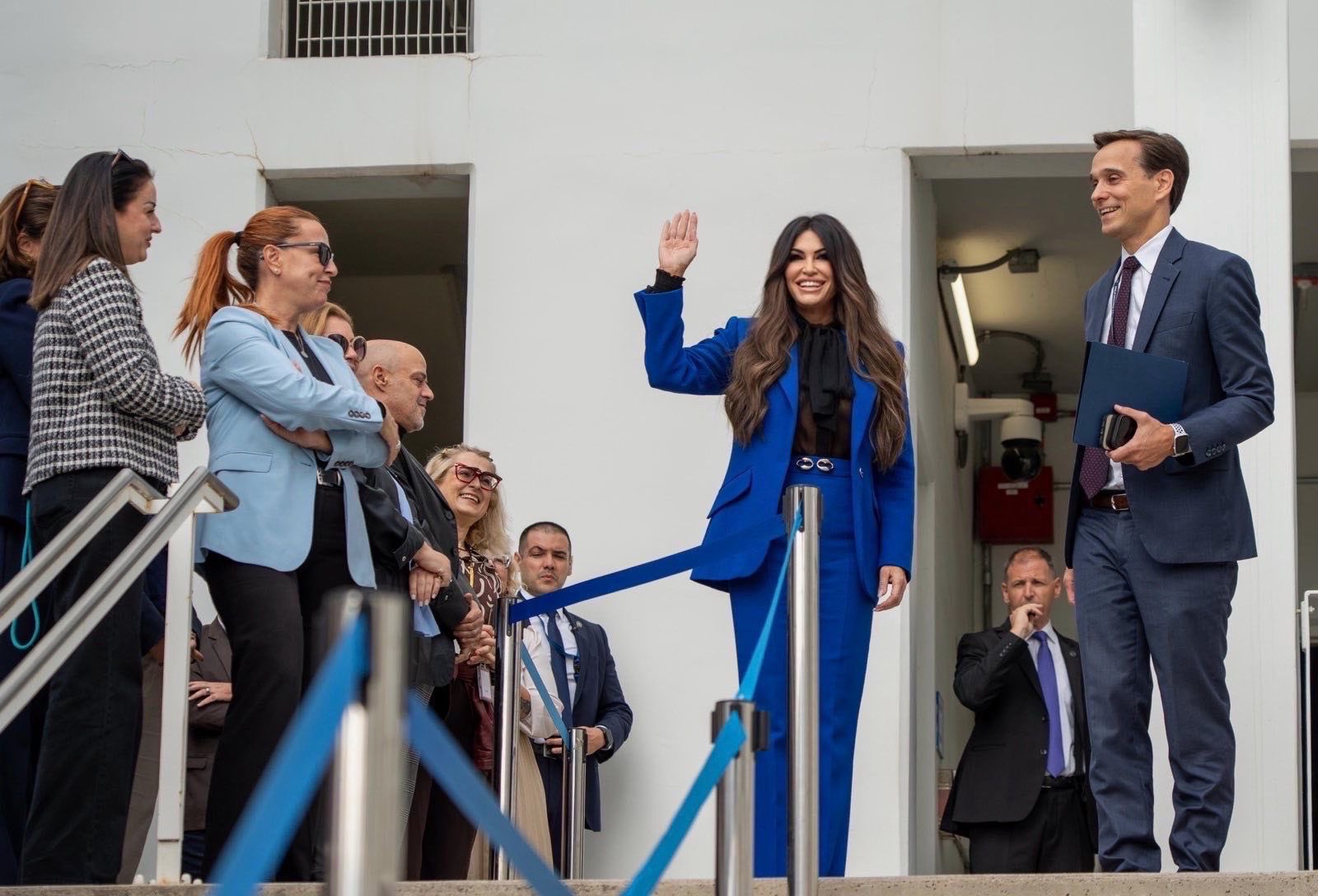
U.S President Donald Trump has removed Kimberly Guilfoyle as U.S. ambassador to Greece following allegations of misconduct and improper political dealings.
“She went to Greece. She was doing a good job, but we didn’t like what we were reading,” Trump said following Guilfoyle’s statement on X. Prior to her ambassadorship, Guilfoyle had organized the fundraising division of Trump’s 2020 presidential campaign, and had been engaged to Donald Trump Jr.
The White House requested her resignation on October 13, ending her diplomatic tenure in Athens after less than a year. The decision followed reports involving financial demands, diplomatic threats, and alleged misuse of political connections.
White House press secretary Katie Zacharia confirmed the administration’s decision during her first briefing Tuesday. Guilfoyle subsequently confirmed her departure, rejected the allegations, and pledged to defend her reputation.
Allegations reach into Greek politics, business
The dismissal followed weeks of reports in The Wall Street Journal detailing Guilfoyle’s conduct before and during her diplomatic assignment. The newspaper’s first report said she told guests at a reception that the United States could undermine the Greek government if it chose to, promoted the business interests of Aktor, a Greek construction and energy company, and allowed that company’s lobbyist into private diplomatic meetings.
The Journal also reported that Guilfoyle was angered at not being invited to a Greek-themed event at the World Economic Forum in Davos earlier this year.
The allegations also extend to her conduct before she reached Greece. Prior to her ambassadorship, Guilfoyle allegedly accepted improper gifts and requested donor and former attorney Eric Deters to wire her personal bank account $100,000 USD (€89,136) in July 2025.
Prior to her ambassadorship, Guilfoyle allegedly offered access to administration officials in exchange for financial compensations, with discussions also involving Deters’ tax and legal problems. Deters later described their arrangement as an exchange of money for political favors.
Guilfoyle’s lawyers disputed the allegations and challenged the authenticity of the reported messages, and maintained that the disputed payments concerned outstanding fees for earlier speaking engagements and public appearances.
U.S. Secretary of State Marco Rubio initially defended her performance. During a visit to Athens last week, where he announced a new counterterrorism information sharing agreement between U.S. and Greek law enforcement officials, Rubio deemed her “a strong ambassador here.”
Mounting allegations nevertheless increased pressure on the administration. The State Department’s inspector general, for one, began examining the reported conduct, according to accounts citing administration officials, and Senator Jeanne Shaheen and Representative Robert Garcia have called for a full investigation.
Athens stays reserved, opposition demands answers
The Greek government, led by Prime Minister Kyriakos Mitsotakis, has denied reports that it unfairly favored local business interests with which the ambassador had frequent dealings. “The progress made in recent years and the past will continue,” said Greek Deputy Prime Minister Kostis Hatzidakis.
Government spokesperson Pavlos Marinakis also told Greek television channel SKAI that Guilfoyle’s removal had been solely a decision for the U.S. government, and that Athens could neither influence nor comment on it and would not ask Washington for explanations.
Athens had already rejected the Journal’s reporting before the ambassador’s exit. At a press briefing in late September, Marinakis said the government had never been threatened and that such a threat would not have been tolerated.
Before the resignation, opposition parties had urged Foreign Minister Giorgos Gerapetritis to summon Guilfoyle, to which he refused, arguing that she had been treated like any other ambassador and that no formal summons were necessary.
The opposition, however, has since intensified its criticism over the scandal. The foreign affairs spokesperson of the center-left PASOK party, Dimitris Mantzos, said it confirmed a model of transactional diplomacy at odds with the foreign policy Greece should pursue. He further asked whether Prime Minister Mitsotakis would raise the matter with Washington, or let the country become a stage for private business.
The Coalition of the Radical Left (SYRIZA) party also demanded explanations over the alleged interference. The Greek Left Alliance (ELAS) said the government had yet to give any convincing answer to what Guilfoyle allegedly said, and whether Athens responded.
Former U.S. diplomat Eric Rubin, a former head of the State Department’s diplomats’ union, questioned whether the controversy had damaged the embassy’s standing and complicated relations between Washington and Athens while in conversation with NPR. “I think Europeans are snickering.”
What does Guilfoyle’s exit mean for Greece and Europe?
Guilfoyle, the first woman to hold the post, was a high-profile figure in Athens from the start. She appeared as the cover model for Vogue Greece and was a regular at late-night parties with Greek celebrities.
The Mitsotakis government received her warmly at the start of her post in October 2025, welcoming U.S. engagement at a time when the Trump administration’s interest in Europe was fading. Her abrupt exit now leaves Greek officials worried that Athens could lose Washington’s attention.
Health Minister Adonis Georgiadis, a veteran of the conservative government, said that Greece’s influence in the U.S. capital had diminished, and described the embassy’s interim chief, Deputy Chief of Mission Josh Huck, as an excellent albeit mid-level official who lacks the direct contact with the White House that Guilfoyle enjoyed.
Guilfoyle held the post for 11 months and 10 days, the second-shortest tenure of any U.S. ambassador to Greece. Only Alexander Kirk served less, about six months in 1943, when he was posted to the Greek government in exile in Caito.
Deputy Chief of Mission Huck is expected to lead the mission until Washington announces a successor. Guilfoyle, for her part, has maintained her innocence and expressed continued loyalty to Trump and the America First movement.
Featured image: US Embassy Athens via X