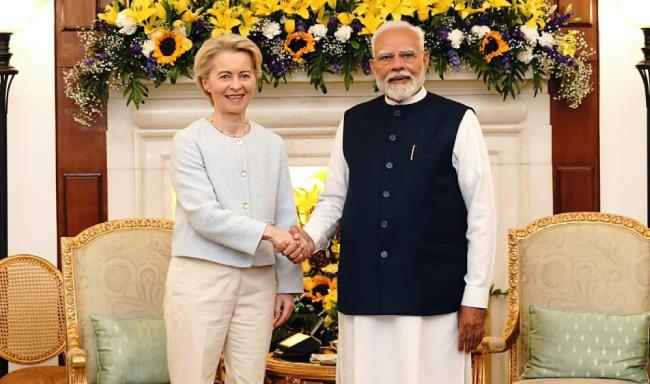

European Commission President Ursula von der Leyen called for Canada on September 16, 2026, to become the first EU “associate member”. The proposal would deepen ties between the EU and Canada and could help both sides reduce their reliance on Washington in areas including manufacturing, technology and artificial intelligence.
Canadian Prime Minister Mark Carney publicly backed this proposal a day later, calling for an “alliance for the future”. He presented the relationship as something that could make both sides more resilient, stating that its value would lie in building an “alliance strong enough so that no one can dictate our choices.”
The proposal comes with geopolitical tensions becoming increasingly volatile, particularly between Washington and its traditional partners.
With the U.S. war on Iran coming up to its eighth month, alongside threats of making Canada the 51st U.S. state, relations with both the EU and Canada have become more strained.
Just a day before von der Leyen proposed giving Canada associate membership, Carney had made clear that Ottawa was looking beyond its traditional relationship with Washington.
“Taking care of ourselves means building our strength at home and diversifying our partnerships abroad,” he said.
Imran Bayoumi, deputy director and resident fellow at the Atlantic Council’s GeoStrategy Initiative and a former U.S. Defense Department policy adviser, told EU Reports:
“Countries, like those comprising the EU, are looking for deepened relationships with more reliable and predictable partners. Canada is in the same boat, and Canada and the EU share a close set of shared values, making it a somewhat natural partnership.”
What does “associate member” mean?
“Associate membership” is not an established category within the EU. For now, von der Leyen’s proposal is primarily a political commitment to develop a deeper relationship between Canada and the bloc, rather than a defined legal status.
The EU-Canada summit in October should begin to clarify whether this proposal will remain a political framework for closer cooperation or a concrete way to materially improve relations between the blocs.
Already, reporting has suggested that some EU diplomats are sceptical about the terminology, as the announcement does not create a new legal status.
“Making this a clear and explicit goal in the Council’s negotiating mandate will demonstrate the President’s and the Member States’ commitment to a stronger, tighter bond between Canada and the EU,” wrote EU laureate and PhD candidate Arne P. Wegner.
Other analysts, however, expect the eventual relationship to consist of agreements allowing Canada to plug into existing EU programmes and frameworks.
Dr. Giuseppe Spatafora, policy analyst at the EU Institute for Security Studies, stressed accession to the European Economic Area would allow Canadian participation throughout most of the Union’s internal market and enable the free movement of people, for example.
What Europe gets out of it
Von der Leyen described the proposed relationship as a “common prosperity and economic security space”, spanning critical minerals, energy, artificial intelligence, quantum computing, cybersecurity and defence. She has also floated integrating the EU and Canada’s defence industrial bases and treating the Arctic as a joint project.
“Canada, which has abundant natural resources and shared cultural heritage with Europe, is a natural partner in this regard,” Bayoumi said.
Those resources are the immediate draw. Canada is a major producer of nickel, cobalt and copper, and holds significant deposits of lithium, graphite and rare earth elements. These are all central to the clean technology and defence industries Europe is racing to build out as it diversifies supply chains away from China.
The Arctic adds a second dimension. Canada’s geography gives it a strategic role in a region where competition over resources and shipping routes is intensifying. Closer cooperation would hand Europe a serious partner in a theatre that matters more to its security every year.
But none of this means Canada can replace its traditional American ally. The country’s economy and security remain deeply entangled with its southern neighbour, and no amount of transatlantic goodwill changes that.
However, replacing Washington may not be the point. For Europe, Canada’s value lies in being another major partner; one with the resources, energy and industrial capacity to make dependence on any single power a little less total.
Washington’s response
After von der Leyen’s announcement, U.S. President Donald Trump described the prospect of Canada becoming an EU associate member as “laughable”, and branded Canada a “terrible trade partner”.
President Trump further warned that if he believed the proposal had “bad intention” or amounted to a “hostile act”, the U.S. could impose serious tariffs on the EU or stop trading with the bloc on some goods.
The threat was conditional, but its timing is significant. The same day, Trump signed a memorandum directing U.S. officials to identify Canadian-origin products that could be removed from the federal civilian procurement system, citing Canada’s “Buy Canadian” policy.
The dispute therefore extends beyond rhetoric: Washington is already using its economic relationship with Canada as a source of leverage, while simultaneously warning Europe against deepening its relationship with Ottawa.
“I would assume that both parties would have expected something like this,” Bayoumi said.
“The U.S. has made its displeasure known in the past when its partners act in ways that Washington perceives as diverging from its own interests.”
Von der Leyen stressed that the proposal was “not against anyone”, while Carney has rejected the idea that the initiative is intended to create a new bloc or act against the U.S. Instead, he has argued that a stronger relationship with Europe could make Canada a better partner for Washington.
But the difficulty is that greater strategic autonomy inevitably reduces the extent to which Canada and Europe depend on Washington. Even if neither side intends to break with the U.S., building alternative markets, supply chains and defence partnerships gives them more room to act independently.
“There’s no reason why this deal has to mean that the U.S. and Europe can’t remain partners,” Bayoumi explained. “Washington’s own actions have pushed traditional partners to limit their dependencies, but that does not mean that they do not want continued relations with the U.S. at the same time.”
What’s next?
Whether Canada actually becomes the EU’s first associate member remains to be seen. The concept is still undefined, and negotiations will determine whether it becomes a substantive new framework or remains largely political.
But the significance of the proposal goes beyond the title. Canada and Europe are both looking to reduce their dependence on Washington by finding new markets, supply chains and strategic partners.
The question is whether they can build greater freedom of action without undermining their relationship with the U.S. The proposed partnership will be an early test of whether strategic autonomy can coexist with continued reliance on Washington.
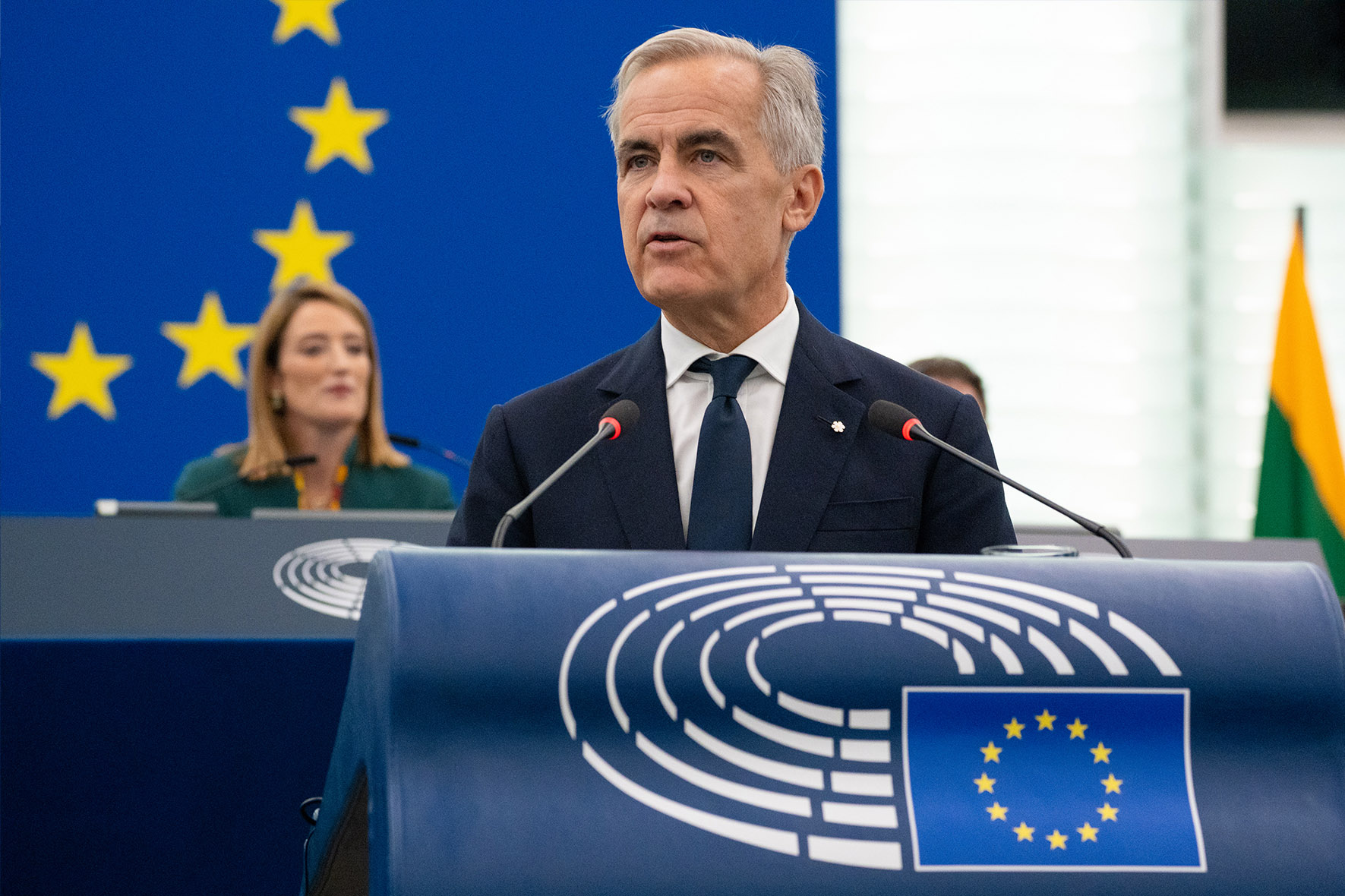
Featured image: Prime Minister Mark Carney addresses the European Parliament © European Union 2026 – EP
Source: European Parliament