
Fresh court interventions into Catalonia’s language policy – including the March 30, 2026 annulment of a Catalan protective decree – have reignited a long-running debate over identity and autonomy in the region.
According to the latest Catalan High Court (TSJC) order, a large section of the educational language decree protecting Catalan as a vehicular language in schools will now be annulled, finding that the original – dating to 2024 – failed to provide guarantees for the use of Spanish as a co-official language.
While the Catalan government maintains the decision has no immediate practical effect on schools, the Plataforma per la Llengua NGO filed a petition for reconsideration with the TSJC against the enforcement of the annulment.
For many Catalans, then, the ruling is not simply an educational policy dispute, but the latest chapter in a much longer struggle – one that began under dictator Francisco Franco, who banned the Catalan language entirely – which has never fully been resolved.
Across the Spanish region of Catalonia, children learned quickly which words were permitted and which were not in the early 1940s: lessons were conducted in Spanish, while Catalan, the language spoken at home, was forbidden.
A slip of the tongue could mean punishment, a quiet lesson in what could no longer be said aloud. Under dictator Francisco Franco, who ruled Spain from 1939 to 1975, the repression of Catalan identity extended far beyond politics, engulfing language, culture, and everyday life.
The independence movement that would erupt decades later did not emerge from nowhere; it was shaped, in part, by the memory of this erasure and by the long struggle to reverse it.
Suppression and survival
Before the Spanish Civil War erupted in 1936, the Catalan people enjoyed relative independence and cultural freedom of expression. In 1932 the Statute of Autonomy was approved by the Cortes Republicanas (Parliament) during the Second Spanish Republic, allowing the region to govern itself for the first time in over two centuries.
“This new situation was one of the principal triggers of the right-wing insurrection against the Spanish Republic and the Civil War,” noted Stanford professor Joan Ramon Resina in conversation with EU Reports.
Seven years after this statute was passed, Franco was named Caudillo (chieftain) and the independence Catalans had known was stripped away by his Nationalist forces. Franco acted immediately to root out their culture and suppress their political autonomy, banning the language and punishing separatists.
Also talking to EU Reports, Cardiff University professor Andrew Dowling described the scale of the assault plainly: “The Catalan language was suppressed in all public spheres, including the education system, as were all cultural organisations. This assault can be considered cultural genocide.”
Resina added that “all aspects, including the language and the most harmless folkloric expressions of the Catalan personality were banned for decades,” with Dowling noting that while 80% of Catalans still spoke Catalan in 1939, two decades of suppression and mass migration from other parts of Spain had reduced that figure to around 50% by the early 1960s. This decline underscored the long-term damage of cultural erasure.
Catalan identity, despite this, survived. With the death of Franco and his fascistic regime in 1975, the culture and language that the people of Catalonia were forced to confine to their homes began, gradually, to re-emerge.
Reclamation
Catalonia was among the first to unite opposition to Franco, which found its most organized expression in the Assembly of Catalonia, founded in 1971 and by which political groups across party lines were united around three core demands: freedom, amnesty for political prisoners, and the restoration of Catalan autonomy.
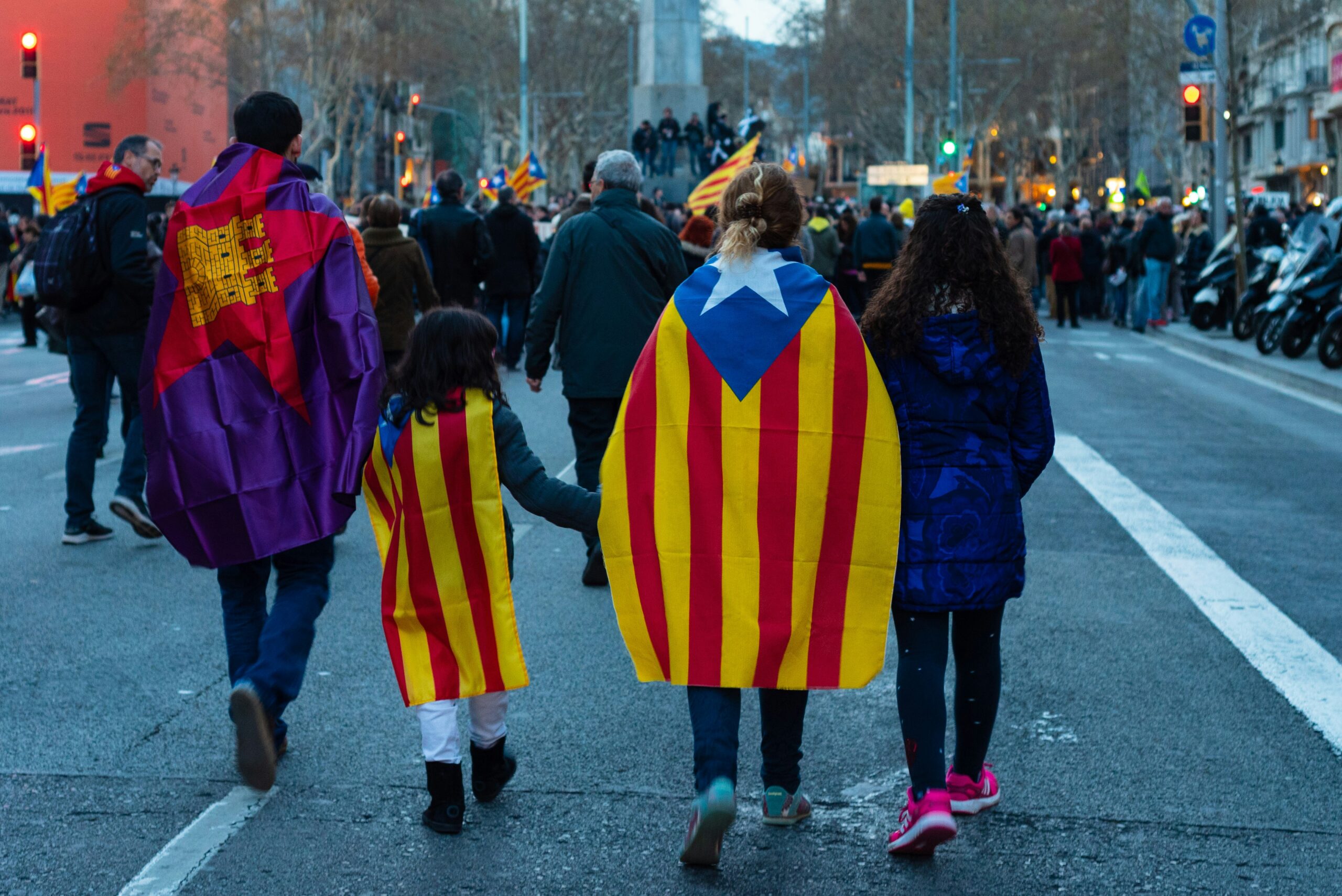
The breadth of that coalition was demonstrated on September 11, 1977, when over one million people took to the streets of Barcelona in one of the largest demonstrations in Spanish history.
The country’s authorities recognised that the Catalan question required urgent resolution. Josep Tarradellas, leader of the Catalan government in exile, returned in October 1977, and democratic elections for the new Catalan regional government followed in March 1980.
One of its most significant early measures was the Law of Language Normalisation of 1983, which established Catalan as the language of instruction across the education system. A Catalan-language television station followed in 1984, playing a key role in transmitting the language to a new generation.
Institutions such as the autonomous police force Mossos d’Esquadra and broadcasting network Televisió de Catalunya reflected a renewed confidence in both governance and cultural identity. Barcelona re-emerged as a cultural and economic centre, symbolised by the 1992 Olympic Games.
From culture to politics
The restoration of autonomy did not resolve underlying tensions. As successive governments in Madrid were seen to roll back or constrain elements of that autonomy, frustration within Catalonia began to grow.
Shaped in part by the memory of Francoist repression, cultural identity increasingly took on a political dimension. Resina argued that “the experience that sealed the collapse of trust in the Spanish institutions was the Supreme Court’s voiding of core provisions of the Statute of Autonomy,” in 2010, serving for many Catalans as the “ultimate proof that the Spanish constitution was dead.”
Dowling offered a different perspective, arguing that while historical grievance remained important, the turn towards independence after 2010 was driven more immediately by economic crisis, “discontent at the financial regime with the Madrid government,” and concern that the transmission of the Catalan language was stalling.
The 2010 Supreme Court ruling, he said, was equally significant. Its verdict that key aspects of the revised 2006 Statute of Autonomy were unconstitutional proved a decisive turning point.
Tensions reached a boiling point in 2017, when Catalonia held an independence referendum. While 90% of votes cast supported the creation of an independent state, turnout was low after opponents boycotted the vote; the Constitutional Court of Spain had already declared the referendum illegal, placing it in direct defiance of the 1978 Constitution.
The vote was overshadowed by a heavy police response, as Spanish authorities moved to prevent it from taking place, seizing ballot boxes and clashing with voters at polling stations. Images of violence circulated widely, deepening divisions within Catalonia and hardening attitudes on both sides.
In 2019, Spain’s Supreme Court sentenced several Catalan independence leaders to lengthy prison terms for their role in organising the vote. The rulings, which included convictions for sedition, were presented by Madrid as a defence of the constitutional order. For many in Catalonia, they reinforced the sense that political demands were being met with judicial force rather than dialogue.
The sentences triggered widespread protests, some of which escalated into violent clashes. Barcelona became the focal point of unrest as strikes, marches and confrontations brought the city to a standstill.
Unresolved Questions
The 2026 court ruling, which also orders the enforcement of Spanish-language quotas in Catalan schools, is more than a legal technicality. It is the latest episode in a conflict over language and identity.
The two scholars offer different perspectives on how much that past defines the present; Resina argued that most outsiders fundamentally misunderstand the Catalan situation, accepting the notion that Catalans are simply “unwilling taxpayers and fanatics of a regional language.”
For him, this misreads a much deeper reality. Catalan, he said, “is being driven to extinction by long-term policies of suppression that began long before Franco and have continued since his demise.”
The most recent official survey, published in 2025, found that Catalan is now the habitual language of just 32.6% of Catalonia’s population, down from 36.1% in 2018 and fourteen points lower than twenty years ago.
Dowling, meanwhile, cautioned against reducing the independence movement solely to historical grievance, noting that practical factors such as economic imbalance, fiscal extraction, and ongoing linguistic anxiety continue to shape it alongside historical memory.
The independence movement may be simmering for now. But, as long as courts in Madrid are ruling on what language Catalan children learn in, the question Franco thought he had answered remains very much open.
Featured image: Transly Translation Agency via Unsplash+