

A local council in the Emilia-Romagna region of Italy has successfully bid for a villa formerly belonging to dictator Benito Mussolini in order to prevent it from being acquired by “fascist nostalgics”.
Mussolini was the founder and leader of the Italian Fascist movement, ruling Italy as the Duce (leader) from 1922 to 1943, when he was deposed by his own Grand Council.
Propped up by Nazi Germany, Mussolini continued as a figurehead for the regime and as ruler of parts of Italy until the end of WWII, when he was executed by Italian partisans.
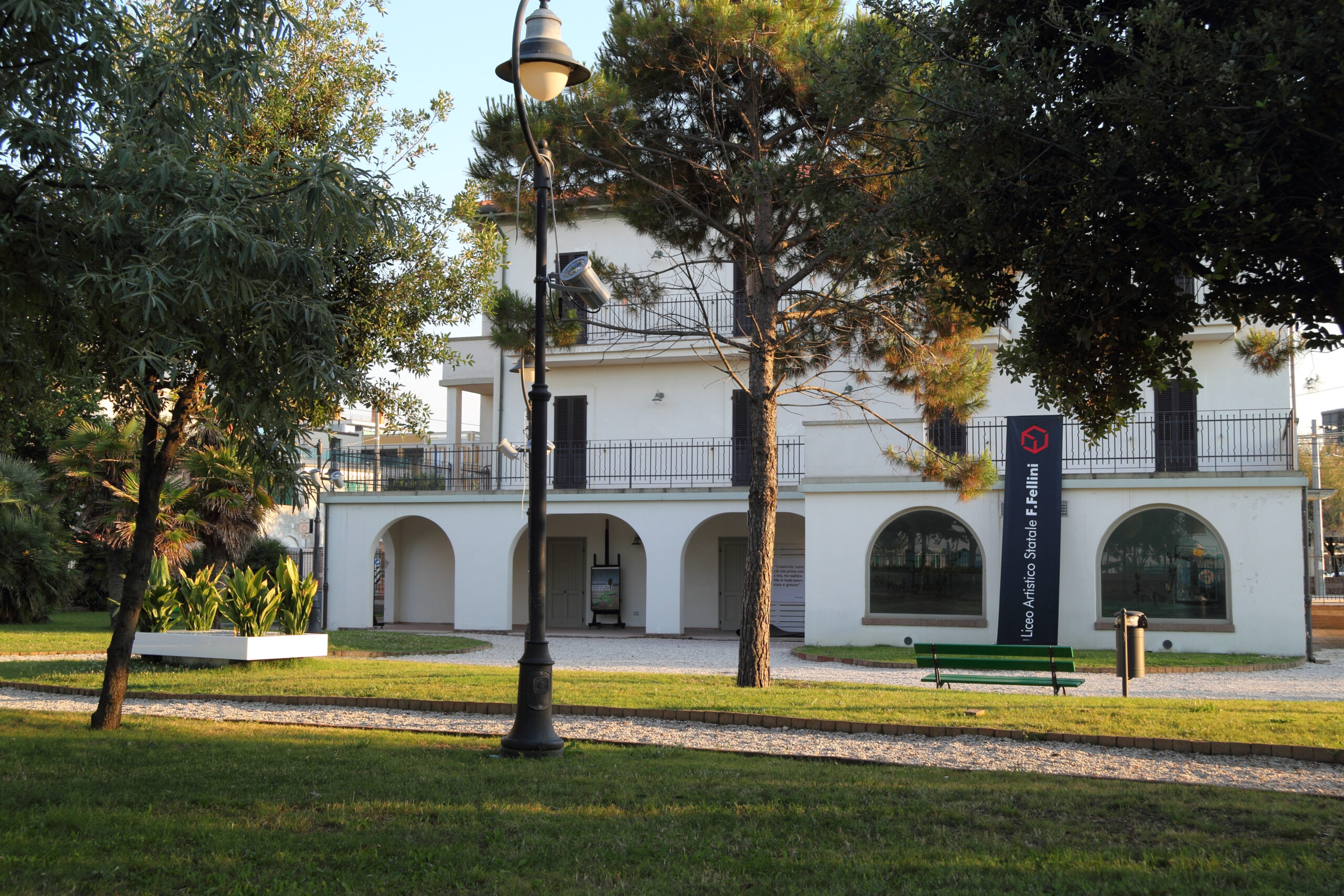
The villa in question lies at the Riccione municipality on the eastern Italian Adriatic coast, a popular seaside resort near Predappio, where Mussolini was born and later buried.
First built in 1893, the villa was bought by Mussolini’s wife Rachele in 1934. It became a favoured summertime retreat for the dictator, who would fly over by seaplane, as well as a place in which government business was conducted.
What’s at stake?
Predappio has in recent years become a site of pilgrimage for neo-fascists and others who are nostalgic for the Mussolini regime. Supporters of the dictator regularly visit the small Italian town in order to pay homage and visit the crypt where he is buried.
In October 2022, to mark the centenary of Mussolini’s March on Rome – his staged coup d’état which brought him to power as Italian Prime Minister – several thousand black-shirted supporters paraded through the streets of Predappio to visit the cemetery and listen to the dictator’s great-granddaughter, Orsola Mussolini.
Supporters have continued to flock to Predappio each year since. As many as a thousand nostalgics attended Mussolini’s crypt in October 2025, carrying flags and banners, as well as performing the Roman salute used by Mussolini’s fascists and the Nazis.
These pilgrimages, far from being something carried out covertly, have been central to the town’s identity and economy; they are a major source of tourism for the town, which produces a wide range of souvenirs and merchandise including Il Duce T-Shirts, busts, and mugs – leading to some dubbing the town the “Fascist Disneyland.”
This year marks the centenary of Mussolini’s total ban on all other political parties, transforming Italy into a one-party state. Following the announcement by the savings bank Fondazione Cassa di Risparmio that the dictator’s former summer residence would be going up for sale following years of abandonment, some in Riccione raised concerns that it too could become a site of interest for Fascist sympathisers and other nostalgics.
A bid on the property was put forward by private buyer and Turin-based firm David2 – an investment vehicle whose main backer is rightist entrepreneur and politician Massimo Massano.
Massano had previously been a Member of Parliament for the Italian Social Movement (MSI) Party, a far-right, neo fascist party founded in the aftermath of World War II by supporters of Mussolini, after the original Fascist party had been dissolved.
As part of this bid, Massano proposed that the villa would be used as an exhibition dedicated to futurism, an art movement prevalent throughout the early twentieth century that was itself heavily associated with fascism.
What kind of price?
Massano’s bid was one of three put forward for the property, including one by Riccione’s Municipal council. Massano put forward a bid of €2 million, as compared to the Comune di Riccione’s €1.2 million. Ultimately, however, the board of directors of the Fondazione Cassa di Risparmio decided to go with the lower bid.
The bank took various details besides the price into consideration when reaching their verdict at the end of March, including the plans put forward for the villa’s future use.
The Comune di Riccione had stated that it intended for the villa to continue to be used as a venue for weddings and other events, as well as a community space for various rotating art exhibitions.
The decision to give the property over to the local government has also been seen as part of a move to keep it out of the hands of the far-right.
Mia Fuller, a Professor of Italian Studies and the Director of the Institute of European Studies at UC Berkeley, pointed out that Mussolini’s family home near Predappio had itself been acquired by “very strongly ‘pro-nostalgia’ people,” and is now “a site of tourism and pilgrimage.”
“My guess is that the municipality of Riccione is aiming to avoid this phenomenon,” Fuller told EU Reports.
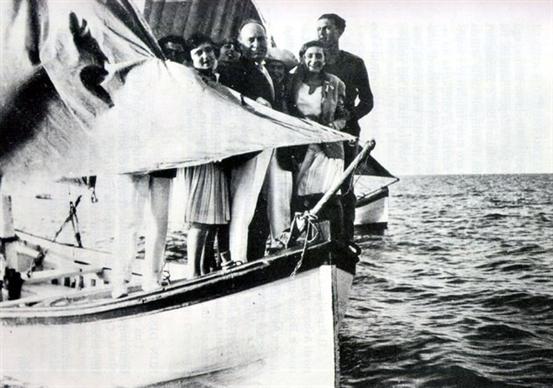
Image source: GetArchive
Creative Commons Licenses
Daniela Angelini, Riccione’s left-wing mayor, stated the public acquisition of the property was “an act of love and vision,” adding that “with this initiative, we restore to the citizens a symbol of our community – a space that will be completely open to everyone.”
This comes following a vote last year by the Comune di Riccione to revoke the honorary citizenship that had previously been conferred upon Mussolini. These acts by Riccione’s local government have been welcomed by various commentators as achieving “what the country has never done at the national level.”
A wider tendency?
Many other countries with a history of fascism, such as Germany, Austria, and Spain, have actively taken steps to prevent such pilgrimages. This has been seen, for example, in the Austrian government’s expropriation of Hitler’s birthplace, and the decision by Spain to exhume the remains of Francisco Franco from the vast mausoleum at the Valley of the Fallen, near Madrid.
In contrast, Italian Prime Minister Giorgia Meloni and her party, the right-wing populist Brothers of Italy (FdI) – itself a successor to the MSI – have frequently been accused of tolerating and encouraging nostalgia for the country’s fascist past, as well as downplaying the extent of Italy’s complicity in the Nazis’ crimes.
Meanwhile, Senate President Ignazio La Russa was reported to have a bust of Mussolini in his room, whilst the Italian government has in the past commemorated Italian lives lost fighting against the Allies in Africa during WWII.
Much of the FdI executive had previously been members of the MSI, whilst Meloni had started out in the MSI’s youth wing, though she has since sought to portray herself as a moderate conservative and has consistently condemned this chapter of Italian history.
“The Meloni government gives full support to members of parliament and municipal level politicians who make efforts to celebrate this history,” Fuller argues. “Everything in public discussions veers toward reaffirming a ‘moral standing’ of the general population, whose suffering in the latter stages of the war – real suffering, of course – is privileged in collective memory, to the detriment of any discussion on Italy’s crimes.”
Others have pointed out that this pehnomena has been ongoing since even before Meloni took power in 2022. Dr. Hannah Malone, Assistant Professor in the History of Modern Architecture at Trinity College Dublin, told EU Reports that “the surge in neofascist activity can be attributed to the fact that, since Berlusconi’s rule in the 1990s and increasingly since 2022, there has been an environment that normalises positive attitudes towards the Fascist past.”
Councillors for FdI were amongst those demanding that the name of Villa Mussolini should not be changed following its acquisition by the Riccione council. Mayor Angelini has conceded to these demands in spite of calls from some on the left for it to be renamed, in much the same way as other streets and buildings throughout Italy have been.
Angelini, in fact, has argued that changing the villa’s name could well be seen as itself trying to rewrite history, and may actually have the reverse effect of further empowering fascist nostalgics.
“Today we are celebrating not just a purchase, but an act of reclaiming our identity: it is a victory for the city,” Angelini stated. “It is a visionary choice: Riccione does not erase its complex memory, but critically reworks it through culture to make it an infrastructure for the future, capable of being alive and vibrant year-round, beyond the seaside season.”
Featured image: Riccione – Villa Mussolini 2011
Source: Wikimedia Commons
Author: Howwi
Creative Commons Licenses