
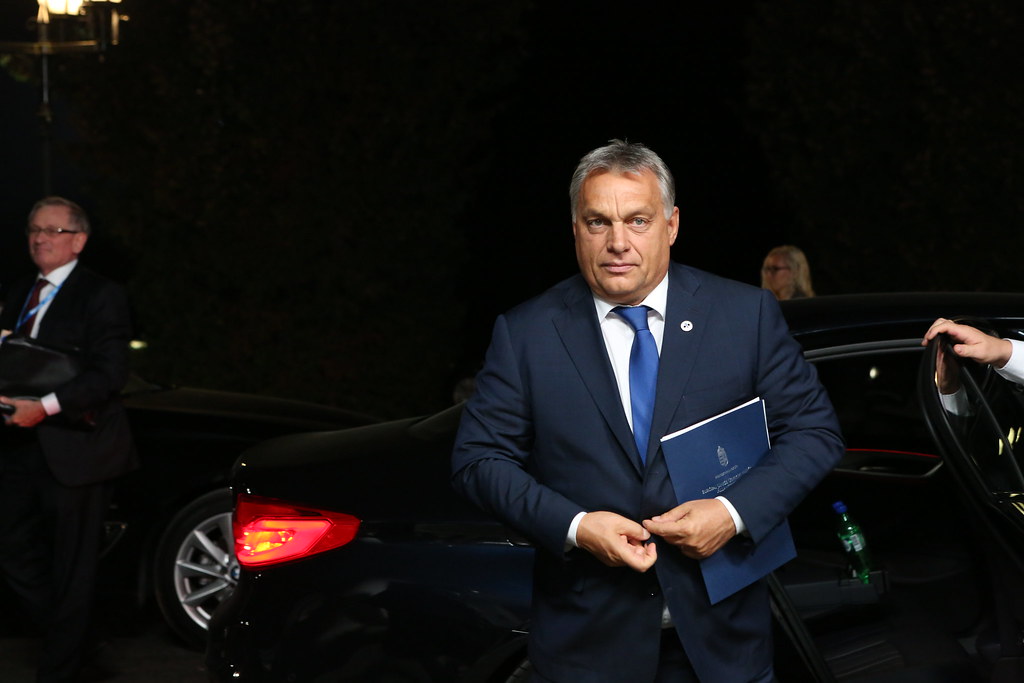
Barcelona, Spain – Hungarian Prime Minister Viktor Orbán and his Fidesz party are facing their strongest opposition in 16 years in the upcoming April 12 elections, against former Fidesz politician Péter Magyar and his Tisza party.
However, the election campaign has been far from restricted within the country’s borders. From claims of Kremlin interference to online misinformation campaigns, this election is increasingly playing out on a global stage, with the international far-right movement pulling out all the stops to try and ensure Orbán’s re-election.
Who supports Viktor Orbán?
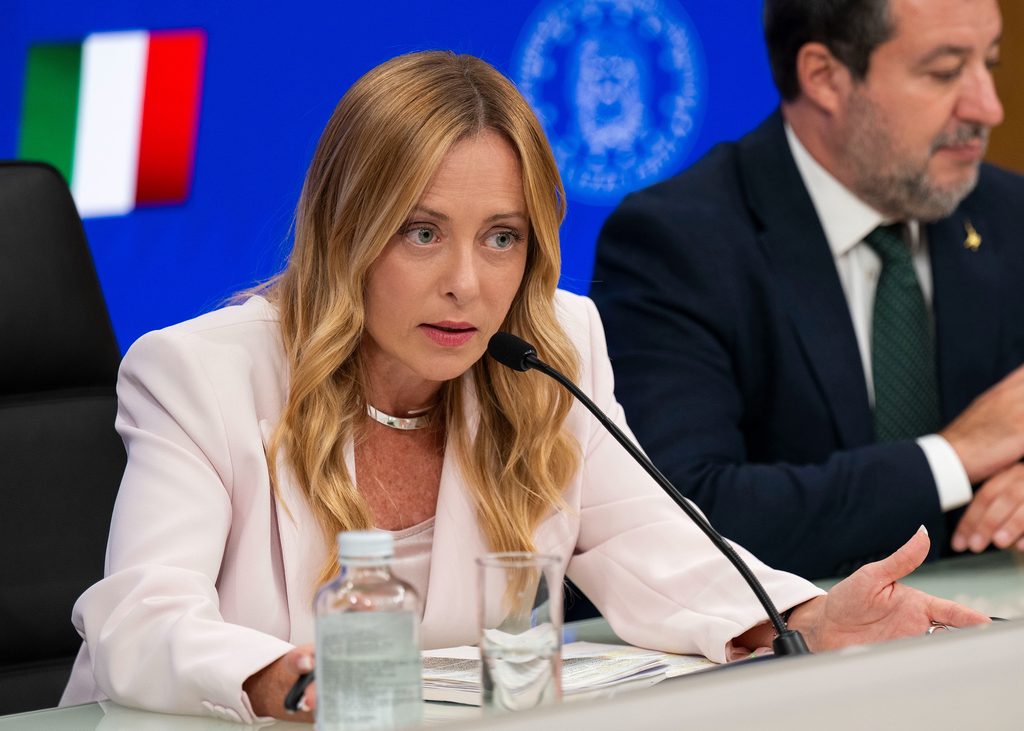
A video published on X made headlines in January, featuring the endorsement of Orbán by the leaders of far-right parties across Europe and beyond. Amongst his endorsers were France’s Marine Le Pen, Italy’s Giorgia Meloni, Spain’s Santiago Abascal and Israel’s Benjamin Netanyahu.
In the video, the leaders spoke of Orbán’s “tenacity” “prosperity” and “wisdom”, and urged Hungarians to re-elect him. Italian Prime Minister Meloni said: “Together we stand for a Europe that respects national sovereignty [and] is proud of its cultural and religious roots.”
Orbán has also been endorsed by American politicians such as U.S. President Donald Trump and Argentina’s Javier Milei. In February, U.S. Secretary of State Marco Rubio visited Hungary, and Vice President JD Vance is set to make an appearance in Hungary ahead of the polling.
Far-right political ecosystem
This election has brought to light the strong organisation and internationalisation of the far right, taking place over the last 15 years. Dr. Heidi Beirich, co-founder of the Global Project Against Hate and Extremism (GPAHE) highlighted the importance of Orbán’s as both a political figurehead and Hungary as a nexus of the far-right organisational ecosystem while in conversation with EU Reports.
“Hungary and Orbán are a lynchpin of the far right movement,” she said.
In recent years, Orbán has been instrumental in supporting and creating organisations such as the Mathias Corvinus Collegium and the Geneva Consensus Declaration, an anti-abortion treatise with 40 countries as signatories hosted at the Maria Kopp Institute in Hungary. Beirich described the declaration as the far-right’s attempt to “replace human rights at the UN”.
According to Beirich, the U.S.’ support of the declaration highlights the strong links between Hungary and American foreign policy. “This is just to show you how central Orbán is to these networks and if he was defeated, it would be crippling to this agenda,” she added.
The evolution of the international far-right
Through these declarations, agreements and a network of conferences and think-tanks, the far-right has consolidated an infrastructure of support to its international members, while criticising organisations like the United Nations, European Union and NATO.
“It’s ironic isn’t it, right? They claim sovereignty is a key thing and yet they’re actually building an international infrastructure that I think is there intentionally to replace the United Nations, the Organization of American States, and the European Union,” said Beirich.
“They’re really not against globalization, they’re against the kind of globalization that we’ve seen,” she continued.
Many far-right parties see Hungary’s illiberal democracy as a test case, and hope that an Orbán victory on Sunday would bolster similar efforts in their respective countries. As Beirich stated, “That’s essentially the fundamental thing that this new far right international agrees on: we want to replace the international system of broad human rights protections and democracy with things [that] exist in Hungary.”
What could an Orbán defeat mean?
With Tisza leading in many polls by double digits, many are speculating about what a defeat of the Fidesz party could mean for Hungary. However, it is also worth considering the potential far-reaching implications across Europe and the rest of the world.
“This election is a big deal for politics not just in the European Union but internationally. A rejection of Orbán would be a big blow to the far right…it would be a big win for democracy if that’s how the chips fall, but we’ll just see what happens.” Beirich concluded.
Featured image: Viktor Orbán, Prime Minister, Hungary
Source: EU2017EE Estonian Presidency via Flickr
Author: Annika Haas
Creative Commons Licenses